Dennis Potter made television drama a place where memory could interrupt the present, songs could reveal what characters could not say, and the boundary between imagination and reality could give way. His best-known series, Pennies from Heaven and The Singing Detective, joined popular music and experimental storytelling to subjects rooted in personal and social life. He also wrote journalism, novels, screenplays and stage adaptations, including Brimstone and Treacle, a television play the BBC initially refused to broadcast.
From the Forest of Dean to television
Potter was born in Berry Hill, in the Forest of Dean, Gloucestershire, on 17 May 1935. His father was a coal miner, and the area remained an important setting and influence in his work. He attended Bell’s Grammar School in Coleford and later St Clement Danes Grammar School in Hammersmith. After national service in the Army Intelligence Corps, where he learnt Russian, he studied philosophy, politics and economics at New College, Oxford.
He began his working life as a journalist on the Daily Herald. His first non-fiction book, The Glittering Coffin, appeared in 1960; The Changing Forest, published in 1962, examined class and social mobility in the place where he had grown up. He also contributed sketches to the satirical television programme That Was the Week That Was.
Potter’s health changed the course of his career. He began to suffer from psoriatic arthropathy, a condition affecting both his joints and skin. In 1964 he stood unsuccessfully as the Labour candidate for Hertfordshire East. He subsequently turned towards television drama, beginning with The Confidence Course for the BBC anthology series The Wednesday Play in 1965.
Making television form part of the story
Potter’s early television plays drew on class, politics and his own experience. The semi-autobiographical Stand Up, Nigel Barton! follows a miner’s son at Oxford, caught between different social worlds. Its companion, Vote, Vote, Vote for Nigel Barton, takes the same character into an election campaign. Both works used television not only to tell a story but to examine how stories, public appearances and political compromises are made.
His later dramas developed a distinctive grammar. Potter used flashbacks and disrupted chronology, direct address to camera, recurring characters and images, and adult actors playing children. In Pennies from Heaven (1978), actors mimed to period songs rather than singing them; the musical numbers sit alongside the drama rather than serving as conventional performances. He returned to this approach in The Singing Detective and Lipstick on Your Collar.
The Singing Detective, broadcast in 1986, places its hospitalised writer, played by Michael Gambon, between illness and imagination. The protagonist’s childhood, a detective story he is writing and the reality of the hospital overlap, while the character’s psoriasis reflects Potter’s own experience of the disease. The six-part series made that unstable relationship between memory, fantasy and the present central to its dramatic structure.
Controversy, theatre and film
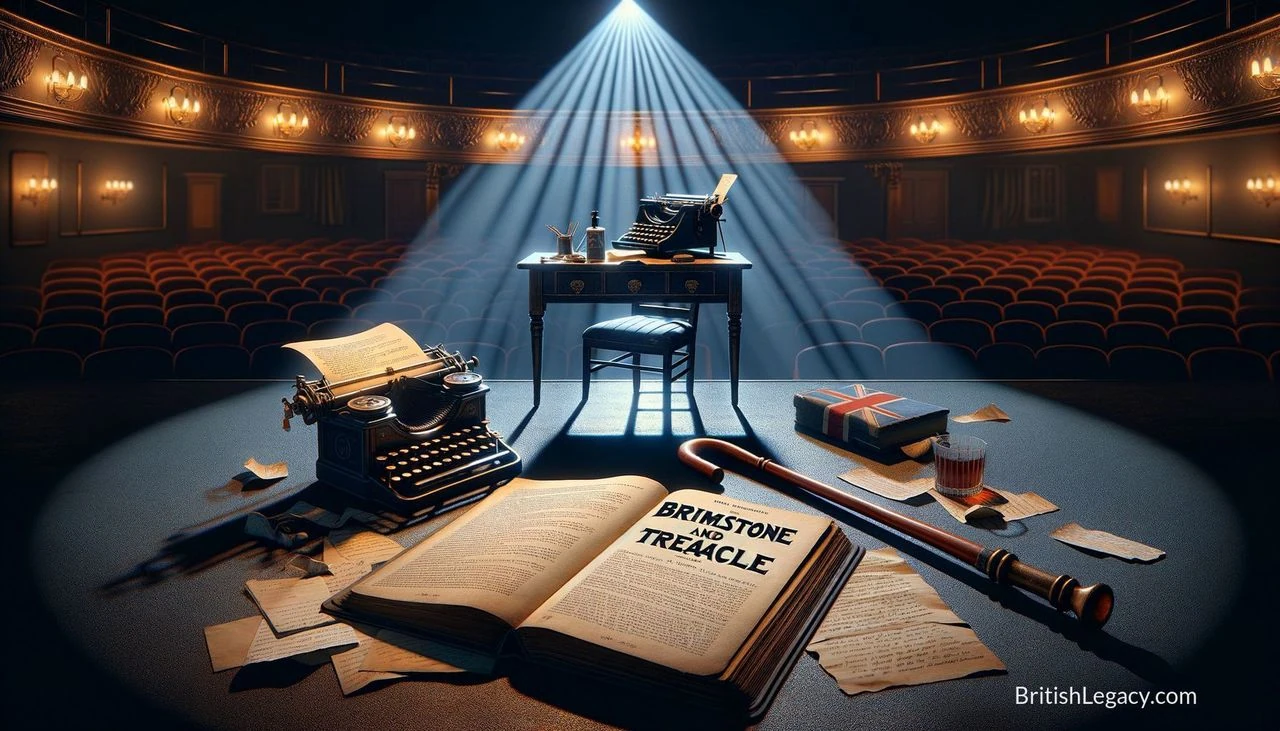
Brimstone and Treacle shows another side of Potter’s work. Written for television in 1976, it centres on Martin, a stranger who enters a suburban family’s home under the appearance of concern. Its treatment of sexual violence, disability and moral responsibility led the BBC to refuse to screen the original television production. Potter adapted the story for the stage, where it was performed in 1977. The television version was eventually broadcast in 1987.
Potter’s work crossed between media, though television remained his principal field. He wrote screenplays including Gorky Park, for which he received an Edgar Award, and adapted Pennies from Heaven for the cinema. The film, released in 1981, received mixed reviews and was a commercial failure, but Potter was nominated for an Academy Award for its screenplay. His work for film included the screenplay for Dreamchild and the adaptation of his television play Schmoedipus as Track 29.
His subject matter and methods could attract sharply divided responses. The television serial Blackeyes (1989), about a fashion model, was criticised by some reviewers as self-indulgent and accused of reproducing the misogyny it set out to expose. Potter’s career was not a smooth sequence of acclaim: his work could provoke argument as well as admiration, and his ambitions for film were not always matched by commercial backing.
Final work and an enduring reputation
In 1993 Potter published a forceful critique of the British news media and appeared in an interview with Melvyn Bragg that was broadcast on Channel 4 in April 1994. By then he had been diagnosed with pancreatic cancer. In the interview he spoke about his illness and his determination to continue writing. He proposed that his final television projects, Karaoke and Cold Lazarus, be made through collaboration between Channel 4 and the BBC. Both were broadcast in 1996, after his death.
Potter died in Ross-on-Wye on 7 June 1994, aged 59. His wife, Margaret, had died nine days earlier. His papers, including unpublished fiction and unproduced plays, are held for cataloguing and preservation at the Dean Heritage Centre in Gloucestershire. The material offers a continuing record of a writer whose completed works crossed genres and media, and whose television scripts remain the centre of his reputation.
Why Dennis Potter deserves a place in British Legacy
Potter’s place in British cultural history rests on particular achievements, not simply on a reputation for being provocative. In works such as Pennies from Heaven and The Singing Detective, he made structure and style carry dramatic meaning. Songs, remembered scenes and imagined narratives are not decorations: they show how characters interpret experience and how popular culture becomes part of private memory. His use of disrupted time, direct address and blurred realities enlarged the expressive possibilities of television drama.
His writing also brought recognisable British settings and tensions into ambitious forms. The Forest of Dean of his childhood informed his work, while plays such as Stand Up, Nigel Barton! and Vote, Vote, Vote for Nigel Barton examined class and electoral politics. Brimstone and Treacle demonstrates both the reach of his work across television and theatre and the discomfort it could create. Potter’s career included controversy and commercial disappointments as well as celebrated dramas; that complexity makes his legacy more instructive, not less. His example matters to British Legacy because it shows how television, an everyday medium, can take formal risks while engaging closely with the country’s social experience.
Sources
Dennis Potter — Wikipedia revision
Adapted in part from Dennis Potter by Wikipedia contributors, under CC BY-SA 4.0. Text has been edited and combined with the existing article; this adapted text is shared under the same licence. Contributor history.