Horatio Nelson: Trafalgar and the making of a naval legend
Nelson’s victory at Trafalgar became central to his British legacy, but his career also included the Battle of the Nile and an earlier injury at Calvi.
Read the entryBRITISH LEGACY / THE COLLECTION
British war heroes have demonstrated exceptional bravery and leadership in conflicts throughout history. Their actions have shaped military tactics and had a profound impact on the course of wars. Celebrating these heroes helps preserve their legacy and the lessons of their valor.
85 entriesNelson’s victory at Trafalgar became central to his British legacy, but his career also included the Battle of the Nile and an earlier injury at Calvi.
Read the entry
The wartime prime minister was also a soldier, journalist, reforming minister and writer whose long career resists a single verdict.
Read the entry
From campaigns in India and the Iberian Peninsula to Waterloo and Parliament, Wellington’s career shaped British military and political life.
Read the entry
Drake’s voyage around the world and his part in the Armada campaign made him famous in England. His career also involved slave-trading voyages, raids and military defeats.
Read the entry
His part in the Arab Revolt made him a public figure; his later years in the RAF and his writing reveal a life less simple than the legend.
Read the entry
From the Royal Navy’s ranks to command of the Grand Fleet, Jellicoe led Britain’s fleet through its defining First World War sea battle.
Read the entry
From the Western Front to El Alamein and the Rhine, Montgomery became one of the Second World War’s most prominent British commanders.
Read the entry
Commander of the British Expeditionary Force during WWI, known for his leadership in the Battle of the Somme.
Read the entry
From the defence of Taunton to campaigns in the Channel and Mediterranean, Blake helped reshape England’s seventeenth-century navy.
Read the entry
Wolfe’s victory at Quebec in 1759 made him a celebrated figure in Britain, while changing the course of French and British rule in North America.
Read the entry
The British admiral commanded the Battlecruiser Fleet at Jutland and later served as First Sea Lord.
Read the entry
Before leading Easy Company in Normandy and across Europe, Winters trained with the 101st Airborne in Wiltshire. His British connection is part of a wider Allied story.
Read the entry
Led British forces in Burma during WWII, successfully defending against Japanese advances.
Read the entry
As head of RAF Fighter Command, Dowding helped bring radar, observers and careful resource management together in the defence of Britain in 1940.
Read the entry
Chief of the Imperial General Staff during WWII, instrumental in strategic planning and military operations.
Read the entry
An engineer by training, Monash led the Australian Corps on the Western Front and helped make coordination, preparation and troop welfare central to military command.
Read the entry
The British officer who commanded the BEF during the opening phase of the First World War.
Read the entry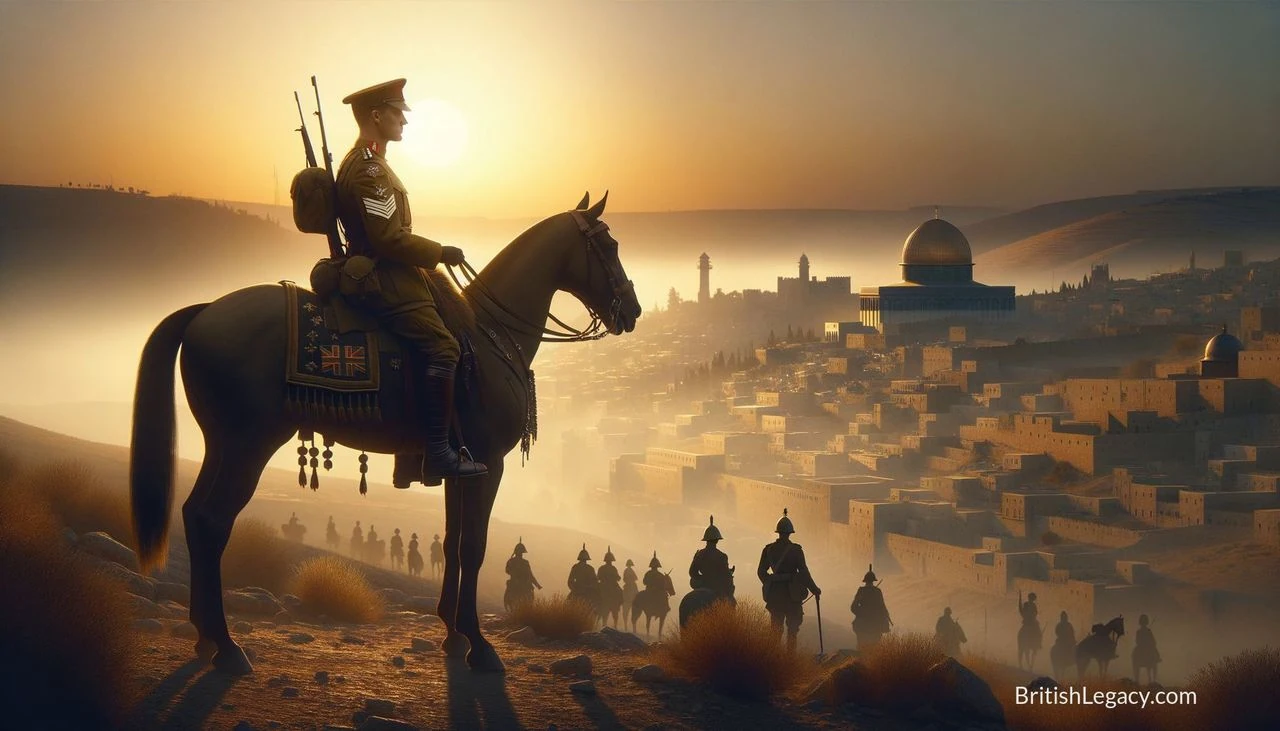
Led the Egyptian Expeditionary Force in the Middle East during WWI, capturing Jerusalem.
Read the entry
A fictional Royal Navy officer whose career, doubts and command decisions place readers inside the Napoleonic Wars.
Read the entry
From the Intelligence Corps to Chief of the General Staff, Jackson’s career brought him to the centre of British military leadership.
Read the entry
A career spanning the Afghan, Sikh and Persian campaigns culminated in the 1857 relief of Lucknow—and a legacy commemorated in Britain and India.
Read the entry
A forceful advocate of deep-penetration warfare, Wingate led British, Indian and African troops in campaigns whose value remains disputed.
Read the entry
Allied commands in North Africa and Italy preceded his service as Governor General of Canada.
Read the entry
Commander-in-Chief of Middle East Command during WWII, known for his campaigns in North Africa and Greece.
Read the entry
The Royal Navy reformer championed fleet modernisation and a battleship that reset expectations of naval power.
Read the entry
A senior Royal Navy officer in two world wars, Mountbatten later oversaw the transfer of British India to independence—a consequential and contested chapter of his career.
Read the entry
The British Army officer’s address to the 1st Battalion, Royal Irish Regiment, combined stark warnings about combat with instructions on how to treat civilians, the dead and prisoners.
Read the entry
From the Anglo-Egyptian victory at Omdurman to Britain’s wartime mobilisation, Kitchener’s career combined military authority with a contested legacy.
Read the entry
An Anglo-Australian RAF fighter pilot, Hillary recorded the Battle of Britain and his recovery from severe burns before returning to flying training.
Read the entry
New Zealand-born British general known for his leadership in the Battle of Crete during WWII.
Read the entry
The Royal Navy commander whose Mediterranean campaigns included Taranto, Cape Matapan and the evacuation of Crete.
Read the entry
The Royal Engineers officer helped prepare Malta’s defences and sustained its garrison and population through the island’s first years of war.
Read the entry
Commander of British forces at Gallipoli and later in India during WWI.
Read the entry
The Australian-born British Army officer commanded the 4th Parachute Brigade at Arnhem, later led senior British and NATO commands, and became a university principal and author.
Read the entry
Canadian-born British Army doctor and poet, author of "In Flanders Fields."
Read the entry
The Irish-born British Army officer led the attack on Washington in 1814, then died during the campaign against Baltimore.
Read the entry
From the SAS to the command of British forces in the Gulf War, Peter de la Billière’s career spanned four decades of military service.
Read the entry
The Royal Engineers officer became famous for commanding the Ever Victorious Army in China and died during the siege of Khartoum.
Read the entry
WWI flying ace and recipient of the Victoria Cross.
Read the entry
Known for his service in WWII, Korea, and as a military historian.
Read the entry