Howard Brenton’s theatre has moved from a Cambridge student production to arguments about liberty, the press, political leadership and Britain’s place in the world. He first drew widespread attention with plays that confronted contemporary institutions; later works turned to figures and episodes from history. Across both, his subjects have included the pressure of the state on individual freedoms and the ways power is acquired, used and challenged.
From Cambridge to experimental theatre
Born in Portsmouth on 13 December 1942, Brenton was the son of Donald Henry Brenton, a policeman who later became a Methodist minister, and Rose Lilian Brenton. He attended Chichester High School for Boys and studied English literature at St Catharine’s College, Cambridge. In 1964 he received the Chancellor’s Gold Medal for Poetry. While at Cambridge he wrote Ladder of Fools, staged at the ADC Theatre in 1965 and later at the Oxford Playhouse. His one-act play It’s My Criminal was performed at the Royal Court Theatre in 1966.
Brenton joined the Brighton Combination as a writer and actor in 1968, then became part of Portable Theatre in 1969. Founded by David Hare and Tony Bicat, the company provided a setting for new writing outside the established commercial stage. Brenton’s Christie in Love was staged at the Royal Court’s Theatre Upstairs in 1969, followed by Fruit in 1970. These works formed part of a busy early period that also included Wesley, Scott of the Antarctic and Hitler Dances.
Collaboration became one of the recurring features of his career. In 1973, Nottingham Playhouse commissioned Brenton and Hare to write Brassneck, a satire tracing a Midlands family’s fortunes from 1945 into the 1970s. The following year Brenton’s The Churchill Play, also staged at Nottingham Playhouse, imagined a future in which the state curtailed basic freedoms. Its opening image—Winston Churchill rising from his catafalque in Westminster Hall—set an unsettling historical frame for a drama about security and liberty.
Institutions, liberty and the press
Weapons of Happiness, Brenton’s play about a strike in a south London factory, was commissioned by the National Theatre for its new Lyttelton Theatre. Its July 1976 production was the first commissioned play performed at the National’s South Bank home, and it won the Evening Standard award for Best Play. The combination of a specific workplace conflict with a larger political setting would recur in Brenton’s work.
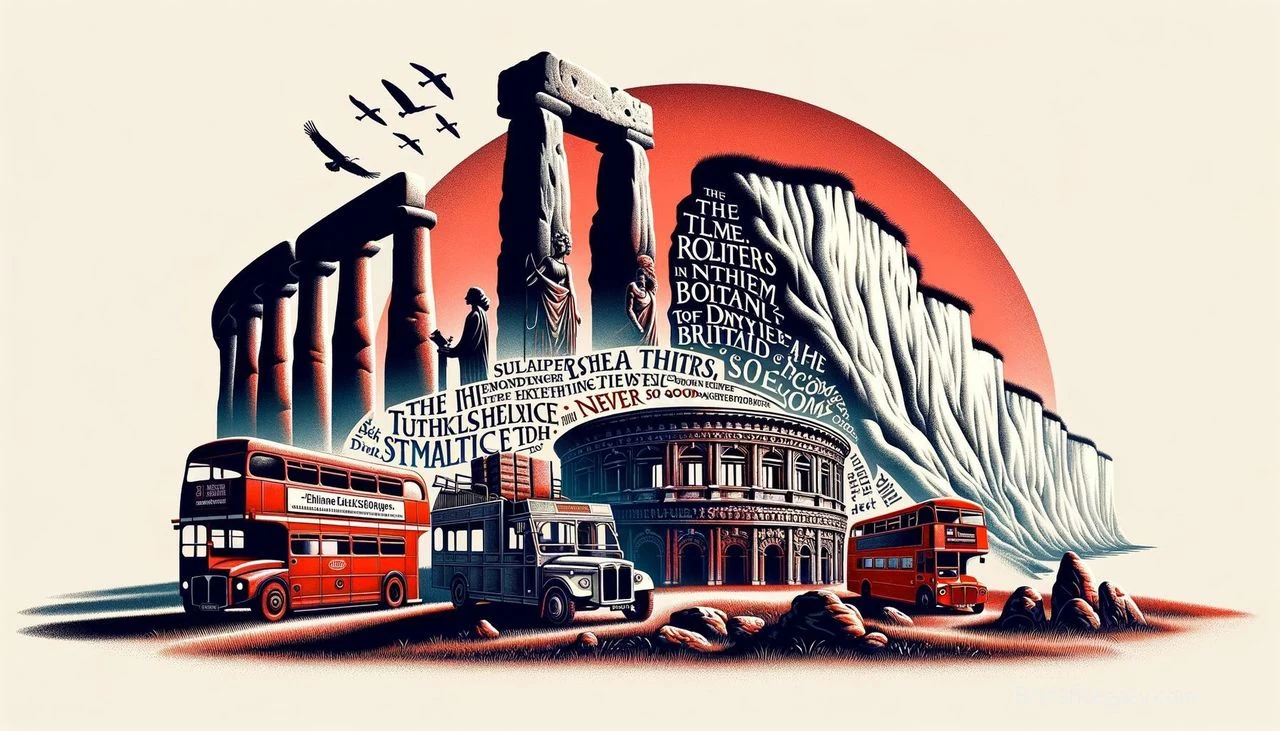
His best-known controversy followed with The Romans in Britain, first staged at the National Theatre in October 1980. The play draws a parallel between the Roman invasion of Britain in 54 BC and the British military presence in Northern Ireland. Public attention focused instead on a scene involving the attempted rape of a Druid priest by a Roman centurion. Mary Whitehouse brought a private prosecution against the play’s director, Michael Bogdanov; her legal team later withdrew it when it became clear that it would not succeed. The dispute made the production a conspicuous episode in debates about theatre, censorship and the limits of expression.
Brenton returned to the question of power in Pravda, his 1985 collaboration with Hare. Directed by Hare, the National Theatre production satirised the absorption of British newspapers by a forceful South African proprietor. The target was widely understood to be Rupert Murdoch and his News International empire, while the play’s wider concern was the danger that concentrated media ownership could pose to society and the state. Pravda won the Evening Standard award for Best Play in 1985.
Historical figures and later plays
Brenton has repeatedly used the past not as a retreat from present concerns but as a way to examine them. Never So Good, staged at the National Theatre in 2008, dramatises the life and career of Harold Macmillan. Its subject is a British prime minister whose political story allowed Brenton to explore leadership and the changing national context in which it operates. The play’s focus on a historical figure continued in Anne Boleyn, staged at Shakespeare’s Globe in 2010, and in 55 Days, which examined the political crisis surrounding the English Civil War and was staged at Hampstead Theatre in 2012.
His later work has ranged across historical, political and contemporary subjects. Drawing the Line was staged at Hampstead Theatre in 2013, followed by Doctor Scroggy’s War at Shakespeare’s Globe in 2014 and Lawrence After Arabia at Chichester Festival Theatre in 2016. In 2018, The Shadow Factory was staged at NST City Theatre in Southampton, and Jude at Hampstead Theatre. His work has also included translations and adaptations, among them versions of Brecht’s The Life of Galileo and Büchner’s Danton’s Death.
Brenton’s writing extends beyond the stage. He wrote screenplays, including Desert of Lies for the BBC’s Play for Today and episodes of the television drama Spooks. He also wrote the novel Diving for Pearls and collected diaries, essays and journalism in Hot Irons. In 2017 he was elected a Fellow of the Royal Society of Literature. His personal life has remained comparatively separate from his public work: he married Jane Margaret Fry in 1970, and they have two sons.
Why Howard Brenton deserves a place in British Legacy
Brenton’s place in British theatre rests on the way his plays make political questions theatrical. The Churchill Play turns the language of national security into a speculative warning about lost freedoms. Weapons of Happiness brings an industrial dispute to the National Theatre’s new South Bank home, giving a workplace conflict the scale of a major public drama. The Romans in Britain connected ancient invasion with Britain’s military presence in Northern Ireland, then became the centre of a legal and public dispute about what could be shown on stage. These are not simply plays about politics: their subjects and production histories expose how political ideas meet institutions, audiences and the law.
His work also gives British history a continuing life in the theatre. From the imagined future of The Churchill Play to Harold Macmillan in Never So Good and Anne Boleyn at Shakespeare’s Globe, Brenton has returned to national stories to examine leadership and authority. His collaborations with David Hare, his award-winning plays and his work for the National Theatre, the Royal Court and other British stages show a career shaped by those institutions while often questioning the systems they represent. That combination—writing for public stages and challenging audiences to consider the exercise of power—makes his contribution specific and enduring. Brenton’s legacy lies in keeping British political experience available for scrutiny, argument and dramatic reinvention.
Sources
Howard Brenton — Wikipedia revision 1378536099
Adapted in part from Howard Brenton by Wikipedia contributors, under CC BY-SA 4.0. Text has been edited and combined with the existing article; this adapted text is shared under the same licence. Contributor history.