
Clive James made a career of looking closely at culture and finding the phrase that made its absurdities visible. He arrived in Britain from Australia in 1962, studied English literature at Cambridge and became one of the country’s best-known television critics and presenters. His work ranged from sharp newspaper criticism to poetry, memoir and television programmes that brought unusual broadcasts from around the world to British viewers.
From Sydney to Cambridge
James was born Vivian Leopold James in Kogarah, a suburb of Sydney, on 7 October 1939. As a child, he chose the name Clive, taking it from Tyrone Power’s character in the 1942 film This Above All. His father, Albert Arthur James, was captured by the Japanese during the Second World War. After surviving a prisoner-of-war camp, he died when an aircraft carrying him and other freed Allied prisoners crashed on its way from Okinawa to Manila. James later said that his life’s work originated in his father’s death.
Raised by his mother in Sydney’s suburbs, James attended Sydney Technical High School and studied English and psychology at the University of Sydney from 1957 to 1960. He contributed to the student newspaper and directed the students’ union revue. After graduating with honours in English in 1961, he worked for a year as an assistant editor on the magazine page of The Sydney Morning Herald.
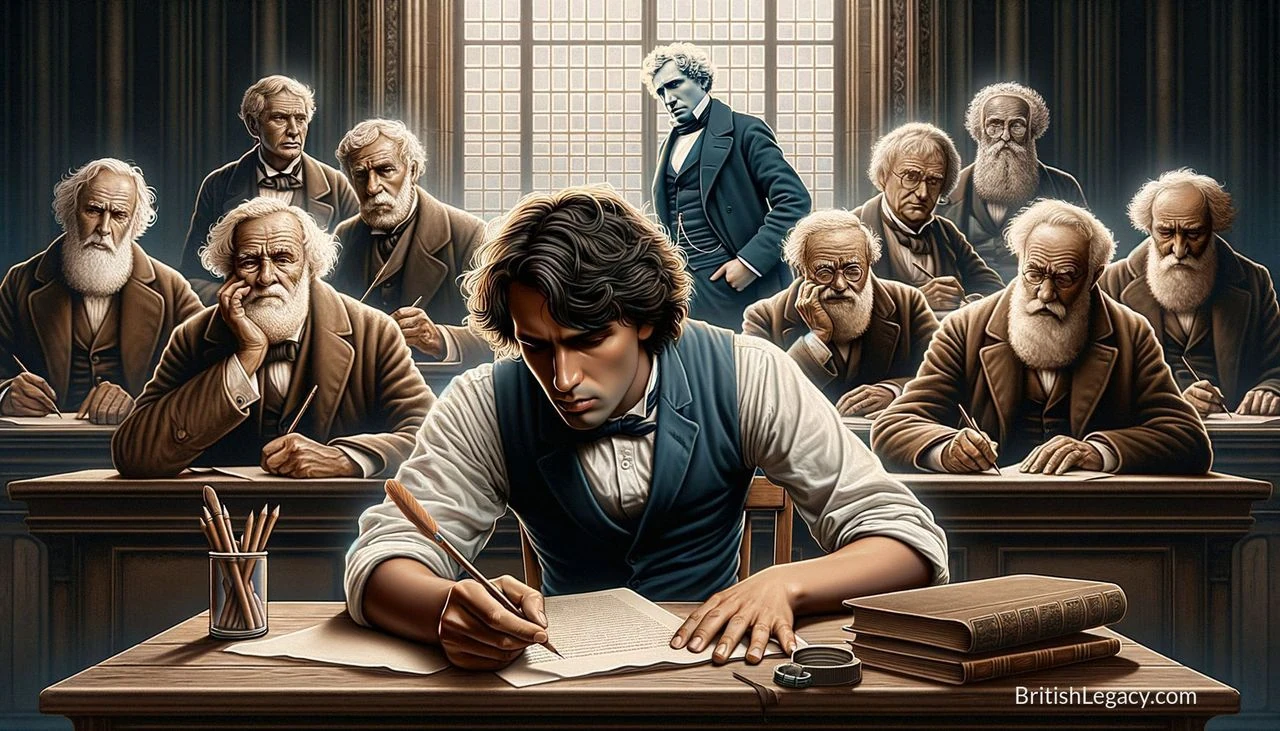
He emigrated to Britain in 1962. His first years in London included a succession of short-term jobs, among them work as a sheet-metal worker, library assistant, photo archivist and market researcher. In 1964 he won a place at Pembroke College, Cambridge, to read English literature. He wrote for undergraduate publications, became president of the Cambridge Footlights and appeared on University Challenge as captain of the Pembroke team. He graduated with a 2:1 and began a doctoral thesis on Percy Bysshe Shelley.
A critic with a comic edge
James’s television criticism for The Observer, which ran from 1972 to 1982, established his British reputation. His reviews combined detailed attention to what appeared on screen with dry, often cutting humour. Selections were collected in books including Visions Before Midnight, The Crystal Bucket and Glued to the Box, later brought together in Clive James on Television. He also wrote literary criticism and essays for publications in Britain, Australia and the United States.
His books crossed genres. Cultural Amnesia: Necessary Memories from History and the Arts, published in 2007, gathers short studies of more than 100 figures in modern culture, history and politics. James also wrote novels, travel writing and a sequence of autobiographical books. Unreliable Memoirs (1980), about his early life in Australia, was followed by accounts of his London years, his time at Cambridge and his later television career. In the 2013 translation of Dante’s Divine Comedy, he used English quatrains to render the poem’s terza rima.
Poetry remained part of his work throughout his career. His collections included Other Passports, The Book of My Enemy and Sentenced to Life: Poems 2011–2014, published in 2015. He also wrote lyrics with the musician Pete Atkin, beginning in the 1970s. Their songs were recorded across several albums; later reissues and performances introduced the work to new listeners.
Television made for a wider audience
James moved from writing about television to presenting it. In Clive James on Television, he introduced unusual or unintentionally funny programmes from around the world, offering an amused, observant guide to what viewers were seeing. After moving to the BBC in 1988, he presented Saturday Night Clive, which began on BBC2 and moved to BBC1 in 1991, and later returned as Sunday Night Clive.
His work for television extended beyond that format. James presented travel programmes, fronted the BBC’s end-of-year review programmes on the 1980s and 1990s, and made the documentary series Fame in the 20th Century. The eight-part series considered how fame developed across the century, using archive footage and discussion to trace its changing reach. In 1995, he set up Watchmaker Productions to make The Clive James Show for ITV. He also presented radio programmes: from 2007 to 2009, he hosted BBC Radio 4’s A Point of View, discussing topics including the media, public life and corporate rebranding.
Illness, honours and final years
James spoke publicly about serious illness in his later years. He was diagnosed with emphysema and kidney failure in early 2010, and in 2012 confirmed that he had B-cell chronic lymphocytic leukaemia. His poem “Japanese Maple”, published in The New Yorker in 2014, addressed mortality; he continued writing a weekly column for The Guardian until June 2017. James died at home in Cambridge on 24 November 2019, aged 80.
His honours reflected both Australian and British recognition. He was made a Member of the Order of Australia in 1992 and an Officer in 2013. In Britain, he was appointed CBE in the 2012 New Year Honours for services to literature and the media, elected a Fellow of the Royal Society of Literature, and awarded the British Academy’s President’s Medal in 2014. He received a special BAFTA award in 2015 recognising his 50-year career, as well as honorary doctorates from the universities of Sydney and East Anglia.
Why Clive James deserves a place in British Legacy
James’s place in British cultural life rests not on his birthplace but on the work he made here and the audiences he reached. His television criticism gave a national newspaper a distinctive, sustained way of writing about television as a serious subject without losing sight of its comic possibilities. On screen, he turned that critical eye into accessible entertainment: programmes such as Clive James on Television invited British viewers to look beyond their familiar schedules and encounter broadcasts from other countries through his commentary.
His contribution was not confined to one medium. As a poet, essayist, memoirist and broadcaster, James moved between forms while maintaining a recognisable interest in language, public culture and the people who shape it. Books such as Cultural Amnesia brought a wide range of cultural and historical figures into a single conversation; his memoirs recast his journeys from Sydney to London and Cambridge as literary material. His British career also shows how a writer from elsewhere can become part of the country’s shared cultural record through years of work, rather than through a claim of native identity. The value of that record is specific: it includes incisive criticism, programmes that made international television entertaining, and writing that carried intellectual curiosity to readers and viewers across Britain.
Sources
Adapted in part from Clive James by Wikipedia contributors, under CC BY-SA 4.0. Text has been edited and combined with the existing article; this adapted text is shared under the same licence. Contributor history.
.jpg)