Richard Bean’s plays move between the bustle of a comedy of mistaken identity and the arguments of a family caught up in a public controversy. His best-known work, One Man, Two Guvnors, recast an Italian comedy in 1960s Brighton and became an international stage success. The Heretic, which opened in the same year, set questions about climate change within an academic and domestic drama. The range reflects a career that began not in the theatre but in Hull, social psychology and occupational work.
Hull, psychology and the first plays
Bean was born in East Hull on 11 June 1956. He attended Hull Grammar School and studied social psychology at Loughborough University, graduating with a BSc honours degree, classified 2:1. After leaving school, he worked for a year and a half in a bread plant; later he became an occupational psychologist. Those jobs preceded a change of direction rather than a conventional route into playwriting.
Between 1989 and 1994, Bean also worked as a comedian. He was among the writer-performers in Control Group Six, a BBC Radio thriller sketch show made with Andrew Clifford, Clive Coleman and Colin Swash, with Geraldine Fitzgerald and Mandy Knight as performers. The programme was nominated for a Writers Guild Award. Bean’s first full-length play, Of Rats and Men, had already been staged at the Canal Cafe Theatre in 1988 before going on to the Edinburgh Festival. He adapted it for BBC Radio; the production, starring Anton Lesser, received a Sony Award nomination.
His work soon included writing for other forms. In 1995, he wrote the libretto for Stephen McNeff’s opera Paradise of Fools, which premiered at the Unicorn Theatre. He later wrote the films Harvest (2009) and The Duke (2020). Across theatre, radio, opera and film, his career has not been confined to a single comic format.
A growing body of stage work
Bean’s plays appeared at theatres across Britain, from London venues to Hull and Sheffield. Toast opened at the Royal Court Theatre in 1999, followed by Mr England at Sheffield’s Crucible Theatre in 2000. The Mentalists reached the National Theatre in 2002. In 2003, his plays included The God Botherers at the Bush Theatre, Smack Family Robinson at Newcastle’s Live Theatre and Under the Whaleback at the Royal Court. Honeymoon Suite followed there in 2004.
In 2005, Harvest opened at the Royal Court and received a Critics’ Circle Theatre Award for Best New Play; it was also nominated for Olivier and Evening Standard awards. Bean’s later work continued to take different forms: The Hypochondriac was a new version of Molière at the Almeida in 2005, while Up on Roof premiered at Hull Truck Theatre in 2006. In the Club opened at Hampstead Theatre in 2007, and The English Game at the Yvonne Arnaud Theatre in 2008.
In 2009, Pub Quiz Is Life premiered at Hull Truck, while England People Very Nice opened at the National Theatre. The following year brought House of Games, an adaptation of David Mamet’s film at the Almeida, and The Big Fellah at the Lyric Hammersmith. This sequence gives a sense of the breadth of Bean’s stage career before the two works that became especially prominent in 2011.
Two plays in 2011
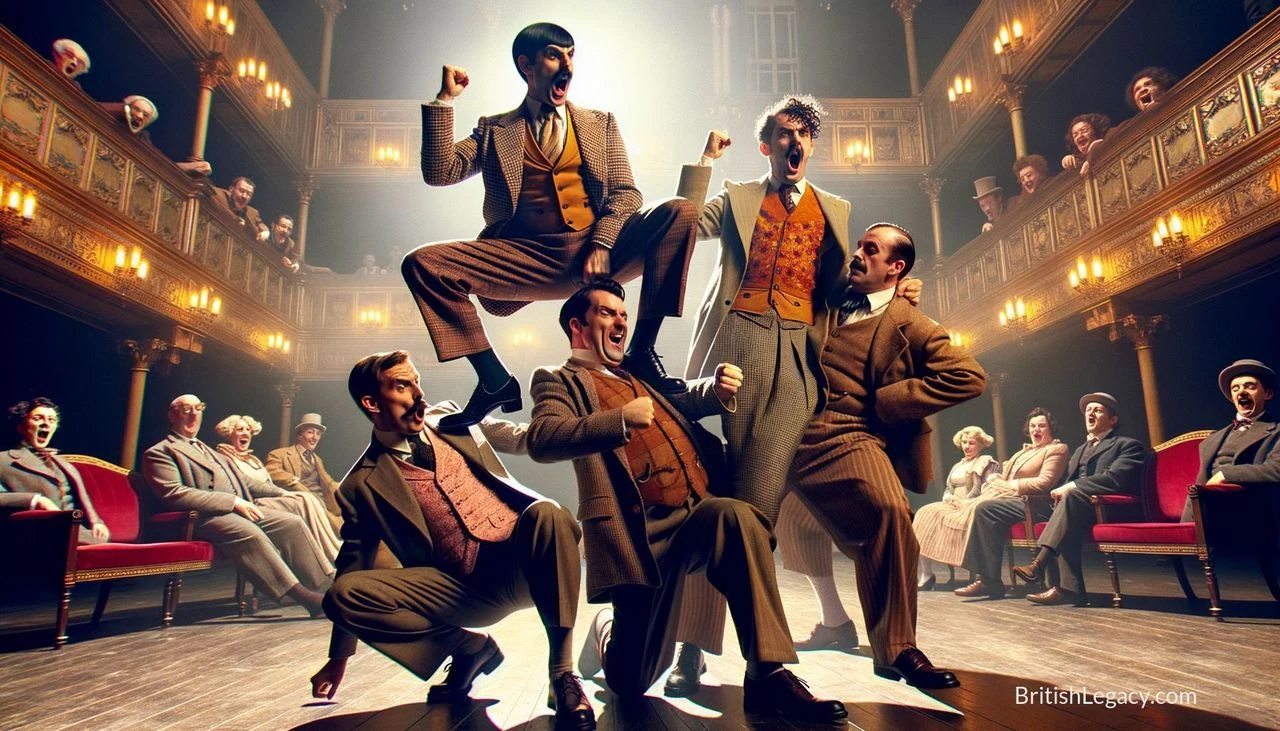
One Man, Two Guvnors adapts Carlo Goldoni’s The Servant of Two Masters. Bean relocated its comic predicament to 1960s Brighton: Francis Henshall, a hungry and hapless servant, takes employment with two masters, setting in motion misunderstandings and mistaken identities. The National Theatre production opened in 2011 under director Nicholas Hytner, with James Corden playing Francis. Its physical comedy, verbal wit and musical interludes helped carry the production beyond its original stage. It went on to Broadway and toured internationally.
In the same year, The Heretic opened at the Royal Court, directed by Jeremy Herrin. Its central character, Dr Diane Cassell, is a climatologist whose scepticism and unorthodox views bring her into conflict with others. The play places its debate about climate change within academic and domestic relationships, using comedy alongside the serious questions. The contrast with the farce of One Man, Two Guvnors is instructive: both plays use humour, but they direct it towards markedly different situations.
The 2011 plays brought awards recognition. The Heretic and One Man, Two Guvnors jointly won the Evening Standard Award for Best New Play, while One Man, Two Guvnors also received the Critics’ Circle Theatre Award for Best New Play. Earlier recognition had included the Pearson Award for Honeymoon Suite and the George Devine Award for Under the Whaleback, both in 2002.
Work beyond the breakthrough
Bean continued to write for major theatres after 2011. Great Britain and Pitcairn premiered in 2014, at the Royal National Theatre and Chichester Festival Theatre respectively; that year also saw Made in Dagenham at the Adelphi Theatre. The Nap opened at Sheffield’s Crucible in 2016, followed by Kiss Me at Hampstead Theatre. In 2017, The Hypocrite premiered at Hull Truck and the Royal Shakespeare Company, and Young Marx, co-written with Clive Coleman, opened at the Bridge Theatre.
Later collaborations included Jack Absolute Flies Again, written with Oliver Chris and premiered at the National Theatre in 2022. That year also brought 71 Coltman Street at Hull Truck. To Have and to Hold, co-directed by Richard Wilson and Terry Johnson, opened at Hampstead Theatre in 2023. The continuing presence of Hull venues in this chronology connects Bean’s later work with the city where he grew up.
Why Richard Bean deserves a place in British Legacy
Richard Bean’s place in British Legacy rests on a sustained body of work for British stages, not simply on the international visibility of one comedy. From Of Rats and Men at the Canal Cafe Theatre and its subsequent radio adaptation to plays at the Royal Court, National Theatre, Hull Truck, Sheffield’s Crucible and theatres across London, his career has reached audiences through different institutions and forms. His honours recognise that work: Harvest won the Critics’ Circle award for Best New Play, and both The Heretic and One Man, Two Guvnors shared the Evening Standard award in 2011.
The two 2011 plays also show what his contribution can offer audiences. One Man, Two Guvnors made a classic Italian comic premise newly playable in Brighton, then travelled to Broadway and international stages. The Heretic used comedy to bring a dispute about climate change into a theatrical setting, where scientific argument meets personal relationships. Bean’s wider catalogue—from adaptations and farce to historical subjects, contemporary settings and collaborations—demonstrates a playwright working across styles rather than repeating a single success. His connection to Hull is more than a birthplace: premieres at Hull Truck appear at different points in the record of his career. Together, these achievements mark a British playwright whose work has served local stages, national institutions and audiences abroad.
Sources
Richard Bean — Wikipedia, revision 1371545290
Adapted in part from Richard Bean by Wikipedia contributors, under CC BY-SA 4.0. Text has been edited and combined with the existing article; this adapted text is shared under the same licence. Contributor history.