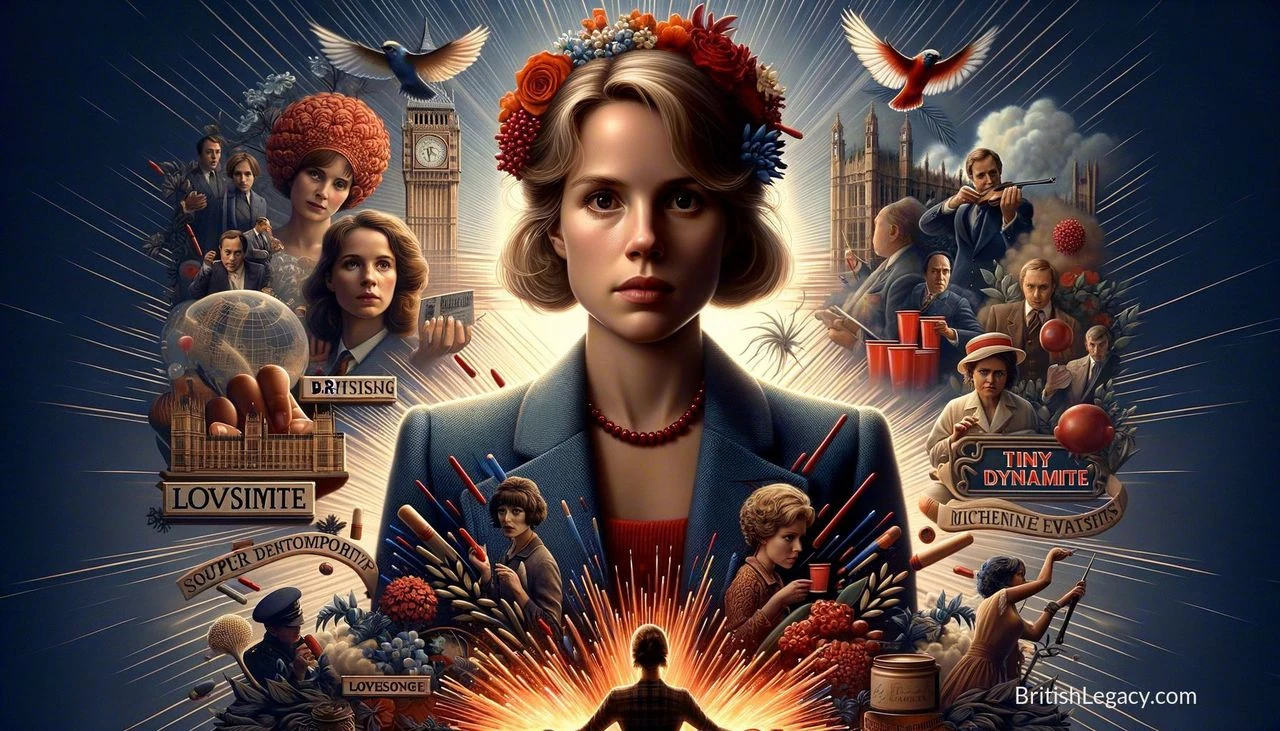
Abi Morgan’s work moves between the close pressures of private life and the larger forces shaping it. Her plays include Tiny Dynamite and Lovesong; her screen and television writing includes The Iron Lady, Sex Traffic, The Hour and The Split. Across those forms, she has returned to subjects ranging from long partnerships and family life to trafficking, political history and divorce.
Finding a way into writing
Born Abigail Louise Morgan in Cardiff in December 1968, she is the daughter of actress Pat England and theatre director Gareth Morgan. Her childhood involved frequent moves around the country with her mother, whose work was in repertory theatre. Morgan attended seven schools. She initially wanted to act, but decided to write while studying drama and literature at the University of Exeter. She later took a postgraduate writing course at the Central School of Speech and Drama.
Her first professional stage credit came with Skinned, produced at Southampton’s Nuffield Theatre in 1998. Before that, she had not shown her writing to anyone for five years. Her early theatre work included Sleeping Around, co-written with Mark Ravenhill, Stephen Greenhorn and Hilary Fannin, and the plays Fast Food and Splendour. Tender, commissioned by Birmingham Rep and co-produced with Hampstead Theatre, was nominated in 2002 for the Laurence Olivier Award for Most Promising Playwright.
Morgan went on to write for theatres including the Royal Exchange Studio Theatre in Manchester, the Royal Lyceum Theatre, the Traverse Theatre in Edinburgh, the National Theatre of Scotland and the Royal Court in London. That range of venues forms part of the context for a career not confined to a single stage or medium.
Plays about time, memory and relationships
Tiny Dynamite, first staged in 2001, centres on two childhood friends and a mysterious woman they encounter. The play brings love and memory into a story that the earlier account describes as also dealing with trauma and redemption. A decade later, Lovesong placed a couple’s younger and older selves alongside one another, tracing a partnership through changes in age and time. Both works use personal relationships as their dramatic focus, though their premises and structures differ.
Her plays also include Fugee, 27, The Mistress Contract and The End. In 2017, Morgan contributed The End to Brexit Shorts, a series of online dramas by leading playwrights responding to the causes and consequences of the referendum result. The monologue, performed by Penelope Wilton, follows a woman facing the end of a 43-year marriage. The domestic rupture gives the work a personal frame for a period of national political change.
From television drama to film
Morgan’s television writing began with a credit on ITV’s continuing drama Peak Practice in 1998. She followed it with the television play My Fragile Heart in 2000 and Murder, a BBC2 drama starring Julie Walters, in 2002. In 2004, Channel 4 commissioned Sex Traffic, a single drama about a teenage girl trafficked from the Balkans to Britain. Directed by David Yates, it won the 2005 BAFTA for Best Drama Serial.
Her later television work included Tsunami: The Aftermath, White Girl, Royal Wedding and an adaptation of Sebastian Faulks’s Birdsong. Royal Wedding follows the 1981 royal occasion through events in a Welsh mining village. In The Hour, her first continuing drama series, a BBC newsroom provides the setting during the 1956 Suez Crisis. The series ran for two series. Morgan won the Primetime Emmy Award for Outstanding Writing for a Miniseries, Movie, or Dramatic Special in 2013 for The Hour, having been nominated for the same award in 2012 after its first series.
Her subsequent television writing includes The Split, a drama about the personal and professional lives of divorce lawyers, first shown in 2018, and the 2024 miniseries Eric. The range of this work—from newsroom drama to legal and family relationships—shows how her writing has travelled between individual experience and institutional settings.
For cinema, Morgan adapted Monica Ali’s Brick Lane in 2007. She wrote The Iron Lady, starring Meryl Streep as Margaret Thatcher, and co-wrote Shame with Steve McQueen. The Iron Lady brought her a BAFTA nomination for Best Original Screenplay; Shame was nominated for Outstanding British Film. Her film work also includes The Invisible Woman, an adaptation of Claire Tomalin’s book about Charles Dickens and Nelly Ternan, and Suffragette. In 2025, Bridget Jones: Mad About the Boy joined her screenwriting credits.
Recognition and personal writing
Morgan was appointed an Officer of the Order of the British Empire in the 2018 Birthday Honours for services to theatre and screenwriting. The honour recognises work that has moved between British stages, television and film, rather than a career tied to one format. Her writing has also taken on historical and political settings, including the Suez Crisis, the 1981 royal wedding and the suffrage movement.
In 2022, she published This Is Not a Pity Memoir, which discusses her husband’s battle with encephalitis and Capgras delusion. Its subject brings personal experience into a body of work already attentive to family relationships and the pressures that alter them. The memoir sits alongside, rather than replacing, her continuing work for stage and screen.
Why Abi Morgan deserves a place in British Legacy
Abi Morgan deserves a place in British Legacy for the breadth and continuity of her contribution to British drama and screenwriting. Her career began with stage work and developed through theatre commissions, television plays, serial drama and feature films. Skinned, Tender and her later theatre writing belong to a substantial body of stage work; Sex Traffic and The Hour demonstrate her ability to write for television, while The Iron Lady, Shame and Suffragette place her work in cinema. Her OBE, awarded for services to theatre and screenwriting, recognises that work across forms.
Her subjects connect intimate relationships to wider circumstances without making them interchangeable. Lovesong follows a couple across different ages; The Split centres on divorce lawyers’ professional and private lives; The Hour sets a newsroom against the Suez Crisis; and Sex Traffic tells a story of trafficking from the Balkans to Britain. These works offer audiences different ways to consider how institutions, politics and history enter individual lives. Morgan’s significance lies not in a single defining production but in a sustained body of writing across British stages and screens, with stories that range from the personal to the political.
Sources
Abi Morgan — Wikipedia revision 1375899629
Adapted in part from Abi Morgan by Wikipedia contributors, under CC BY-SA 4.0. Text has been edited and combined with the existing article; this adapted text is shared under the same licence. Contributor history.