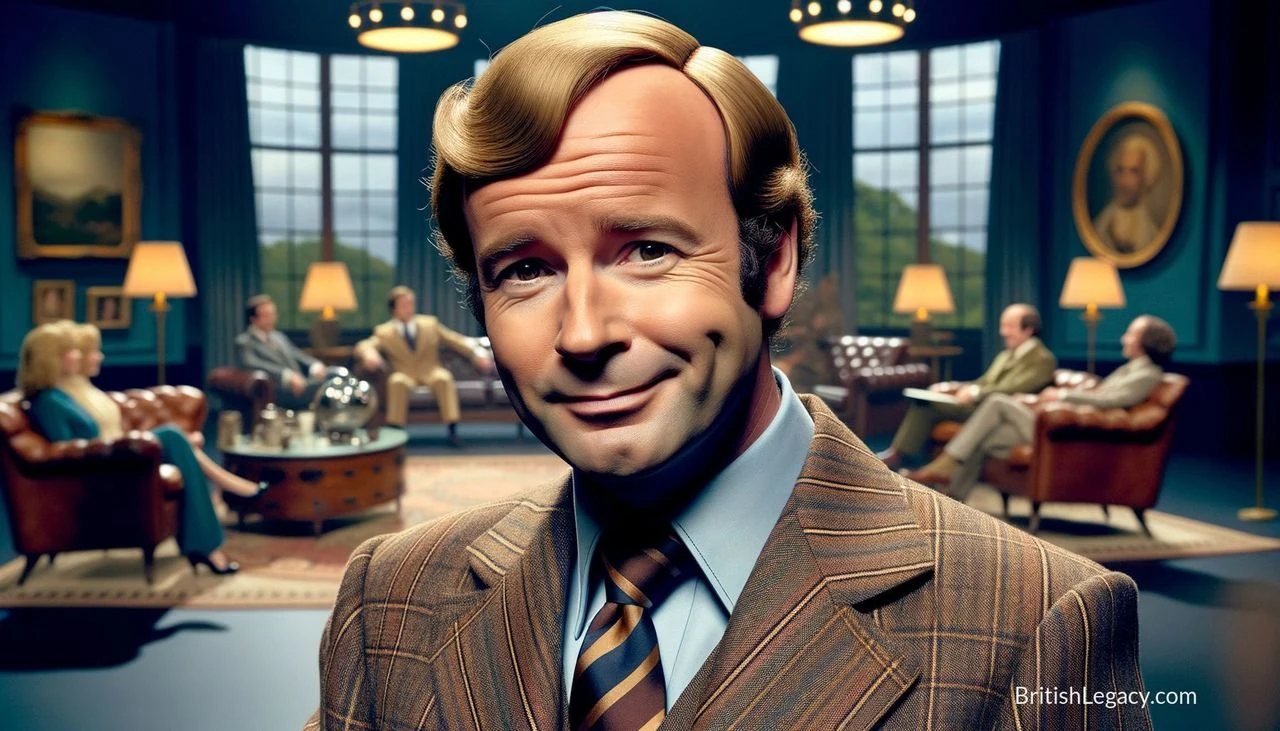
Alan Partridge began as a hapless sports reporter on BBC Radio 4’s On the Hour. Since his 1991 debut, the fictional broadcaster has hosted spoof chat shows, pitched television ideas from a roadside hotel, presented programmes in Norfolk and returned to the BBC as a magazine-show host. Played by Steve Coogan and created with Armando Iannucci, Partridge has lasted because his vanity and poor judgement are not the whole joke: the character’s repeated failures also give the comedy room for embarrassment, resilience and, at times, sympathy.
A sports reporter takes the microphone
Coogan and Iannucci created Partridge for On the Hour, a 1991 BBC Radio 4 parody of current-affairs broadcasting. The starting point was a generic sports reporter, voiced by Coogan; Iannucci later recalled that the writers quickly gave the character a backstory. Early material was also written by Patrick Marber, Richard Herring and Stewart Lee. What began as a supporting voice proved adaptable enough to become the centre of further programmes.
In 1992, Partridge hosted the six-part radio spoof Knowing Me, Knowing You with Alan Partridge. Its interviews let him irritate and offend guests, while establishing “Aha!” as his catchphrase. The character returned as a sports reporter when On the Hour became the BBC Two television programme The Day Today in 1994. That year, Knowing Me, Knowing You also moved to television. A Christmas special, Knowing Me, Knowing Yule, followed in 1995. Its on-screen attack on a BBC commissioning editor supplied a fictional explanation for Partridge’s subsequent fall from television grace.
The contrast between the confident host he imagines himself to be and the inept presenter other people see is central to the character. His blunders, self-promotion and social misjudgements satirise the performance of authority in broadcasting. The humour is not simply that he makes mistakes: Partridge is often unable to understand what those mistakes reveal about him.
Life after television success
BBC Two’s I’m Alan Partridge premiered in 1997. Written by Coogan, Iannucci and Peter Baynham, the sitcom follows Partridge after he has been dropped by the BBC and left by his wife. He presents an unfashionable local-radio slot near Norwich, lives in a roadside hotel and keeps proposing ideas for television programmes. His ambition remains undimmed, even as his circumstances make the gap between his self-image and his prospects difficult to ignore.
The first series received BAFTAs for Comedy Performance and Comedy Programme or Series in 1998. A second series arrived in 2002, moving Partridge from the hotel to a static home with his new girlfriend, Sonia, after a mental breakdown. The change of setting allowed the writers to continue following a character who is still trying to recover status and control. The series combines the discomfort of watching his social failures with glimpses of the distress beneath them.
After the sitcom, Coogan kept Partridge to smaller appearances for a time, saying he had begun to feel like an “albatross”. The character was not abandoned. In 2003, a mockumentary revisited his life and career; in 2004, Coogan performed as Partridge at a Royal Albert Hall event supporting the Teenage Cancer Trust. A 2008 tour also placed him among Coogan’s other characters. The pause gave Coogan room for other work before Partridge returned in a new format.
New formats, familiar ambition
Partridge came back in 2010 in Mid Morning Matters with Alan Partridge, first made as online shorts about a digital radio show. Coogan wrote the series with Neil and Rob Gibbons, who went on to co-write Partridge projects with him. The web format offered a low-key way to test the character again; after a positive response, the series also reached television on Sky Atlantic. A second series followed in 2016.
In 2011, Coogan, Iannucci and the Gibbons brothers published the spoof memoir I, Partridge: We Need to Talk About Alan. Written in Partridge’s voice, it turns his career and grievances into another outlet for self-importance. In 2012, he presented Welcome to the Places of My Life, a Sky Atlantic special built around a tour of his home county, Norfolk. Coogan received a BAFTA for Best Male Performance in a Comedy Programme for the special.
The 2013 film Alan Partridge: Alpha Papa took him beyond television. Partridge becomes a crisis negotiator during a siege at his radio station. The film received positive reviews and opened at number one at the UK and Ireland box office. In 2016, the mockumentary Scissored Isle turned his attention to the British class divide; the same year, the travelogue Nomad sent the character on a journey across the UK.
In 2019, Partridge returned to the BBC in This Time with Alan Partridge, a spoof current-affairs programme in the style of The One Show. A second series followed in 2021. The podcast From the Oasthouse, launched in 2020, gave him another platform for rambling reflections on relationships, family and contemporary disputes. Coogan has described the podcast form as allowing more room for nuance. A UK tour, Stratagem, followed in 2022, with Partridge delivering a motivational talk. Further projects included the 2023 book Big Beacon and the 2025 BBC One series How Are You? It’s Alan (Partridge). Coogan won the 2026 BAFTA for Best Actor in a Comedy for his performance in the series.
The character beneath the catchphrase
Partridge’s comic engine is his inflated view of his own importance. He is tactless, socially inept and driven by a need for attention, but he is not frozen in one original sketch. Coogan has described the early character as “one-note” and said he gradually became more complex and empathetic. The Gibbons brothers helped give later versions a more rounded quality; the writers have found comedy not only in his arrogance but in his attempts to adapt and in the human vulnerability those attempts expose.
That development affects how the satire works. Coogan has said that the writers use Partridge to satirise bigotry and privilege, not to celebrate them. Earlier versions were more openly bigoted; later writing found comedy in his awkward efforts to appear progressive. Partridge’s right-wing views and provincial outlook make him a target, while his determination and capacity to keep going give audiences reasons to recognise more than a caricature. Writer Peter Baynham described the balancing act as showing a man suffering while also inviting some identification with his pain.
Norwich has become part of the character’s identity: the location places him at a slight distance from London and its media power, while giving his ambitions a recognisably provincial setting. Partridge’s life across radio, television, books, film, podcasts and live performance has also let the writers make each new format part of the joke. A presenter who once depended on broadcast television now pursues the opportunities offered by digital audio, online media and public appearances.
Why Alan Partridge deserves a place in British Legacy
Alan Partridge deserves a place in British Legacy because the character has sustained a distinctive form of British broadcasting satire across more than three decades. His beginnings on On the Hour made him a parody of the confident, fluent voice of current-affairs radio. Subsequent chat shows, local radio, television specials, a sitcom and a feature film repeatedly placed that self-assured voice in situations where his ineptitude became impossible to conceal. The long chronology is itself significant: Coogan and his collaborators have not simply repeated a catchphrase, but returned to a character whose changing circumstances can expose new versions of the same vanity.
Partridge’s British connection is specific, not just a matter of accent or setting. His career plays on recognisable media formats, from the BBC current-affairs spoof to the morning magazine programme, and his life outside London gives the ambition a provincial dimension. The books, podcast and live show have extended the joke into forms that continue to shape public entertainment. His influence is also visible in the later British cringe-comedy tradition, while phrases and proposals from the character have entered wider cultural use. Just as importantly, the comedy has become more than a portrait of a fool: its combination of satire and pathos lets audiences laugh at self-importance while recognising insecurity and the desire to matter. That evolving balance makes Partridge a substantial creation in British comedy, rather than merely a collection of familiar lines.
Sources
Adapted in part from Alan Partridge by Wikipedia contributors, under CC BY-SA 4.0. Text has been edited and combined with the existing article; this adapted text is shared under the same licence. Contributor history.