Anthony McPartlin and Declan Donnelly’s partnership began on a children’s drama, but it did not stay within one genre. First known as PJ and Duncan on Byker Grove, they became pop performers, children’s presenters and, eventually, familiar hosts of British prime-time television. Their career has included hit formats, less successful experiments, acting roles and a run of audience-voted awards. Its distinctive feature is not simply longevity: it is the way the pair have repeatedly moved between kinds of entertainment while keeping their partnership at the centre.
Two young actors meet in Newcastle
Donnelly joined the BBC children’s drama Byker Grove in 1989 as Duncan. McPartlin joined the following year, playing PJ, and the two met while working on the programme’s second series. Their characters’ storylines brought them together on screen; a friendship developed off screen as well. Donnelly had also appeared in the film adaptation of The Cinder Path, while McPartlin had a brief earlier television role in Why Don’t You?.
Their association with the characters became the basis for a musical turn. Performing as PJ & Duncan, they released two albums and a run of singles. “Let’s Get Ready to Rhumble” became the best-known track from this period and was nominated for a BRIT Award. For a third album, they used their own names, Ant & Dec; its signature single was “Shout”. Their recording career reached a high of number three in the UK charts, and the pair also had success elsewhere in Europe. In 2002, they returned to “Let’s Get Ready to Rhumble” on television; its re-release reached number one in the UK, and they donated the proceeds to charity.
Learning the rhythms of children’s television
Music was only one route away from Byker Grove. In 1994, while still recording as PJ & Duncan, they began presenting the CITV Saturday-morning programme Gimme 5 as Tony & Lan. The following year they fronted their own CBBC series, The Ant & Dec Show. It won two BAFTA awards in 1996: one for children’s entertainment and one for sketch comedy. They moved to Channel 4 in 1997 for Ant & Dec Unzipped, which also won a BAFTA.
In 1998, ITV signed the duo. They presented SMTV Live and the music programme CD:UK with Cat Deeley, becoming a prominent part of Saturday-morning television for the next three years. Games such as “Eat My Goal” and “Wonkey Donkey”, alongside sketches and the presenters’ shared timing, gave the shows a format distinct from a straightforward music countdown. Other early presenting work included BBC game show Friends Like These and ITV’s Slap Bang with Ant & Dec. The move from children’s programmes to evening television was a progression, not an overnight transformation.
Prime time, live television and familiar formats
The pair’s first major prime-time presenting role came with BBC Saturday-night game show Friends Like These, first broadcast in 1999. They later presented the first two series of ITV’s Pop Idol. In 2002, they created and presented Ant & Dec’s Saturday Night Takeaway. Its early run developed through features including “Ant & Dec Undercover”, “Ant v Dec” and “Little Ant and Dec”. The programme was paused after 2009 and returned in 2013 with revived features and new segments. It became the most closely identified with their names, while also making them responsible for a complex live-entertainment format rather than simply the links between its parts.
In August 2002, they began presenting I’m a Celebrity…Get Me Out of Here!, the reality series in which public figures face challenges in the Australian jungle. The programme brought a different balance of performance: jokes and commentary had to sit alongside contestants’ reactions and the unfolding competition. In February 2004, nearly 15 million people watched the third series, then the duo’s highest viewing figures to that point.
ITV gave them another enduring role in 2007, when they became presenters of Britain’s Got Talent. They have also hosted formats that did not last as long, including PokerFace, Red or Black? and Ant & Dec’s Push the Button. Their work has ranged from the live charity football coverage of Soccer Aid to the annual charity programme Text Santa, and from Ant & Dec’s Gameshow Marathon to the game show Limitless Win, which began airing in 2022. They presented the BRIT Awards in 2001, 2015 and 2016.
More than presenting
McPartlin and Donnelly have acted on stage and screen as well as presented. Both had leading roles in the 2006 film Alien Autopsy, and they appeared as themselves in Love Actually. Their production work includes Mitre Television, and they have taken producer roles on programmes including Saturday Night Takeaway. Their output has also included books: their autobiography, Ooh! What a Lovely Pair: Our Story, appeared in 2009, and Once Upon a Tyne followed in 2020, marking 30 years of working together.
Their connection to Newcastle has remained visible in public life. Both support Newcastle United and attended the club’s 2025 EFL Cup final victory at Wembley; they later joined the team’s victory parade in the city. In 2014, they designed a striped Paddington Bear statue for a London display, with the auction raising money for the NSPCC. In 2016, they presented a documentary about the Prince’s Trust and the Queen’s 90th birthday celebrations. Their public profile has therefore encompassed entertainment, charitable work and a continuing association with their home city.
Recognition, setbacks and scrutiny
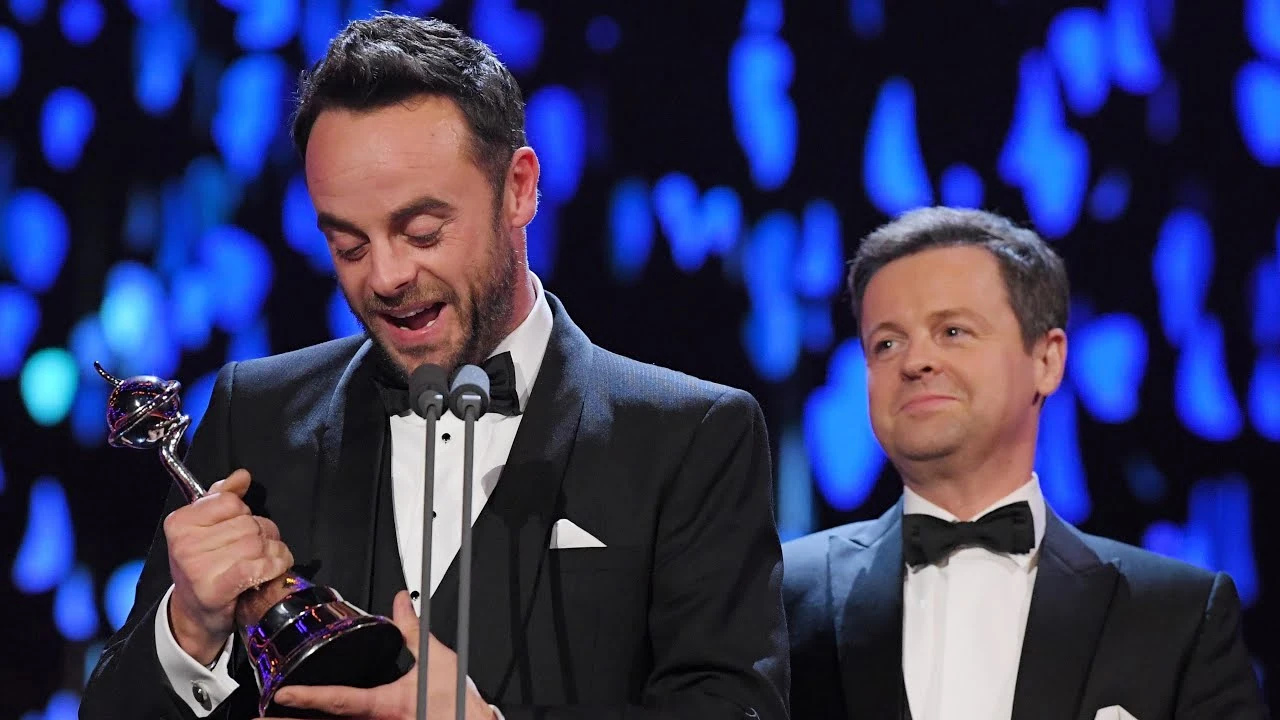
The pair’s awards include BAFTAs for their children’s programmes and later entertainment work, as well as numerous National Television Awards. In January 2020, they received a Guinness World Record for the most consecutive National Television Awards for Best Presenter, with the total then at 18. They continued to extend the run, reaching 23 before it ended in 2025. In 2016, Queen Elizabeth II announced that they would receive OBEs for services to broadcasting and entertainment. They collected the honours at Buckingham Palace in January 2017.
Their career has not been free of controversy. An investigation into the 2005 British Comedy Awards examined the decision to award a public-vote prize to Saturday Night Takeaway rather than the public’s first choice, The Catherine Tate Show. Later investigations by auditors Deloitte and media regulator Ofcom found that phone-in competitions on Saturday Night Takeaway and Gameshow Marathon had been handled unfairly. Among the problems identified were finalists chosen before lines had closed and selections based on suitability for television rather than an equal chance for entrants. These findings are part of the history of programmes on which the pair appeared and worked; they complicate any simple account of uninterrupted success.
McPartlin’s addiction has also been a well-publicised personal challenge. The source account describes it as a difficulty he faced, but offers no basis for further personal detail. The pair’s continued presenting work does not erase either the scrutiny of programme practices or the difficulty of individual circumstances; a fair account can acknowledge both without turning private hardship into a measure of professional merit.
Why Ant and Dec deserve a place in British Legacy
Ant and Dec deserve a place in British Legacy because their work documents several important shifts in British television entertainment. Their partnership began in a BBC children’s drama made in Newcastle, continued through children’s broadcasting and pop music, and became a fixture of ITV’s Saturday-night and reality programming. Across those changes, they have not been confined to one role: they have presented, acted, recorded music and developed or produced formats. That breadth makes their career more revealing than a list of successful shows. It shows how performers can carry an established relationship with an audience from one part of television into another.
Their story also links national television to a particular regional starting point. The characters PJ and Duncan introduced the pair to viewers, while Newcastle remains part of their public identity and their support for the city’s football club. Awards, long-running programmes and repeated prime-time appearances mark their reach, but the record also includes less successful formats and formal findings about unfair competition practices. Remembering both achievement and accountability gives British Legacy a fuller portrait of popular entertainment: programmes can become central to shared viewing while still requiring scrutiny. Their place in that history rests on sustained work across generations of television, not on a claim that every programme or decision was beyond criticism.
Sources
Ant & Dec — Wikipedia revision · Ant & Dec — Wikipedia
Adapted in part from Ant & Dec by Wikipedia contributors, under CC BY-SA 4.0. Text has been edited and combined with the existing article; this adapted text is shared under the same licence. Contributor history.