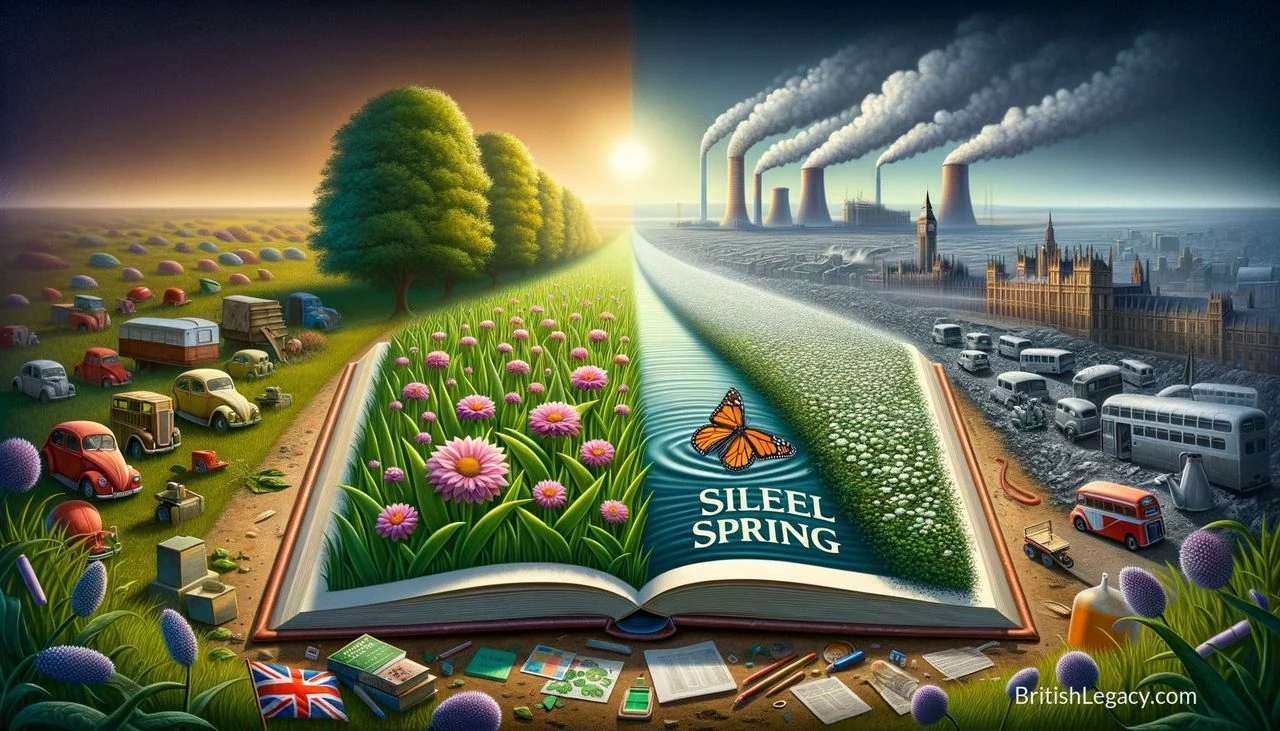
Rachel Carson’s Silent Spring carried a warning about pesticides from the United States into a wider argument about wildlife, public responsibility and the consequences of chemical use. Published in 1962, the book focused particularly on DDT and the harm Carson argued that pesticides could cause to wildlife, human health and the natural world. Its British significance lies in the debate it helped bring into view: how should a modern society balance the use of chemicals with the protection of the environment?
A warning that travelled
Carson wrote at a time when environmental responsibility, as the original account observes, was less established in public discussion than it is today. Silent Spring challenged the assumption that chemical spraying was simply an efficient answer to pests. Its force came from joining a warning about ecological damage to a detailed case against indiscriminate pesticide use. The book made the consequences of that practice a subject for public argument, rather than leaving them solely to technical or scientific discussion.
The book was published in 1962, and its subject was not confined to American readers. In Britain, it was discussed by scientists, policymakers and the public. The response described in the original account suggests that Carson’s work offered British readers a vocabulary for questioning the use of chemical sprays and considering their effects on the natural world. That influence should not be mistaken for proof that one book alone created environmental concern; rather, it became part of a broader conversation about what responsible use of pesticides should mean.
British campaigning and public debate
The original article connects the book’s reception with British environmental organisations, naming the Soil Association and the emerging Green Party movement. It says that such organisations gained new energy and intensified campaigns against pesticide use after the book’s publication. The precise scale of that effect is not established in the account, but its central point is clear: Carson’s argument travelled into British campaigning and helped make pesticide use a subject of wider public concern.
That debate reached beyond campaign groups. The article describes newspapers, magazines and television programmes as carrying discussion of Silent Spring to a broader audience. It also places the book in conversations among scientists, officials and the public. Taken together, these claims portray its British reception not as a single event, but as a process in which arguments about chemical use entered several parts of public life. The account further suggests that schools and universities took up environmental subjects, though it does not identify particular reforms, dates or institutions.
Influence, limits and lasting relevance
The article also attributes influence to Carson in policy discussions, saying that British officials reassessed pesticide regulation and that controls later became stricter. It offers no specific legislation or dates to demonstrate a direct chain from the book to those changes. The careful conclusion is that Silent Spring contributed to a climate of debate about pesticides and environmental protection, not that it single-handedly produced later laws.
It names Sir David Attenborough and leaders within Greenpeace UK among British figures said to have found inspiration in Carson’s work. Without further detail, that claim is best understood as an illustration of the book’s reported reach rather than a measure of its influence on every environmentalist. Carson died in 1964, two years after the book appeared. The British account of her legacy is therefore principally about the continuing life of an argument: that the effects of pesticide use deserve scrutiny, and that environmental protection is a matter for public discussion as well as scientific assessment.
Why Rachel Carson deserves a place in British Legacy
Rachel Carson’s place in British Legacy rests on the cross-border reach of Silent Spring. An American writer’s examination of pesticides became part of British discussion about chemical spraying, wildlife and environmental responsibility. The work mattered not because it can be shown here to have caused a particular law or movement, but because it helped bring difficult questions into public view. The original account describes debate among scientists, policymakers and the public, alongside campaigning by environmental organisations. That connection makes Carson relevant to Britain’s environmental history without making her British or overstating what one book achieved.
Her British legacy also illustrates how writing can travel into institutions and public life. The article links Carson’s argument with media coverage, environmental education and the commitments of British environmental advocates, while leaving the details of those connections unspecified. What can be said with care is that her book offered a prominent challenge to indiscriminate pesticide use and contributed to a conversation that crossed national boundaries. Remembering Carson in this context recognises both the reach of her work and the importance of keeping claims about its effects proportionate to the evidence.