Gillian Clarke’s career has brought Welsh poetry into classrooms, writers’ centres and public life, as well as into books read across languages and borders. A poet and playwright, she has also edited, broadcast, lectured and translated from Welsh into English. Her writing is associated with the natural world and Welsh identity; her work beyond the page has included teaching and helping to establish a writers’ centre in North Wales.
From Cardiff to a life in Wales
Clarke was born in Cardiff on 8 June 1937. After university, she spent a year working for the BBC in London, then returned to Cardiff. There she gave birth to her daughter, Catrin, and two sons; she later wrote a poem about Catrin under her daughter’s name. Clarke worked as an English teacher, first at Reardon-Smith Nautical College and later at Newport College of Art.
In the mid-1980s, she moved with her second husband to rural Ceredigion in west Wales. She went on to teach creative writing at the University of Glamorgan. Teaching was one strand of a career that also included poetry, drama, editing and translation. Clarke has published collections for adults and children, dramatic commissions and articles, moving between different forms and audiences over several decades.
Her first collection, Snow on the Mountain, appeared in 1971. Later books include The Sundial, Letter From a Far Country, Letting in the Rumour and Collected Poems. Her work for children includes the illustrated book The Animal Wall. Several of her books received a Poetry Book Society Recommendation.
Landscape, language and the work of poetry
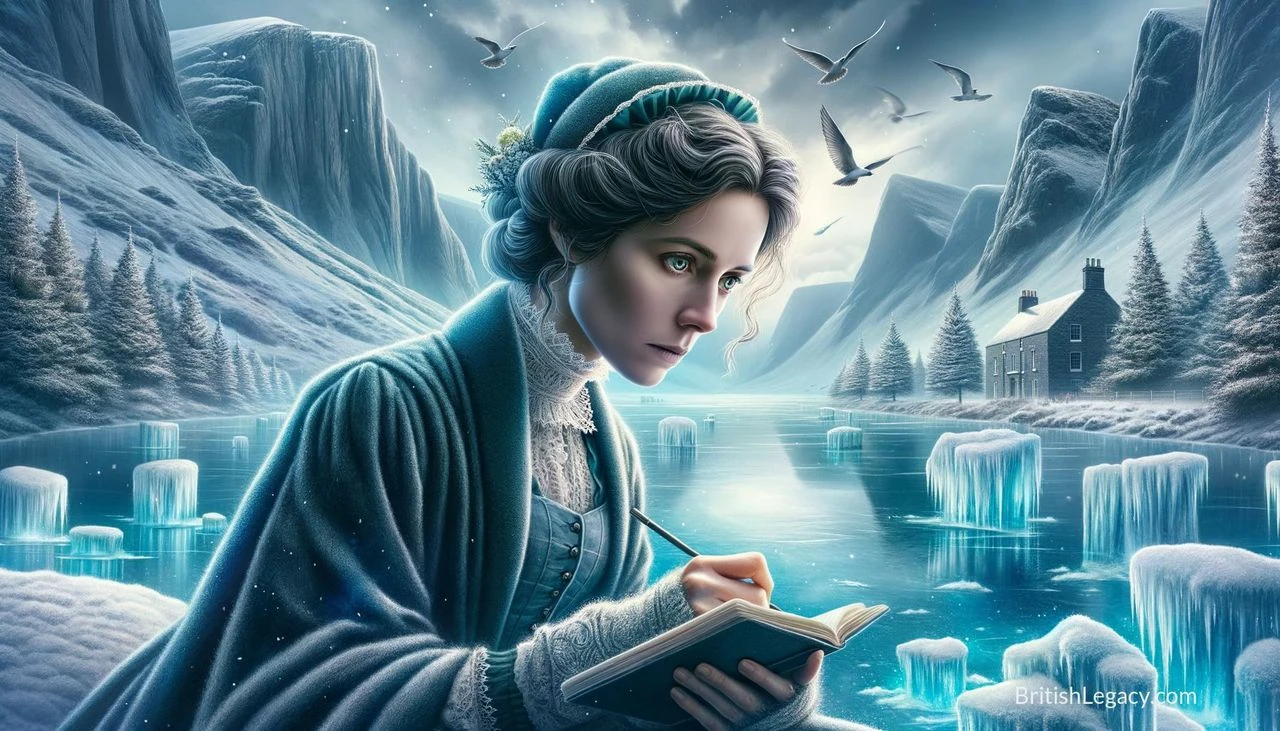
The natural world and Welsh identity are central themes in accounts of Clarke’s poetry. Her 2012 collection Ice was shortlisted for the T. S. Eliot Prize. Its title offers a point of entry to a body of work in which landscape matters, while the wider range of her writing includes Wales’s culture and history. Her poems do not stand apart from the places and communities that give them context.
Clarke’s work has reached readers beyond Wales through translation. It has been translated into ten languages, and she has given readings and lectures in Europe and the United States. She also translates from Welsh into English. The combination of writing, translating and public readings has connected her work with audiences in different languages and settings.
Her poems are studied by GCSE and A-level students throughout the United Kingdom, and a considerable number appear in the AQA GCSE anthology. Clarke has also read to teenagers preparing for their English GCSE examinations. For many pupils, school study provides an encounter with her work alongside other poets; for Clarke, it has formed part of a wider relationship between poetry and education.
Building spaces for writers and readers
Clarke’s contribution to Welsh literary life has included creating and sustaining places for other writers. In 1990, she co-founded Tŷ Newydd, a writers’ centre in North Wales, and she is its president. The centre gives practical form to an interest in writing beyond her own books: it is a dedicated setting for writers and their work.
She was editor of The Anglo-Welsh Review from 1975 to 1984, and has served as a judge, lecturer and public reader. In 2008 she joined the GCSE Poetry Live team, which included John Agard, Simon Armitage, Carol Ann Duffy, Imtiaz Dharker, Moniza Alvi, Grace Nichols, Daljit Nagra and Choman Hardi. In December 2013, she was the guest on BBC Radio 4’s Desert Island Discs.
These roles have carried poetry into educational and public settings without displacing the work itself. Clarke has written more than 100 poems over her career, published books for adults and children, and undertaken dramatic commissions and editorial work. Her activities as a teacher, translator and organiser sit alongside her writing: they are distinct ways of sustaining contact between poems, readers and writers.
Honours and an enduring readership
In 1999, Clarke received the Glyndŵr Award for an outstanding contribution to the arts in Wales, presented during the Machynlleth Festival. She was elected a Fellow of the Royal Society of Literature in 2000. In 2008, she became the third National Poet of Wales, succeeding Gwyn Thomas; she held the post until March 2016, when Ifor ap Glyn succeeded her.
Clarke received the Queen’s Gold Medal for Poetry in 2010, becoming the second Welsh person to receive the honour. In 2011, she joined the Gorsedd of Bards, and in 2012 she received the Wilfred Owen Association Poetry Award. The book Ice was shortlisted for the T. S. Eliot Prize that year. Her work continues to be read in schools, while her books and translations have brought it to readers in a range of contexts.
Why Gillian Clarke deserves a place in British Legacy
Clarke deserves a place in British Legacy because her achievements make a specific contribution to Welsh and wider UK literary life. Her collections, from Snow on the Mountain to Ice, establish a sustained body of poetry connected to Wales, its landscapes and its identity. That work has reached beyond its home context: it has been translated into ten languages, read at events in Europe and the United States, and studied by pupils across the United Kingdom. The classroom presence matters in practical terms, bringing poetry to young readers as part of their education rather than leaving it only to specialist audiences.
Her legacy also includes work that supports writers and the conditions in which poetry is shared. Co-founding Tŷ Newydd in 1990 helped create a writers’ centre in North Wales, while her teaching, editing, readings and lectures have connected literary work with readers and fellow writers. As National Poet of Wales from 2008 to 2016, she held a public role rooted in Welsh culture. Taken together, these are tangible contributions: poems and books, translation across languages, sustained educational engagement and an institution for writers. They show how a career grounded in Wales can enrich literary life across the United Kingdom without losing its distinct Welsh character.
Sources
Gillian Clarke — Wikipedia revision 1372010020
Adapted in part from Gillian Clarke by Wikipedia contributors, under CC BY-SA 4.0. Text has been edited and combined with the existing article; this adapted text is shared under the same licence. Contributor history.