Barbara Windsor made a career of being instantly recognisable without being confined to one medium. She began on the stage as a child, found a place in the irreverent comedy of the Carry On films and, decades later, became a defining presence on British television as Peggy Mitchell in EastEnders. Her work ranged from West End theatre to pantomime and radio; her public image, with its blonde beehive and bold glamour, was never the whole story of a performer whose professional life lasted from 1950 to 2017.
An East End childhood and an early start
Born Barbara Ann Deeks in Shoreditch on 6 August 1937, Windsor was the only child of John Deeks, a bus driver, and Rose Deeks, a dressmaker. Her birth was registered in Stepney. During the Second World War she and her mother moved to Stoke Newington, and Windsor was evacuated to Blackpool when she was six. After returning to London, she attended Madame Behenna’s Juvenile Jollities, a drama school, and appeared in charity concerts and pantomimes.
Windsor began her professional stage career in 1950, aged 13. Her first important West End success came in the musical Love from Judy, which opened in 1952 and ran for two years. She adopted the name Windsor in 1953, the year of Elizabeth II’s coronation. Her early working life included singing in musical shows and cabaret, as well as screen appearances: she made her film debut as a schoolgirl in The Belles of St Trinian’s in 1954, while studying shipping management at Bow Technical College.
A formative change came with Joan Littlewood’s Theatre Workshop at the Theatre Royal, Stratford East. Windsor appeared in its 1959 production of Fings Ain’t Wot They Used T’Be, a work that helped bring her to wider notice. Littlewood’s company gave her experience in a theatrical environment distinct from the film comedy for which she would become best known. Windsor’s screen work in Sparrows Can’t Sing (1963), directed by Littlewood, earned her a BAFTA nomination for Best British Film Actress.
Carry On, and a career beyond the films
Windsor’s first Carry On film was Carry On Spying in 1964. Between then and 1974 she appeared in nine films in the series, including Carry On Doctor, Carry On Camping, Carry On Henry and Carry On Abroad. The films made her a familiar face to audiences, and her comic persona became closely associated with the series. In Carry On Camping (1969), an aerobic-exercise scene involving her character’s bikini top became one of the franchise’s best-known moments.
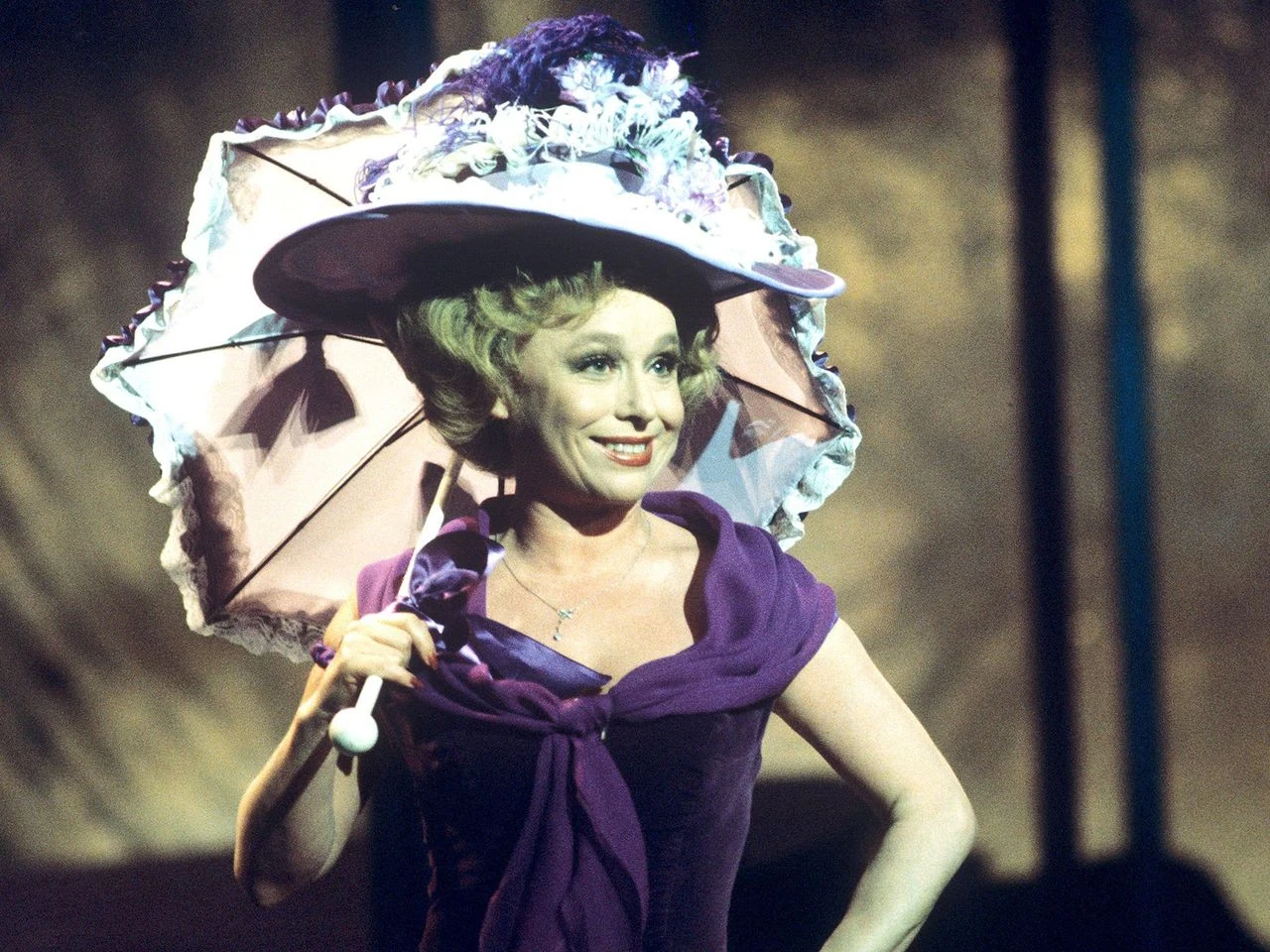
The association could also narrow the roles offered to her. Windsor continued working in theatre, film and television rather than relying on the Carry On name alone. In 1964 she appeared in the Broadway production of Oh, What a Lovely War!, earning a Tony Award nomination for Best Featured Actress in a Musical. She played Marie Lloyd in the musical-biographical show Sing a Rude Song in 1970 and appeared opposite Vanessa Redgrave in the West End production of The Threepenny Opera in 1972. Other screen roles included A Study in Terror, Chitty Chitty Bang Bang and Ken Russell’s The Boy Friend.
Stage work remained a constant. Windsor performed in touring productions and pantomimes across several decades, playing roles including Aladdin and Dick Whittington. In 1981 she took the part of Kath in Joe Orton’s Entertaining Mr Sloane at the Lyric Hammersmith; she returned to the role for a National Theatre tour in 1993. This breadth matters to her story: the Carry On films made Windsor famous, but the theatre remained a practical and creative foundation throughout her working life.
Peggy Mitchell takes centre stage
Windsor joined EastEnders in 1994 as Peggy Mitchell, the widowed mother of Phil and Grant Mitchell. The BBC soap opera gave her a new audience and a role that endured well beyond her first run in the series. Peggy became the owner of the Queen Victoria pub, and Windsor’s performance brought force and humour to a character whose family loyalties and conflicts played out in the programme’s fictional Albert Square.
She won the British Soap Award for Best Actress in 1999 and received the ceremony’s Lifetime Achievement Award in 2009. A bout of Epstein–Barr virus led to a two-year absence from the role between 2003 and 2005, although she made guest appearances. Windsor announced in 2009 that she would leave, and Peggy’s departure was broadcast in 2010. She returned for occasional episodes, including the programme’s 30th-anniversary period, and filmed her final appearance in 2016. Her character’s story continued to be felt after that: in 2022, an episode used archived audio of Windsor as Peggy.
Windsor also kept working outside the soap. She hosted the BBC documentary series Disaster Masters, provided the voice of the Dormouse in Alice in Wonderland (2010) and its 2016 sequel, and presented music and showbusiness-history programmes for BBC Radio 2. In 2017, Samantha Spiro played Windsor in the BBC television biopic Babs, which recalled her life and career.
Public life, honours and remembrance
Windsor was appointed an MBE in the 2000 New Year Honours and a Dame Commander of the Order of the British Empire in 2016 for services to charity and entertainment. Other recognition included the Freedom of the City of London in 2010, a British Soap Award for Outstanding Achievement that year and an honorary Doctor of Arts from the University of East London in 2014. Her long connection with performance was honoured in 2017 when she was inducted into the Hackney Empire Walk of Fame.
She was diagnosed with Alzheimer’s disease in 2014. Her husband, Scott Mitchell, made the diagnosis public in 2018, and Windsor and Mitchell later became ambassadors for the Alzheimer’s Society. In 2019, they appeared in a charity video urging people to unite against dementia. This public advocacy placed a difficult personal illness in a wider conversation about the condition, while Windsor’s career remained the reason so many people recognised her.
Windsor died in Stanmore, London, on 10 December 2020, aged 83. Her funeral took place at Golders Green Crematorium in January 2021. Tributes came from colleagues and public figures, while the next episode of EastEnders was dedicated to her memory. Her life had already been dramatised in Babs; her work itself remained available to audiences through the films, television and theatre roles that had taken her from a teenage stage performer to a familiar figure in British popular culture.
Why Barbara Windsor deserves a place in British Legacy
Barbara Windsor deserves a place in British Legacy because her career records several chapters of British entertainment through one performer’s changing work. She came to public attention in the Carry On films, whose broad comic style became a lasting part of British screen comedy, but she was not simply a film-series regular. Her Theatre Workshop years, BAFTA and Tony nominations, West End work and decades of pantomime show the range of training and performance behind that public image. Windsor moved between popular comedy and the stage, building a working life that lasted for more than six decades.
Her portrayal of Peggy Mitchell brought that experience to a different generation of viewers. Peggy’s years in EastEnders gave Windsor a central role in a British soap opera and earned her major audience and industry recognition, including the 1999 Best Actress award. Later, Windsor and her husband used her public profile to support dementia awareness after her Alzheimer’s diagnosis. Those achievements connect entertainment with a wider public contribution: she was celebrated for her performances, then helped draw attention to a condition affecting many people. Her legacy rests not on generic claims of national character, but on a specific body of work across theatre, film, television and radio, and on the recognition her career brought to British popular culture.
Sources
Barbara Windsor — Wikipedia revision
Adapted in part from Barbara Windsor by Wikipedia contributors, under CC BY-SA 4.0. Text has been edited and combined with the existing article; this adapted text is shared under the same licence. Contributor history.