
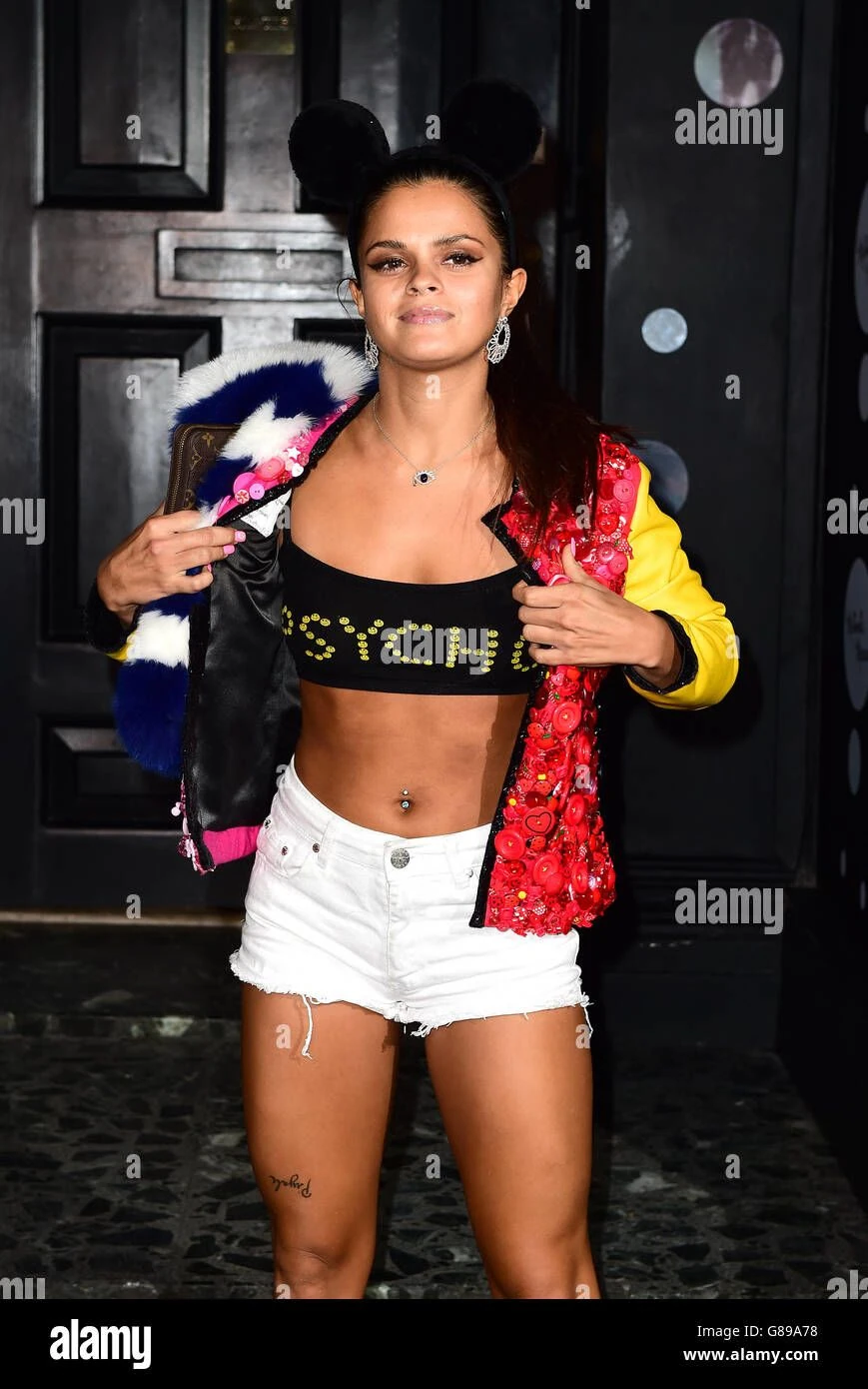
Bip Ling’s career has moved between the fashion image and the work of making one. She has modelled for publications and brands, presented for Vogue.com, produced illustrations for Topshop, published a fashion blog and released music under her own name. Born Bipasha Elizabeth Ling in Southwark, she studied Fine Art at Central Saint Martins before developing a public profile that crosses fashion, visual art and music.
From art studies to a fashion platform
Ling was born on 23 June 1989. Her mother, Tanya Ling, is a fashion illustrator; her father, William Ling, owns the Fashion Illustration Gallery. The family’s connection to illustration and fashion provides context for her later work, though her own route has included both making images and appearing in them. She studied Fine Art at Central Saint Martins, an education that sits alongside her work as a model, visual artist and fashion illustrator.
In 2009, Ling launched a fashion blog under the name bipashaelizabethling.blogspot.com, also associated with the name Bipling.com. At 21, she signed with modelling agency Storm Management. The blog and agency signing mark two early strands of her career: publishing material under her own identity and entering the professional modelling industry. Rather than following a single route into fashion, Ling’s work has continued across editorial, commercial and self-directed projects.
Modelling, presenting and drawing
Ling has modelled for British Vogue, Vogue, NYLON and LOVE, and worked as a presenter for Vogue.com. Her brand work has included Forever 21, Nike and Calvin Klein. These projects put her in front of the camera and before different fashion audiences, while presenting for Vogue.com added an on-screen role to her work in the industry.
She has also made fashion illustrations for Topshop. That work is a distinct part of the picture: modelling involves presenting a look, whereas illustration involves developing and recording one. Along with her Fine Art studies and identification as a visual artist, the illustration work shows a creative practice that is not confined to the performance of fashion. Her career encompasses both participation in fashion imagery and the production of images.
DJ sets, songs and self-released albums
Music entered Ling’s working life early: she began DJing at 17. She later moved from DJ sets to recording and releasing songs. Her first single, “Bipping”, appeared in 2014. “Bip Burger” followed in 2015, and 2017 brought “Pizza Slice” and “Curry”. Other 2017 releases included “STRIP”, “Buff Girlz”, “Sex Party”, “Bip Billionaire” and “Skinny Bippin”. The range of titles belongs to a music catalogue released under her own name, rather than to a separate, conventional pop persona.
In 2018, Ling released her first album, Church of Bop. Its listed songs included “Bip Burger”, “Pizza Slice” and “Curry”, alongside “Galloping”, “Ocean Queen”, “Starters (Intro)”, “Bopcorn” and “Donna Trope”. The album brought together material that had appeared as singles as well as other tracks. In 2019, she continued with releases including “Pout!”, “B.F.D.” and “Black Pudding”.
Her releases in 2020 extended across an EP and two albums. The self-released EP Baby Bop included “Let’s Learn To Wash Our Hands! (Hand Wash!!!)”, “CUDDLEZ”, “COLOURS” and “PLAY PAUSE STOP”. In May, Bip UP The NHS, Yar! arrived with a group of songs including “Hoover”, “Rubber Gloves”, “Mask”, “Goggles”, “Sponge”, “Needles” and “Syringe”. In September, Jokez appeared, listing tracks such as “Apple Juice Drink”, “Paraphernalia”, “Bright Edges”, “Opal”, “Shellfish” and “Cloud Museum”. These releases show the breadth of her self-released recording activity in that year, with songs issued in several groupings rather than as a single album.
Later releases continued the sequence. Ling’s EP Get Out My Bipping Vault appeared in 2025, with songs including “Clip Clop”, “Candy Floss” and “Peanut Butter Jelly”. From “Bipping” in 2014 to that EP, her recorded work spans more than a decade. Her musical career also includes vocals, with pop and electronic listed among its genres.
Blog, mascot and screen work
The fashion blog remains one of the recurring elements in Ling’s online identity. Alongside it, Mooch, a cartoon bear, is described as her mascot. These projects give her public work forms beyond magazine pages and recordings: a blog for publishing, a character for visual identity, and music for performance and release. Her online presence is part of a wider career that includes both fashion-industry work and material issued independently.
Ling has also appeared on screen as an actor. In 2016, she played Princess Barbara in Adam Green’s Aladdin. The film role adds another medium to a career already spanning modelling, presentation, illustration, blogging and music. It is one specific screen credit, rather than evidence of a separate acting career, and sits within the broader range of creative work associated with her name.
Why Bip Ling deserves a place in British Legacy
Bip Ling’s place in British Legacy is grounded in her documented contribution to contemporary fashion and creative work in Britain. Born in Southwark and educated in Fine Art at Central Saint Martins, she has modelled for British Vogue and other publications, presented for Vogue.com, and produced fashion illustrations for Topshop. Those are concrete links to British fashion and visual culture. They also show why her career should not be reduced to modelling: illustration and art studies are part of the same professional picture.
Her work across different media offers a further reason to record her story. Ling launched a fashion blog in 2009, began DJing as a teenager, and has released singles, EPs and albums under her own name, including Church of Bop, Baby Bop and Jokez. She has also taken a film role and developed a recognisable online presence around her blog and mascot, Mooch. Together, these activities demonstrate a sustained, cross-disciplinary practice rather than a single moment of visibility. They make her relevant to a British legacy of fashion and culture that includes not only established institutions and labels, but also individual creators who publish, perform, draw and record their own work.
Sources
Adapted in part from Bip Ling by Wikipedia contributors, under CC BY-SA 4.0. Text has been edited and combined with the existing article; this adapted text is shared under the same licence. Contributor history.
.jpg)