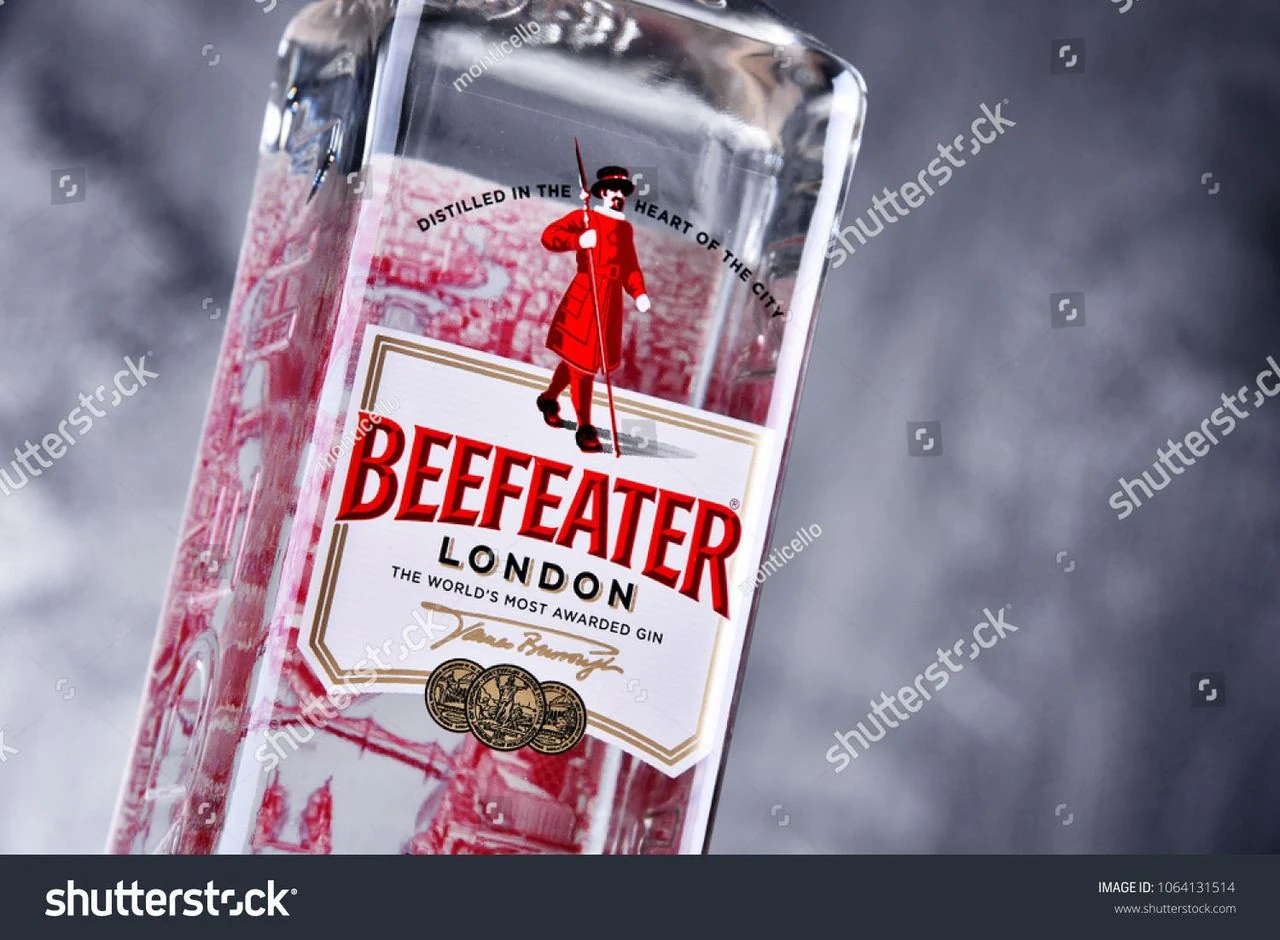
Beefeater is a London gin brand whose story begins in Victorian Chelsea. Founded by James Burrough in 1863, it became known for London dry gin made with a range of botanicals, among them juniper, coriander, citrus peel and orris root. Its name draws on the Yeomen Warders of the Tower of London, giving the brand a recognisable association with the capital’s history. That association is part of its identity, but the story is also one of a London distillery, a particular style of gin and a brand that later reached markets around the world.
A distillery in Victorian London
James Burrough acquired the Chelsea Distillery in 1863. The imported account presents this as the starting point for Beefeater and describes Burrough as seeking to make high-quality gin. It says the brand took its name from the Yeomen Warders, the ceremonial guards of the Tower of London, commonly known as Beefeaters. The name links the product to a familiar London institution, while its production history is rooted in the city’s nineteenth-century distilling trade.
Beefeater’s central product is London dry gin. The supplied account describes a botanical recipe that includes juniper berries, angelica root, liquorice, coriander seeds, almond, orris root, Seville oranges and lemon peel. It says the botanicals are steeped for 24 hours before distillation in copper pot stills. Together, those ingredients and the production method give the gin its characteristic combination of juniper, spice and citrus. The account identifies Desmond Payne MBE as the brand’s Master Distiller, overseeing the process.
Botanicals, production and a familiar style
The recipe offers a useful way to understand the gin beyond its branding. Juniper is its defining botanical, while the listed roots, seeds and citrus contribute different aromatic notes. The 24-hour steeping described in the supplied text is a preparatory stage before distillation; copper pot stills are identified as the equipment used. The article does not provide technical specifications for the stills or measurements for the individual ingredients, so the recipe is best understood here as a description of the main botanicals rather than a complete production formula.
Beefeater is also associated in the supplied account with familiar mixed drinks, including the gin and tonic, Martini and Negroni. Those examples illustrate how a London dry gin can be used as a base in different cocktails, rather than establishing that the brand created or defines those drinks. The account describes Beefeater as a regular choice for bartenders, but offers no independent figures or named establishments to quantify its use.
From London name to international markets
The supplied article says Beefeater exports to more than 100 countries. That reach gives a London-made brand an international presence, while the name and imagery continue to refer to the capital. The article describes marketing that features London landmarks and Beefeaters, carrying the association between the product and the city into its presentation. Its claim that the gin has received numerous awards is not accompanied by award names or dates, so no particular competition or accolade is identified here.
The brand has also introduced variations alongside its signature London dry gin. The imported text names Beefeater 24, described as incorporating Japanese and Chinese teas, and Beefeater Pink, described as strawberry-infused. These products show a move beyond the core expression while retaining the Beefeater name. The source provides no launch dates or detailed recipes for the variants, and its suggestion that Pink was aimed at a younger demographic is not developed with supporting particulars.
Tradition and change
Beefeater’s identity combines a historic London setting and a traditional style of gin with products intended to broaden the range. The botanical list and copper-pot-still production described in the supplied account provide the basis for its classic expression; the tea and strawberry variants show how the range has expanded. The account also makes a general claim that the company pursues sustainability, responsible production and ethical botanical sourcing. It gives no examples, measures or dates with which to assess that claim, so those commitments cannot be described in greater detail on the evidence available.
This distinction matters when telling the story of a long-running consumer brand. Its London name, its association with the Yeomen Warders and its place in the gin market are meaningful parts of the account, but broad assertions of quality, cultural influence or environmental leadership require more specific support. What can be described from the supplied material is a brand founded in Chelsea in 1863, built around a London dry gin and later extended through named variations and international exports.
Why Beefeater Gin deserves a place in British Legacy
Beefeater Gin merits a place in British Legacy as a brand with a clear, evidenced connection to London. Its supplied history begins with James Burrough’s acquisition of the Chelsea Distillery in 1863, and its name invokes the Yeomen Warders of the Tower of London. These are more specific links than a general claim to British heritage: one places the brand in a London distillery, the other draws on an identifiable institution associated with the capital. Its botanical recipe and London dry style add a second dimension, showing how a product’s identity can be built through both place and method.
The account also traces a brand that moved beyond its original expression. Beefeater 24 and Beefeater Pink extend the range, while the reported export presence in more than 100 countries indicates the scale of its reach. The material does not establish the brand’s precise economic or cultural impact, nor does it substantiate broad claims about awards or sustainability. A careful legacy, then, is not a list of superlatives: it is the story of a London gin producer whose name, production history and changing product range have carried a recognisable association with the city into international markets.