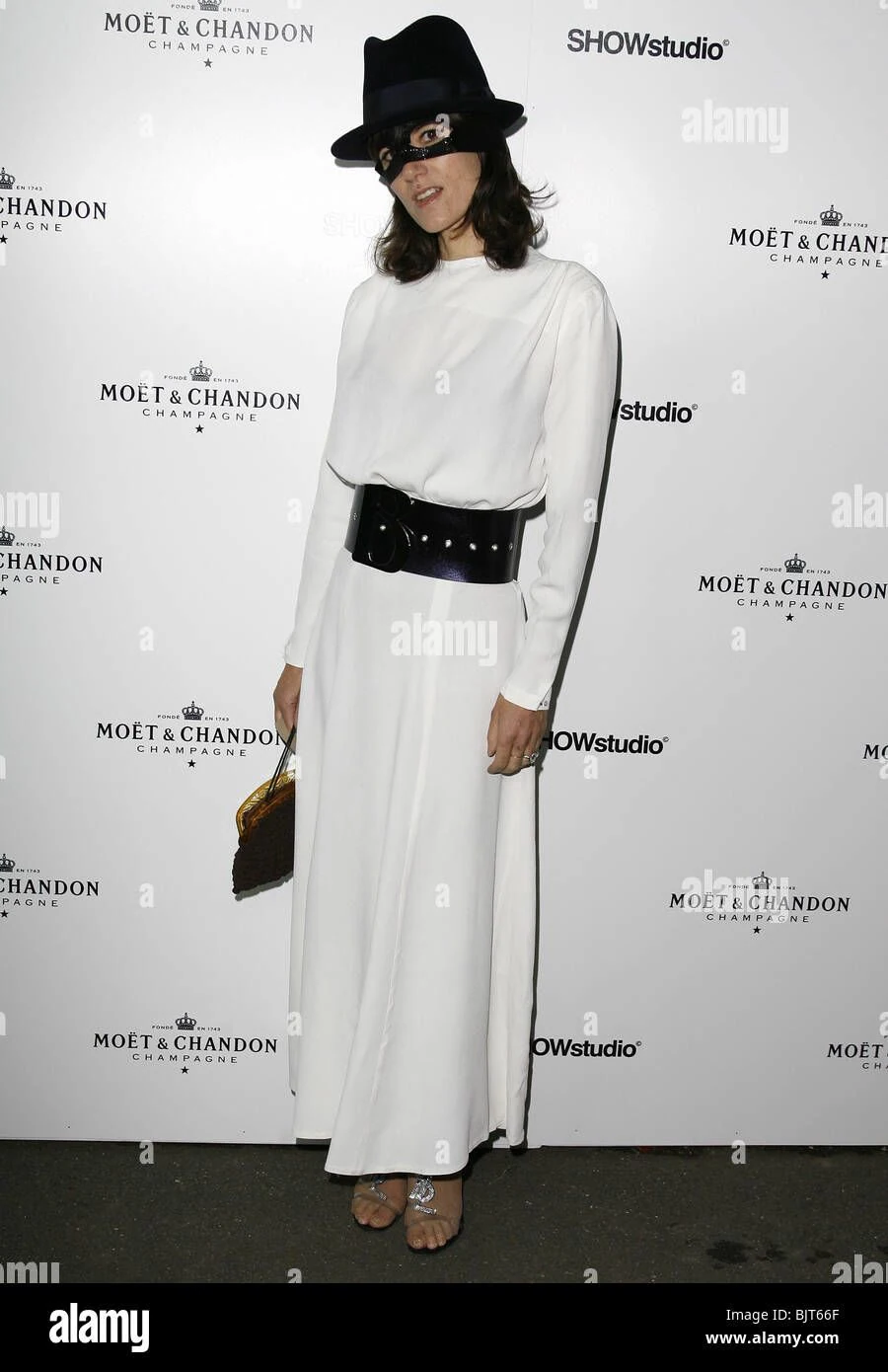
Bella Freud’s fashion has a voice you can read. Her slogan sweaters carry phrases such as “Ginsberg is God” and “Je t'aime Jane”, turning a familiar garment into a direct, playful statement. The words are not incidental decoration: they give clothing a character and make language part of the design. Freud’s work is also associated with tailoring and a relaxed elegance, bringing together masculine and feminine elements.
A London designer with a distinctive vocabulary
Freud was born in London on 17 April 1961 and is based in the city. She is the daughter of painter Lucian Freud and Bernardine Coverley, and the great-granddaughter of Sigmund Freud, founder of psychoanalysis. Those family connections are part of her biography, but her career is defined by her own work in fashion. She launched her eponymous label in 1990, establishing a name under which her clothes and design projects could be recognised.
The label’s identity rests in part on contrasts: tailoring alongside ease, and references to culture alongside the practical form of a garment. Descriptions of Freud’s collections emphasise their nonchalant elegance and the meeting of masculine and feminine sensibilities. These qualities do not require a garment to announce itself loudly. Cut and shape can provide a considered foundation, while a phrase on a sweater makes the wearer’s choice more explicit.
That combination gives her clothes more than one register. A tailored piece can speak through its silhouette; a slogan sweater can speak through its words. The two approaches share an interest in how clothing communicates, whether by suggestion or by a message that can be read at a glance. Together, they offer a useful way of understanding Freud’s design identity without reducing her work to a single garment or catchphrase.
Slogans that make clothing speak
“Ginsberg is God” and “Je t'aime Jane” illustrate the range of Freud’s use of language. One is an emphatic declaration; the other is an intimate expression of affection. Both are short enough to be read quickly, yet distinctive enough to give the garment a particular tone. The phrases invite interpretation without needing a long explanation, making the wearer part of the exchange between message and audience.
Freud is known for a playful, often humorous use of language, and the sweaters make that quality visible. Their effect depends on more than the words alone. A phrase printed on clothing moves through daily life with its wearer; it can be noticed, remembered and read differently in different settings. That makes the garment both an article of dress and a small act of communication.
The slogan is a recognisable part of Freud’s work, not a reason to treat all her fashion as the same. Her tailoring and collections provide a broader context for the playful wording. One can be direct and easily quoted; the other gives her work a foundation in the construction and character of clothes. In this sense, the phrases are a clear entry point into her design practice, while the label’s wider association with tailored clothing suggests a more varied body of work.
From garments to other creative formats
Freud has also worked beyond clothing. She developed a fragrance line in collaboration with perfumer Azzi Glasser and produced homeware. These projects carry her design activity into other kinds of objects, though their presence should not be mistaken for evidence that fashion has become secondary to her work. They show instead that her name has been used across more than one design format.
In October 2024, Freud launched the podcast Fashion Neurosis. It adds a spoken format to a career already associated with clothing and design projects. The title has an obvious resonance with her family name, but the essential point is that the podcast extends her public work into fashion conversation. It sits alongside, rather than replacing, the material practice of designing garments.
These different formats share a broad concern with how style is expressed and understood. Clothing communicates through cut, fit and words; homeware and fragrance operate as designed products; a podcast uses speech. The evidence establishes these as parts of Freud’s activity, without requiring claims that every project has the same audience or purpose. Taken together, they make her career more than a story about one signature sweater.
Why Bella Freud deserves a place in British Legacy
Bella Freud deserves a place in British Legacy for the particular way her fashion makes language wearable. Her slogan sweaters do not treat clothing as a blank surface. Phrases such as “Ginsberg is God” and “Je t'aime Jane” give a garment a legible voice, mixing wit and cultural reference with the everyday act of getting dressed. A short line can change how a piece is read: it can prompt recognition, amusement or curiosity. Freud’s designs make that communicative possibility tangible, while her association with tailoring keeps the story grounded in the construction and character of clothes.
Her London birth and base, and the label she launched in 1990, place this work within contemporary British design. The British connection is specific: it is the setting of a sustained fashion practice, not a claim that one designer speaks for a whole national tradition. Freud has also carried her work into fragrance, homeware and, with Fashion Neurosis, podcasting. Those projects show a designer working across clothes, objects and conversation. Together with her language-led garments, they offer a distinctive contribution to British cultural life: fashion that can be worn, read and discussed, and a design identity recognisable without relying on grand claims about influence.
Sources
Adapted in part from Bella Freud by Wikipedia contributors, under CC BY-SA 4.0. Text has been edited and combined with the existing article; this adapted text is shared under the same licence. Contributor history.