
Jodie Comer’s career has moved from a Liverpool drama school and early television roles to awards on both sides of the Atlantic. She first became widely recognised for playing Villanelle in Killing Eve, but her work also includes the drama Help, major film roles and the one-woman play Prima Facie. Across those projects, she has moved between screen and stage, comic and dramatic material, and characters with markedly different voices.
A Liverpool start
Comer was born in Liverpool on 11 March 1993 and grew up in the city’s Childwall suburb. She attended St Julie’s Catholic High School in neighbouring Woolton. At 11, she began going to CALS Theatre School, a weekend drama school in Belle Vale run by Carol Wilson.
In 2006, Comer entered the Liverpool Performing Arts Festival at St George’s Hall. She won her category with a monologue about the Hillsborough disaster. When a family holiday meant she could not take part in her school friends’ dance group at a talent show, they removed her from the group; she performed the monologue instead. The performance did not win the school competition, but it prompted her drama teacher to use professional contacts to help her audition for a BBC Radio 4 play. That became her first acting job, and co-stars encouraged her to find an agent.
Comer’s professional work began with a guest role in The Royal Today in 2008. She made her theatre debut in 2010 in The Price of Everything at the Stephen Joseph Theatre. Further television parts followed, including the drama series Justice, appearances in Silent Witness and Doctors, and the supernatural miniseries Remember Me. From 2013 to 2015, she played Chloe Gemell in the comedy-drama My Mad Fat Diary; she later appeared as Kate Parks in Doctor Foster.
From Thirteen to Killing Eve
In 2016, Comer took her first starring television role as Ivy Moxam in the BBC Three miniseries Thirteen. The performance brought her a nomination for the British Academy Television Award for Best Actress. The same year, she played Beryl Evans in the BBC One miniseries Rillington Place. In 2017, she portrayed Elizabeth of York in the Starz miniseries The White Princess, and made her feature-film debut as Christine in England Is Mine.
Her best-known television role began in 2018, when she was cast as Villanelle in the BBC America spy thriller Killing Eve. Villanelle is an assassin who develops a mutual obsession with Eve Polastri, the intelligence agent played by Sandra Oh. The series gave Comer a character who could change persona and accent as part of her disguises. The contrast between those performances and Comer’s native Scouse accent became a frequent point of notice.
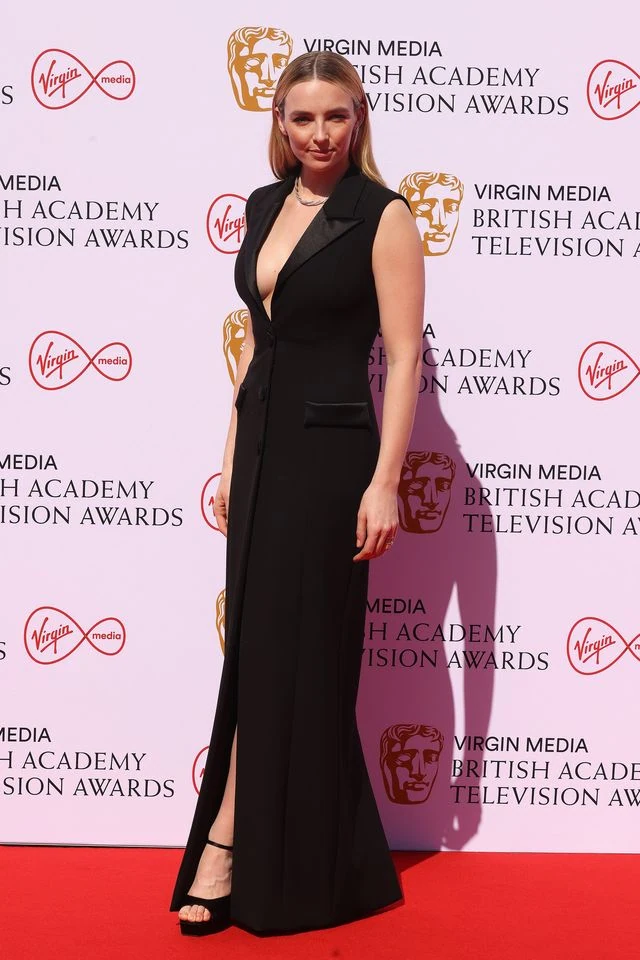
Comer won the Primetime Emmy Award for Outstanding Lead Actress in a Drama Series and the BAFTA Television Award for Best Actress in 2019 for her performance. She was nominated for both awards three times for the role. In 2018, she also appeared in the BBC Four series Snatches: Moments from Women’s Lives, playing Linda, a Liverpool secretary exploring her sexuality in the 1960s.
Her screen work continued across different formats. In 2020, she played Lesley in “Her Big Chance”, an episode of Alan Bennett’s Talking Heads filmed during the COVID-19 lockdown. In 2021, she appeared in the action comedy Free Guy, playing both games developer Millie and her in-game avatar, Molotov Girl. That year she also played Marguerite de Carrouges in Ridley Scott’s historical drama The Last Duel.
Help and the move to the stage
In the 2021 Channel 4 drama Help, Comer played Sarah, a care-home worker facing the early period of the COVID-19 pandemic in the United Kingdom. She also served as an executive producer. The performance earned her a second BAFTA Television Award for Best Actress, following the award for Killing Eve.
Comer returned to the stage in 2022 as Tessa Ensler in Suzie Miller’s one-woman play Prima Facie. The production opened at London’s Harold Pinter Theatre in April and ran until June. The following year it transferred to Broadway’s John Golden Theatre, marking her Broadway debut. Comer won the Laurence Olivier Award for Best Actress for the London production and the Tony Award for Best Actress in a Play for the Broadway run.
A filmed performance from the Harold Pinter Theatre was released to cinemas through National Theatre Live in July 2022. It became the highest-grossing event-cinema release to that point, taking £4.47 million. In 2024, Comer narrated an audiobook based on Miller’s stage play. She was also due to reprise the role on a UK and Ireland tour in 2026.
Film, voice work and public profile
Comer’s later film work includes The Bikeriders and The End We Start From, both released in 2023. In the latter, an environmental thriller adapted from Megan Hunter’s novel, she starred and served as a producer. In 2024, she supplied the voice and likeness of Emily Hartwood for the video game Alone in the Dark. She later starred in Danny Boyle’s 2025 film 28 Years Later.
Her career has attracted attention beyond individual roles. In 2019, she was named the face of Loewe’s spring/summer 2020 fashion campaign. The same year, Forbes included her in its European entertainment selection for its “30 Under 30” list. Her performances have also drawn attention to her ability to use different accents; Comer has spoken about the experience of class discrimination as an actor with a Liverpool accent.
Comer has described keeping her private life separate from her work as important. She has said that many of her friends are from school and that returning home after Broadway helped her focus on being a sister, friend and daughter. She is a lifelong supporter of Everton Football Club.
Why Jodie Comer deserves a place in British Legacy
Jodie Comer’s place in British Legacy rests on a body of work that connects a specifically Liverpool beginning with achievement on international stages. She started acting through a local weekend drama school, performed a Hillsborough monologue at a Liverpool festival and entered professional work through a BBC Radio 4 play. Her progress from those early opportunities to leading roles in British television dramas is a concrete account of how a career can develop across regional, national and international platforms.
Her performances have also carried British television and theatre into wider circulation. Killing Eve brought her a BAFTA and an Emmy; Help added another BAFTA for a drama set during the pandemic in the United Kingdom. With Prima Facie, she took a one-woman production from London’s West End to Broadway, winning the Olivier and Tony awards, while its National Theatre Live cinema release reached a substantial audience. These achievements show range across screen and stage rather than reliance on one celebrated character. Comer’s career also keeps her Liverpool identity visible in an industry where she has discussed the challenges attached to her accent. That combination of local roots, major British productions and international recognition gives her story a clear place in the country’s contemporary cultural history.
Sources
Jodie Comer — Wikipedia revision 1379530503
Adapted in part from Jodie Comer by Wikipedia contributors, under CC BY-SA 4.0. Text has been edited and combined with the existing article; this adapted text is shared under the same licence. Contributor history.

.jpeg)