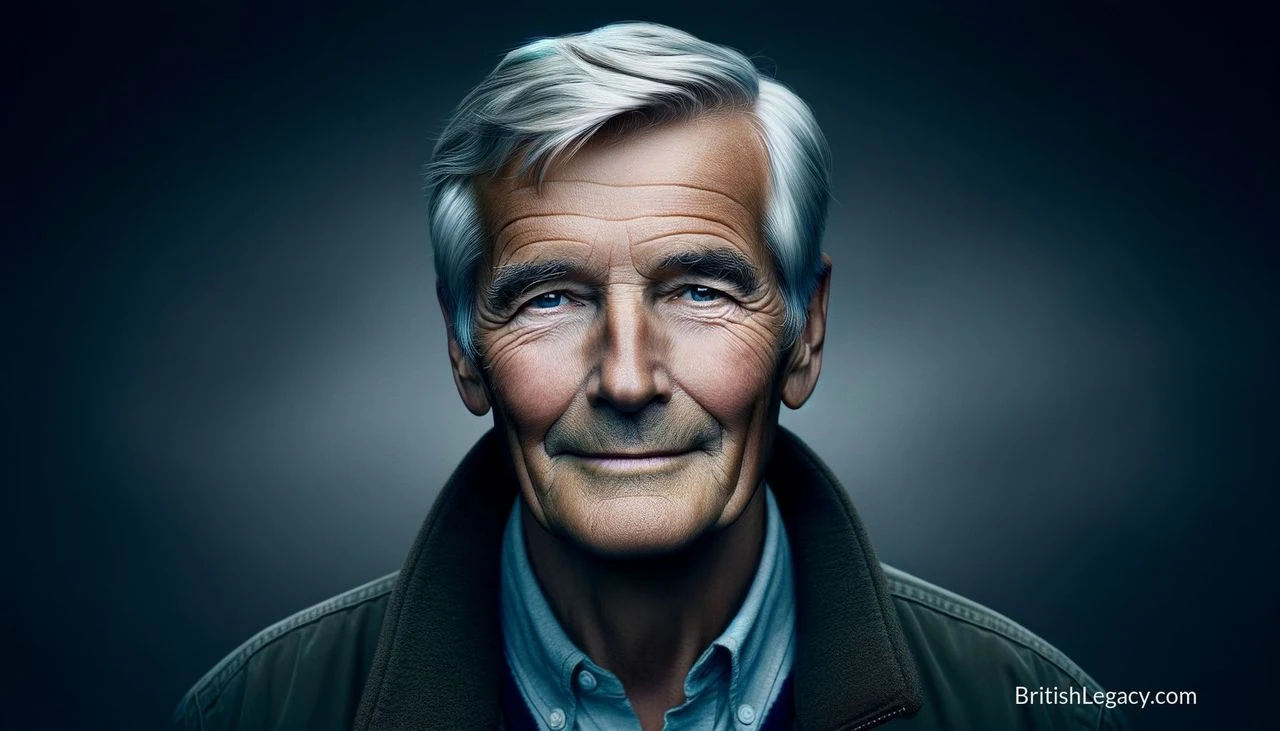
For Chris Packham, wildlife has been both a subject of study and a way of communicating with a wide public. He began presenting The Really Wild Show in 1986, bringing natural history to children on television. Since 2009, he has co-presented Springwatch and its sister programmes, Autumnwatch and Winterwatch. Alongside that broadcasting career, he has campaigned on wildlife protection, including the persecution of birds of prey in Britain. The combination has given him a public role in which observation, explanation and advocacy meet.
Southampton beginnings and a route into wildlife film
Packham was born in Southampton on 4 May 1961. He attended Bitterne Park Secondary School and Taunton’s College before enrolling at the University of Southampton in 1979 to study biological sciences. He graduated with a BSc in zoology. He later enrolled in a PhD programme but left before completing it, choosing instead to train as a wildlife cameraman.
That decision followed practical experience behind the camera. In 1983, Packham worked part-time as a camera assistant for wildlife filmmaker Stephen Bolwell on A Toad’s Tale. From 1983 to 1985, he worked on the BBC series The Living Planet and The Living Isles, as well as Channel 4’s Ourselves and Other Animals. These early credits place his later work as a presenter within a broader career in wildlife television: he had experience of making programmes as well as appearing in them.
Making natural history television
Packham’s presenting career began in 1986 with the BBC children’s programme The Really Wild Show, which ran until 1995 and won a BAFTA. He also presented Wild Shots, a nature photography series for Channel 4. Further work ranged across broadcasters and formats: he wrote and presented programmes including BBC One’s The X Creatures and BBC Two’s Hands on Nature and Nature’s Calendar, and appeared in live broadcasts, regional series and other wildlife programmes.
In June 2009, he began co-presenting BBC Two’s Springwatch, later also presenting its seasonal companions, Autumnwatch and Winterwatch. The continuing series gave him a recurring platform to discuss wildlife with viewers. Other projects have taken different approaches to the natural world: in 2013, Secrets of Our Living Planet examined ecological relationships between species; in 2014, Inside the Animal Mind explored animal cognition, while The Wonder of Animals considered a range of animal groups. He also presented Animal Einsteins in 2021 and the five-part BBC Two series Earth in 2023.
Television has also allowed Packham to address subjects beyond wildlife behaviour. In Chris Packham: Asperger’s and Me, broadcast in 2017, he examined his own experience as a person with Asperger’s. The documentary received the Broadcasting Press Guild Award for best single documentary in 2018. In 2023, he presented Inside Our Autistic Minds, a two-part BBC documentary about autism. His work as an author includes the memoir Fingers in the Sparkle Jar, published in 2016; it was voted the UK’s Favourite Nature Book in a poll run by the Arts and Humanities Research Council.
Campaigning for wildlife
Packham’s public work has extended beyond presenting. He has raised awareness of the illegal persecution of birds of prey in the UK and, in 2019, co-founded Wild Justice with Mark Avery and Ruth Tingay. The not-for-profit organisation aims to use the UK legal system to protect wildlife. These activities offer a concrete account of his campaigning: drawing attention to threats and using legal routes to challenge decisions affecting wildlife.
In 2018, Packham organised the writing of a manifesto for UK wildlife and delivered it to Downing Street as part of the People’s Walk for Wildlife. The march from Hyde Park to Downing Street drew around 10,000 people, according to the account of the event. The manifesto and march made wildlife loss a visible public issue, linking his broadcast profile with a collective act of advocacy.
His campaigning has not been without disagreement. Packham has criticised the badger cull and has spoken about the illegal killing of migrating birds in Malta. In 2014, he self-funded a film crew to document that killing. In 2017, he was arrested and charged with assault while filming on Gozo; the case was dismissed after video evidence was revealed. These episodes show the contested settings in which wildlife campaigning can take place, without diminishing the importance of distinguishing advocacy from the factual outcomes of individual cases.
Packham has also held roles with conservation organisations. He has served as president of bodies including the Hawk Conservancy Trust, the Bat Conservation Trust and the British Trust for Ornithology, and as vice-president of the RSPB and the Wildlife Trusts. He was president of the Hawk and Owl Trust from 2010 to 2015, leaving after citing personal differences over policy ideas. In 2023, he became president of the RSPCA; he and Caroline Lucas resigned in December 2024, accusing the organisation of legitimising cruelty. The sequence reflects the range of institutional work associated with his conservation career, as well as the disagreements that can arise within it.
Recognition and public influence
Packham’s honours include the Dilys Breese Medal, awarded by the British Trust for Ornithology in 2011 for promoting science to new audiences. The University of Southampton made him an honorary Doctor of Science in 2013, and in 2018 Royal Holloway, University of London, awarded him an honorary doctorate for services to wildlife conservation. He was appointed Commander of the Order of the British Empire in the 2019 New Year Honours for services to nature conservation.
These recognitions sit alongside a career built through sustained public communication: children’s television, long-running seasonal wildlife programmes, documentaries, books and campaign work. Packham has also appeared with his stepdaughter, zoologist Megan McCubbin, including on Springwatch and the series Chris and Meg’s Wild Summer. His output has connected natural history with subjects such as ecology, animal cognition and autism, giving viewers several ways into complex or unfamiliar topics.
Why Chris Packham deserves a place in British Legacy
Chris Packham’s place in British Legacy rests on a clear and distinctive contribution: he has made wildlife a continuing subject of mainstream British television while also taking part in efforts to protect it. The Really Wild Show introduced him to audiences through children’s broadcasting; Springwatch and its seasonal companions later gave him a recurring platform to bring natural history to viewers. His programmes have ranged from ecological relationships and animal behaviour to nature photography and the changing seasons. The value of that work lies not in an unsupported claim that television alone changes public attitudes, but in its sustained attention to the natural world and its ability to make that world visible to a broad audience.
His campaigning adds a practical dimension to that record. Packham has raised awareness of the persecution of birds of prey, helped organise a large public march for wildlife, and co-founded Wild Justice to pursue wildlife protection through the legal system. His work with conservation organisations and his honours for services to nature conservation show that this is not simply a television persona: it is a career spanning broadcasting, public advocacy and organisational roles. For a British legacy, the connection is specific. Packham’s work has made British wildlife and the choices affecting it a subject of public discussion, while his combination of communication and campaigning offers a documented example of how a broadcaster can carry natural history beyond the screen.
Sources
Chris Packham — Wikipedia, revision 1376886881
Adapted in part from Chris Packham by Wikipedia contributors, under CC BY-SA 4.0. Text has been edited and combined with the existing article; this adapted text is shared under the same licence. Contributor history.