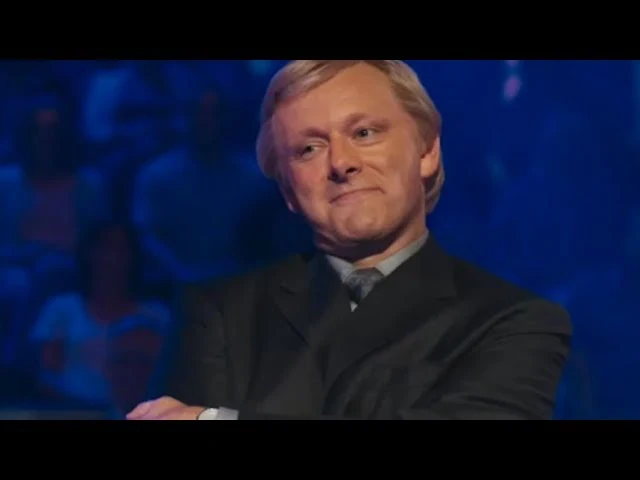
Chris Tarrant’s broadcasting career began in the Midlands, but its most familiar moments reached well beyond it: Saturday-morning chaos on Tiswas, a popular London breakfast-radio show and, from 1998, the measured question that made millions of quiz-show viewers wait: “Is that your final answer?” As presenter of Who Wants to Be a Millionaire?, Tarrant became the face of a British television format sold internationally. His career, however, was built across several kinds of broadcasting, beginning with regional current affairs rather than a studio quiz.
From Reading to regional television
Christopher John Tarrant was born in Reading, Berkshire, on 10 October 1946. He attended the King’s School in Worcester, where he played hockey and cricket, then studied English at the University of Birmingham, graduating in 1967. Before moving into broadcasting, he worked as a schoolteacher and briefly as a film director for the Central Office of Information.
In 1972, Tarrant joined ATV as a newsreader on ATV Today, a current-affairs programme for the Midlands. This regional role provided an early grounding in live television and brought him to a wider audience. Alongside that work, he became a co-presenter of Tiswas, the Saturday-morning children’s show broadcast from 1974 to 1981. Its irreverent sketches and unpredictable performance style made it a distinctive part of British television. Tarrant presented it with Sally James and appeared alongside, among others, Bob Carolgees, John Gorman and Lenny Henry.
The show also produced the Four Bucketeers, a group that included Tarrant. Their “Bucket of Water Song” reached number 26 in the UK singles chart in 1980. After Tiswas, Tarrant joined several of his colleagues for O.T.T., a late-night show billed as an adult counterpart. It was short-lived, and Sally James presented the concurrent final series of Tiswas alone. Tarrant also spent time at TV-am before the next long-running strand of his career took shape on radio.
A familiar voice on Capital Radio
Tarrant joined Capital Radio in 1984, first presenting a Sunday lunchtime programme and then moving to a weekday late-morning slot. In March 1987, he took over Capital Breakfast. The show became highly popular and increased the station’s audience share in London. Tarrant’s combination of music, conversation and humour made him a regular presence at the start of the day for listeners in the capital.
He remained at Capital for 20 years. On 2 April 2004, after presenting 4,425 shows, he said goodbye to the station. By then, his radio work had run alongside television presenting, rather than replacing it. That ability to move between formats helped establish a public profile before his best-known quiz show began.
The long pause before the final answer
Tarrant began presenting ITV’s Who Wants to Be a Millionaire? in 1998. The game’s staged climb towards a million-pound prize gave the host a particular job: to keep the choices, the contestant’s uncertainty and the audience’s anticipation in view. “Is that your final answer?” became closely associated with the programme. The format originated in Britain and was sold to more than 100 other countries.
From 1998 to 2014, Tarrant presented 30 series and recorded 592 episodes. Five contestants won the top prize of £1 million. The programme’s international versions carried the central structure of the game beyond the UK, while Tarrant’s original presentation helped make the British series recognisable to its own audience. His career on the show also included the story of contestant Charles Ingram, who was initially declared a million-pound winner but was later denied the prize after cheating was determined. Tarrant testified at Ingram’s trial; he said he had not noticed anything amiss during filming.
Tarrant announced in 2013 that he would leave the programme after 15 years. His final work for the original run included the clip show Chris’ Final Answer, broadcast in February 2014. ITV later revived the format with Jeremy Clarkson as host. Tarrant said he chose not to watch the new series and would have declined an offer to return.
Beyond the quiz studio
Television work outside Millionaire included Tarrant on TV, a programme built around clips from unusual television shows around the world, which he presented from 1990 to 2006. He hosted a range of other programmes, from the quiz Lose a Million to The Colour of Money, and presented Tarrant Lets the Kids Loose, in which young children tried out adult roles such as running a radio station or an ice-cream van.
Later work included travel documentaries. In 2012, he began presenting Chris Tarrant: Extreme Railways, travelling on lines including Australia’s Ghan and India’s Konkan Railway; a second series followed in 2015. He also presented Chris Tarrant Goes Fishing and appeared as a team captain on Show Me the Telly. In December 2024, after 52 years in television, he announced his retirement, saying the pandemic had prompted him to reconsider how he wanted to spend his time.
His public recognition included an OBE in 2004 for his charity work, particularly campaigning on behalf of disadvantaged children. He was also ranked 38th in ITV’s 2006 poll of TV’s 50 Greatest Stars. In 2010, Birmingham gave him a place on its Walk of Stars and made him an honorary citizen. Tarrant said that he owed his career to his start in Birmingham with ATV and Tiswas.
Why Chris Tarrant deserves a place in British Legacy
Chris Tarrant’s place in British broadcasting rests on more than one successful programme. He moved from regional current affairs at ATV into the unruly Saturday-morning world of Tiswas, then became a familiar voice on Capital Breakfast. Each role connected him with a different audience: Midlands viewers, children and families across the country, and London radio listeners. His career illustrates how a broadcaster could build a national profile through work across both television and radio, rather than through a single format.
Who Wants to Be a Millionaire? gave that career an international dimension. Tarrant presented the British programme for 16 years, through 30 series, as the format was sold to more than 100 countries. Its lasting television signature was not only the prize but the deliberate pause before a contestant committed to an answer. His contribution was as presenter and host of that distinctive encounter, not as the sole creator of the format. His connection to Birmingham is especially direct: he credited his start with ATV and Tiswas for what followed, and the city later honoured him as an honorary citizen. Taken together, these achievements make his story a specific chapter in British broadcasting: regional television, popular entertainment, commercial radio and a home-grown quiz format that travelled widely.
Sources
Chris Tarrant — Wikipedia revision 1374238374
Adapted in part from Chris Tarrant by Wikipedia contributors, under CC BY-SA 4.0. Text has been edited and combined with the existing article; this adapted text is shared under the same licence. Contributor history.