Cressida Bonas’s career crosses disciplines often treated separately. She began ballet training as a child, studied dance at university and postgraduate level, and went on to perform on stage and screen. Alongside acting, she has worked as a model, including in campaigns for British fashion houses Burberry and Mulberry. The chronology brings the strands together: a performer whose early grounding was in movement and whose professional work has ranged from theatre to television and fashion.
From ballet to dance study
Bonas was born in Winchester, Hampshire, on 18 February 1989. Her mother is Lady Mary-Gaye Curzon and her father is entrepreneur Jeffrey Bonas. Her maternal grandfather was the 6th Earl Howe. Her family background also includes the Bonas Brothers business, which owned textile mills in Castle Gresley and Burton-on-Trent. The company constructed looms for its own use and later manufactured them for other companies; its final line was elastic for women’s tights, and it closed in the 1980s.
Bonas began studying ballet at the Royal Ballet School at the age of nine. She later attended Prior Park College in Bath on a sports scholarship and completed her formal education at Stowe School. At the University of Leeds she studied dance, graduating with a 2:1, before undertaking postgraduate dance studies at Trinity Laban Conservatoire in Greenwich. That training provides useful context for her later work: performance and movement were part of her education before her professional acting career began.
At school, Bonas acted in productions including Alan Bennett’s Habeas Corpus, August Strindberg’s Miss Julie and Tennessee Williams’s The Glass Menagerie. These early parts preceded her screen work and professional theatre appearances. They also show that acting had a place alongside her dance training, rather than appearing suddenly with her later public profile.
First screen work and the theatre
Bonas made her first screen appearance in 2009, with a small role in the television series Trinity. Her theatrical debut came later, in There’s a Monster in the Lake, staged at the Hay Festival in 2014 and at the Vault Festival in January 2015. The distinction matters: her first screen credit and her first theatre production were different milestones.
In May and June 2015, Bonas played Laura in Laura-Jane Foley’s one-woman play An Evening with Lucian Freud at the Leicester Square Theatre. Ella Marchment directed the production. Bonas also played Cecily Cardew in The Importance of Being Earnest at the London Oratory School. The parts placed her in contrasting material: a contemporary play centred on artist Lucian Freud and Oscar Wilde’s comedy.
In 2016 and 2017, she returned to the Leicester Square Theatre as Daisy Buchanan in Gatsby, a musical play based on F. Scott Fitzgerald’s The Great Gatsby. This later role explains why some descriptions associate her with the production, but it was not her theatrical debut. In 2017, she also appeared as Sonia Orwell in Mrs. Orwell at the Old Red Lion Theatre.
Her screen credits developed alongside the stage work. In 2016, she played Patience Oriel in the television series Doctor Thorne. The following year, she appeared as Mrs Steen in the film Tulip Fever and as Sasha in The Bye Bye Man. In 2020, she played Sheila Caffell in the television series White House Farm. Taken together, the credits show a career moving between stage productions, film and television, rather than resting on one kind of performance.
Modelling and fashion campaigns
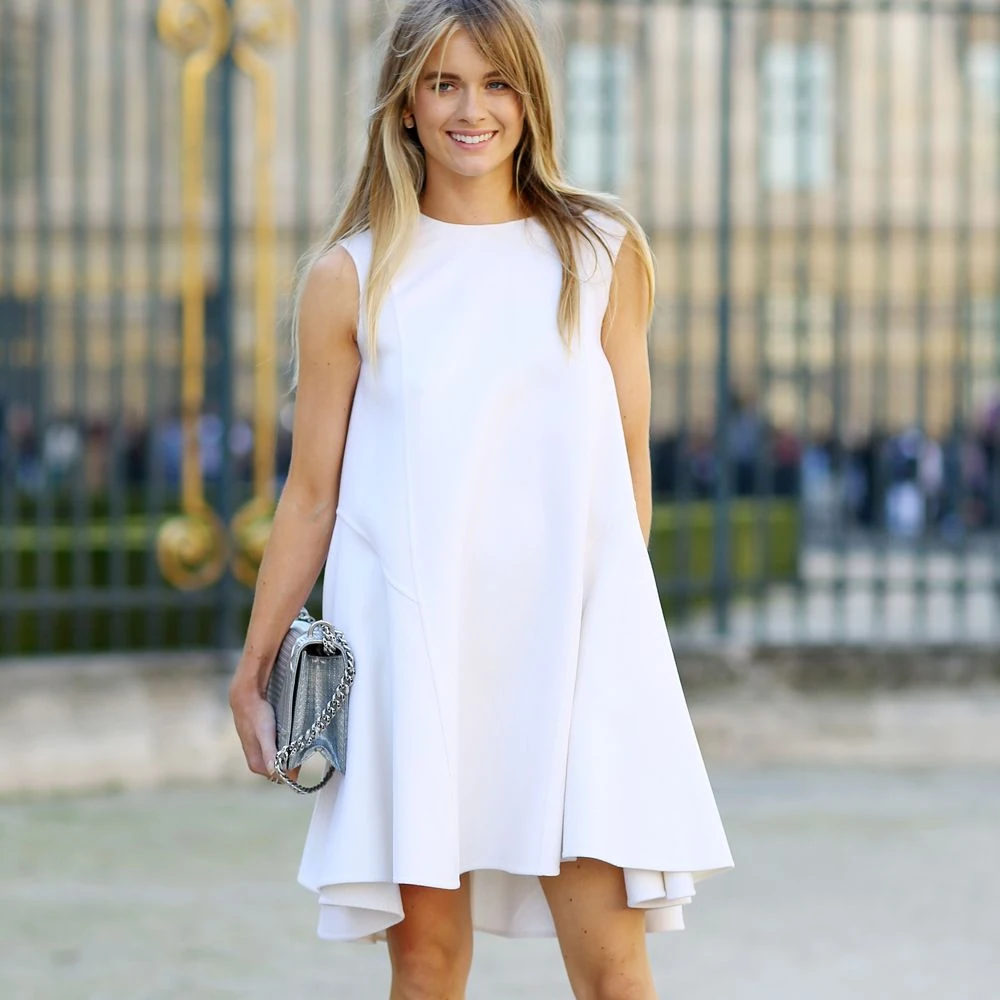
Bonas’s modelling work has brought her into the public-facing world of fashion. Mario Testino photographed her for Vanity Fair after the magazine included her in its 2014 International Best-Dressed List. In January 2015, following modelling work for Burberry, she was announced as the face of Mulberry’s 2015 campaign. A two-minute advertisement for the fashion company, released in March, also featured actor Freddie Fox.
These documented projects offer a firmer account of her fashion work than sweeping claims that she set trends or represented a definitive English style. They connect her to British brands and to the magazine and advertising platforms through which fashion is presented to a wide audience. Modelling is one strand of her career; it sits alongside, rather than replacing, the theatre and screen roles.
A public profile alongside professional work
Bonas has also attracted attention through her personal connections. She was introduced to Prince Harry by her friend Princess Eugenie in May 2012. Their relationship ended in 2014, and Bonas attended his wedding to Meghan Markle in 2018. In August 2019, her engagement to property investor Harry Wentworth-Stanley was announced. The couple married in a small private ceremony in West Sussex on 25 July 2020.
Those public milestones help explain some of the attention surrounding her, but they are distinct from her professional record. Her education in dance, early school acting, theatre roles and screen credits provide a more substantial account of her work. The same is true of fashion: named campaigns and a magazine listing are more informative than a general label such as “style icon”.
Why Cressida Bonas deserves a place in British Legacy
Cressida Bonas deserves a place in British Legacy as a contemporary performer whose career connects several parts of the country’s creative life. She studied ballet from childhood, continued with dance at the University of Leeds and Trinity Laban, and moved from school productions into professional theatre, television and film. Her stage work includes Laura in An Evening with Lucian Freud and Daisy Buchanan in Gatsby; her screen credits include Doctor Thorne, Tulip Fever and White House Farm. These specific roles make it possible to describe her contribution through the work itself, rather than through claims of influence that the record does not establish.
Her modelling career adds a second documented connection to British creative industries. Work for Burberry and Mulberry, together with her appearance on Vanity Fair’s 2014 Best-Dressed List, places her within fashion’s campaign and editorial worlds. Recording both aspects of her career gives readers a fuller picture of a working life that moves between performance and fashion. It also shows how dance training, acting and modelling can coexist without being collapsed into a single public image. Bonas’s theatre and screen credits and her fashion campaigns are the concrete basis for her place in this account of modern British culture.
Sources
Cressida Bonas — Wikipedia revision 1373890182
Adapted in part from Cressida Bonas by Wikipedia contributors, under CC BY-SA 4.0. Text has been edited and combined with the existing article; this adapted text is shared under the same licence. Contributor history.