Emma Watson’s career began with one of the most recognisable characters in British children’s literature and grew into work across film, fashion and gender equality. Cast as Hermione Granger at nine, she spent a decade making the Harry Potter films while growing up in public. Later, she took on roles beyond the series, graduated in English literature and became a UN Women Goodwill Ambassador. Her public work has also included campaigns for fair trade and sustainable fashion, and advocacy for women’s rights.
From Oxfordshire to Hogwarts
Watson was born in Paris on 15 April 1990 to English lawyers Chris Watson and Jacqueline Luesby. She moved to England at five and lived in Oxfordshire with her mother, later attending the Dragon School and Headington School in Oxford. She trained in acting, dancing and singing at the Oxford branch of Stagecoach Theatre Arts, and performed in school plays before her first professional screen role.
Casting for Harry Potter and the Philosopher’s Stone began in 1999. Watson auditioned eight times before being cast as Hermione Granger; the film, released in 2001, marked her screen debut. Critics singled out her performance, and she won a Young Artist Award. She returned as Hermione in all eight films, released between 2001 and 2011. The role made her internationally famous while the series’ young cast grew up on screen.
Watson began working outside the franchise before its final instalments. She starred in the BBC television film Ballet Shoes in 2007 and voiced Princess Pea in The Tale of Despereaux the following year. After the Potter films, she appeared in My Week with Marilyn (2011) and took a lead role in The Perks of Being a Wallflower (2012). Her performances in Sofia Coppola’s The Bling Ring and Darren Aronofsky’s Noah followed in 2013 and 2014.
Watson graduated from Brown University with a bachelor’s degree in English literature in 2014, having combined study with film work. She later played Belle in Disney’s Beauty and the Beast (2017) and Meg March in Greta Gerwig’s Little Women (2019). Other roles included The Circle (2017), in which she played an employee of a powerful technology company. Her work has ranged from large-scale studio films to independent projects, rather than following a single genre or screen persona.
Putting gender equality on the agenda
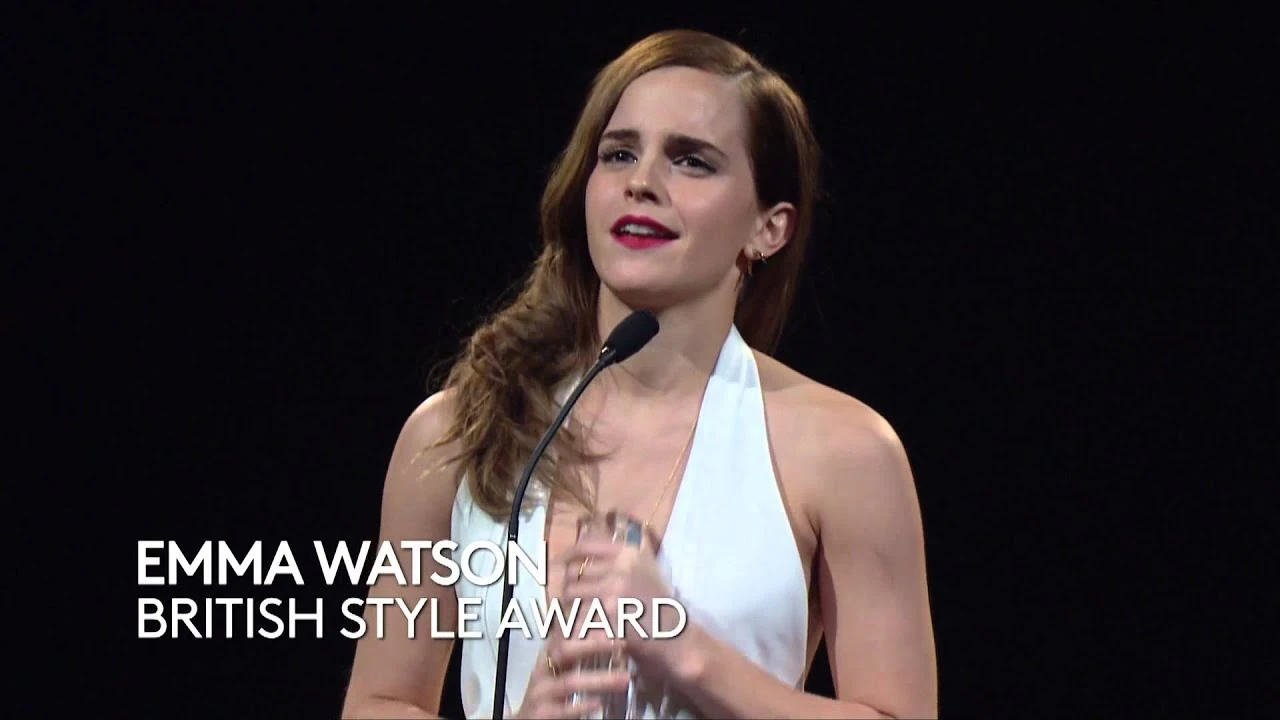
In July 2014, Watson was appointed a UN Women Goodwill Ambassador. That September, she addressed the United Nations in New York to launch HeForShe, a campaign inviting men to advocate for gender equality. Her speech argued that equality concerns everyone, and challenged the idea that feminism means hostility towards men. It drew broad attention to the campaign and helped place her in a new role: not only an actor speaking about a cause, but a public advocate attached to a UN initiative.
Her work continued through education and discussion as well as speeches. She visited Bangladesh and Zambia to promote girls’ education, and in 2016 travelled to Malawi to meet girls who had returned to school after being freed from child marriage. She started Our Shared Shelf, a feminist book club, in 2016 to encourage readers to discuss books about women’s lives and equality. In 2018 she became a founding member of Time’s Up UK, which worked on responses to harassment and bullying in the entertainment industry. She also helped launch a legal helpline for people experiencing sexual harassment at work.
Watson’s advocacy has not been limited to one campaign. She joined a G7 advisory group on gender equality in 2019, consulting with leaders on foreign policy. She has spoken in support of transgender rights and has discussed white privilege and intersectionality in feminist spaces. These strands show a widening public engagement: from calling for men to participate in equality work to considering whose experiences are heard and represented.
Fashion, with an eye on its costs
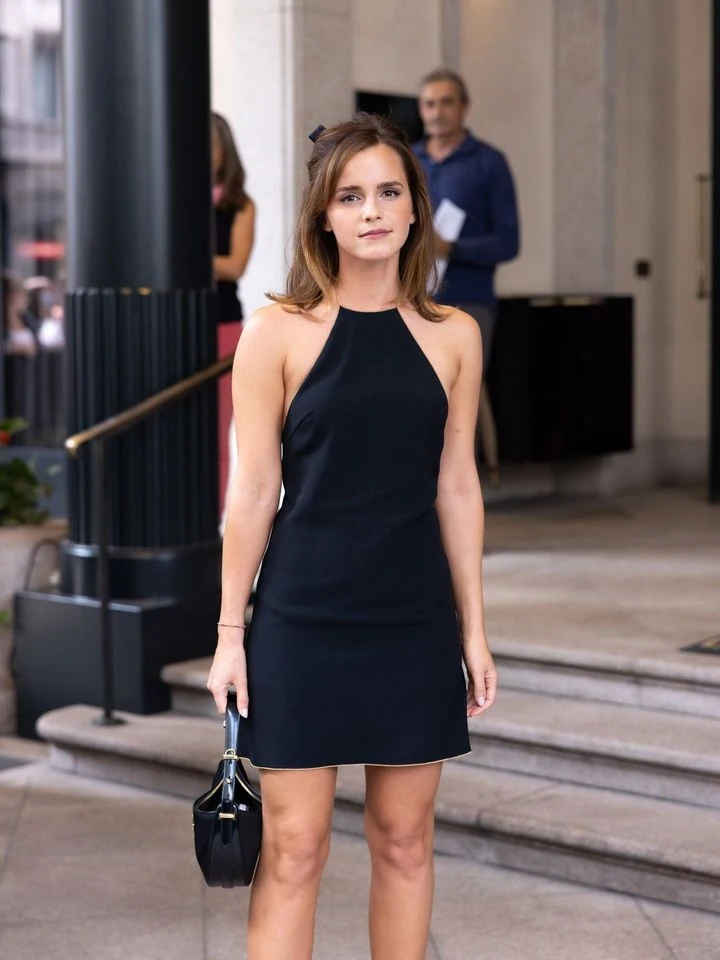
Watson’s involvement in fashion has combined modelling and acting-related publicity with efforts to promote more responsible production. In 2009, she began working with People Tree, a fair-trade fashion brand, as a creative adviser on clothing collections. She said the project could help support the people making the clothes, while also giving young consumers more ethical choices. The partnership produced collections in 2010.
She later used the publicity around film premieres to draw attention to what she was wearing. In 2017, she began updating an Instagram account called “The Press Tour”, identifying the ethical brands featured in her outfits during promotion for films including Beauty and the Beast and The Circle. She guest-edited a 2018 issue of Vogue Australia focused on sustainability in fashion. In 2020, she joined the board of Kering, a luxury-goods group, and chaired its sustainability committee until 2023.
These projects gave her fashion work a purpose beyond red-carpet visibility. Her roles have included a fair-trade collaboration, public explanations of clothing choices and participation in a company board focused on sustainability. They do not, by themselves, resolve the broader environmental challenges of the fashion business; they do show how she has used a high-profile career to bring attention to questions about how clothes are made and marketed.
Why Emma Watson deserves a place in British Legacy
Watson’s British connection is grounded in her upbringing and career, not in the place of her birth: she was born in Paris, moved to England as a young child, and grew up and trained in Oxford. Her first professional acting role was Hermione Granger in a film series adapted from a British author’s novels. The films introduced her to an international audience, but her later choices took her beyond the role that first defined her. From Ballet Shoes to Little Women, she has continued to work across television and cinema while pursuing a university education.
Her place in a British legacy is also supported by public work that has reached beyond entertainment. As a UN Women Goodwill Ambassador, she helped launch HeForShe and made a case for men’s involvement in gender equality. Her support for girls’ education, participation in Time’s Up UK and work on a workplace harassment helpline extended that advocacy into distinct settings. In fashion, her People Tree collections and later sustainability work offered practical ways to draw attention to fair trade and the environmental impact of clothing. These achievements connect a British-born-in-practice public career—shaped by English schooling and British screen work—with international efforts to improve equality and responsibility in industries watched and used by millions.
Sources
Emma Watson — Wikipedia revision 1375381297 · Emma Watson — Wikipedia
Adapted in part from Emma Watson by Wikipedia contributors, under CC BY-SA 4.0. Text has been edited and combined with the existing article; this adapted text is shared under the same licence. Contributor history.