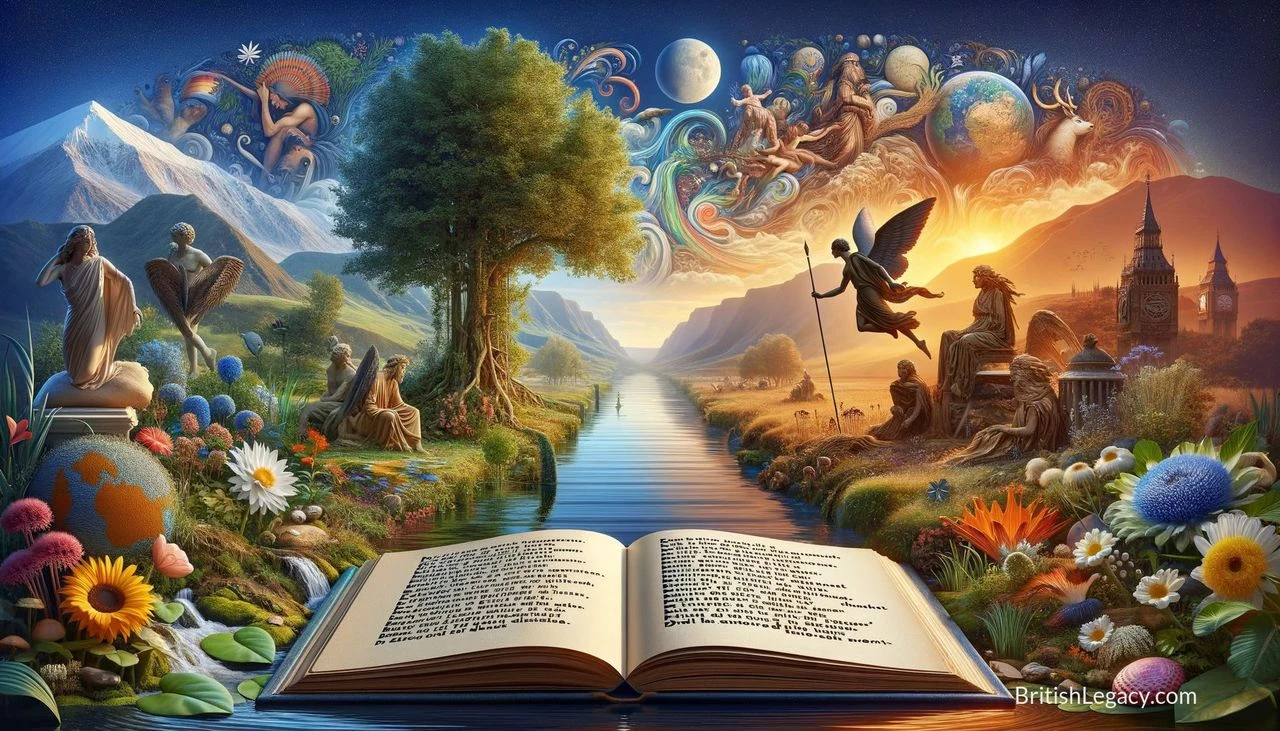
Alice Oswald: A Weaving of Environment and Myth in British Poetry
Among the contemporary luminaries who have left an indelible mark on British literary heritage stands Alice Oswald, a poet whose evocative works echo with the beauty of the natural world and the profundity of myth. Born in Reading, Berkshire, in 1966, Oswald's upbringing saw her enveloped by the lush landscapes that would later saturate her poetry. Not merely a poet, she is a veritable chronicler of nature’s intimate details and an interpreter of ancient tales, crafting a legacy that resonates both within the United Kingdom and beyond its shores.
The Craft of Oswald’s Verse
Alice Oswald's literary ascendancy began in earnest with her first collection, "The Thing in the Gap-Stone Stile" (1996), which garnered critical acclaim and secured her the Forward Prize for Best First Collection. However, it is her third collection, "Dart" (2002), that notably solidified her status in the pantheon of British poets. This book-length poem, which earned the prestigious T.S. Eliot Prize, explores the River Dart in Devon, presenting a confluence of voices—ranging from the river itself to human and other natural presences that inhabit its course.
"Dart" is a testament to Oswald’s prowess in combining environmental themes with a narrative structure that honours the oral tradition. The poem isn’t merely a celebration of the river’s ecosystem; it is an immersive experience that prompts readers to consider their own relationship with nature. Oswald’s meticulous observation and her ability to articulate the minutiae of the natural world engender a sense of both intimacy and transcendence.
Ecological Mind and Mythic Soul
A hallmark of Oswald’s poetry is her deep-seated reverence for the environment, which positions her as both a chronicler and guardian of nature’s ephemeral beauty. Poems such as those in "Woods etc." (2005) and "Falling Awake" (2016), the latter of which won the Costa Poetry Award and heralded her mastery, are imbued with a contemplative awareness of ecological fragility. Oswald often employs the natural world as a mirror to reflect human emotions and experiences, inviting readers to rediscover the interconnectedness of all living things.
Oswald’s interplay between the natural and the mythological is equally compelling. Her work often draws upon classical mythology, reimagining ancient tales within contemporary frameworks. "Memorial" (2011), perhaps one of her most ambitious works, reinterprets Homer’s "Iliad" by stripping it down to its essence, honouring the nameless fallen with a poignant litany of grief and humanity. This melding of the classical with the modern underscores Oswald's unique voice—one that is rooted in tradition while unfalteringly original.
A Legacy Beyond Borders
Alice Oswald’s contributions transcend the borders of Britain, impacting the broader literary landscape with her unique poetic vision. Her works have not only enriched English literature but have also been celebrated internationally, with translations and academic studies attesting to her influence. As a poet laureate for the natural world, her advocacy for the environment through verse calls upon a global audience to recognise and preserve the world around us.
Moreover, Oswald’s influence extends to the next generation of poets, who look to her as a beacon of originality and integrity. Her ability to harness the potency of oral tradition has reinvigorated interest in the spoken word, bridging the gap between ancient storytelling and contemporary poetics.
Conclusion
Alice Oswald’s oeuvre is a conspicuous thread in the rich tapestry of British literary heritage. Her profound engagement with environmental and mythological themes crafts a dual legacy of advocacy and artistry—one that champions the natural world while revitalising age-old myths. In her poetry, the ethereal beauty of the British landscape and the timeless tales of antiquity converge, creating a body of work that is as influential as it is enduring. Oswald’s contributions resonate long past the written word, cementing her as a pivotal figure in the ongoing narrative of Britain's great legacy.