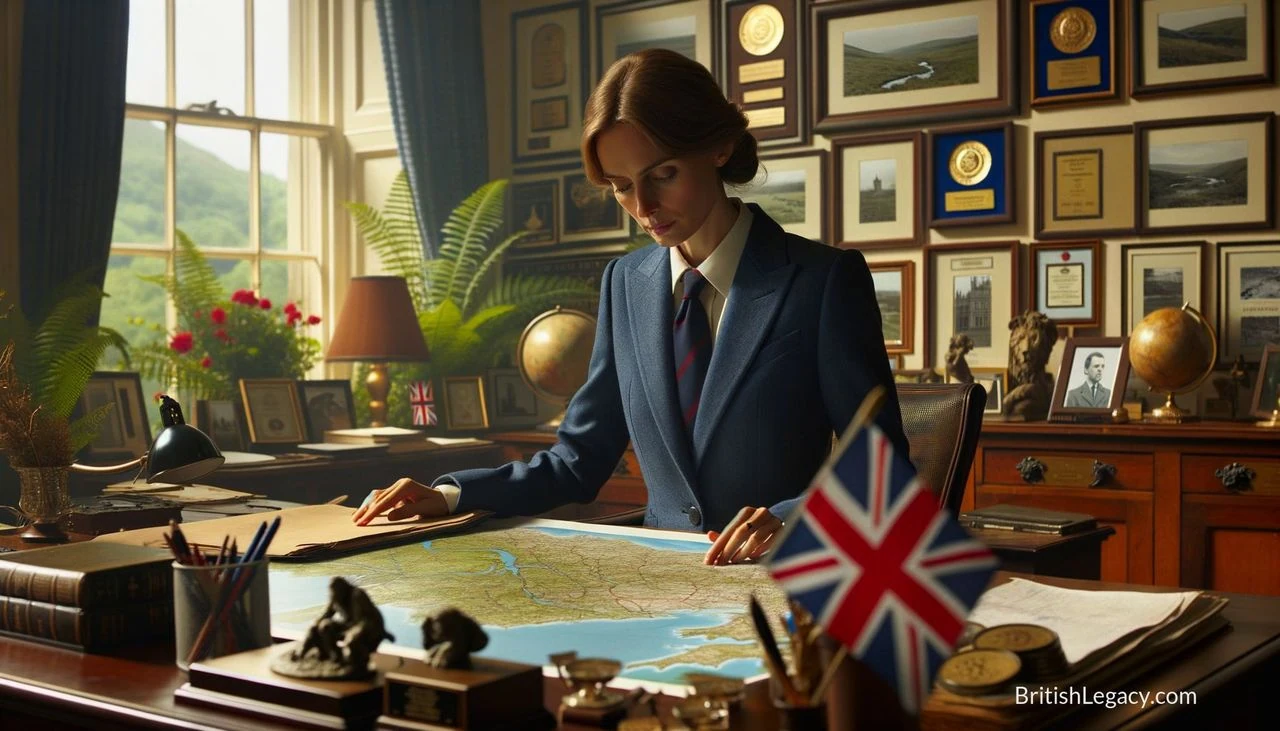
Fiona Reynolds led the National Trust as director-general from 2001 to 2012. Her tenure is associated with a broad view of conservation: caring for historic properties and landscapes while encouraging public access, and considering the environmental pressures affecting the countryside. The themes that recur in accounts of her work are stewardship, inclusion and the relationship between natural and cultural heritage.
Conservation and public access
Reynolds’s leadership was characterised by an effort to balance preservation with public engagement. The idea behind that balance was that heritage should be accessible and relevant to people’s lives, rather than treated solely as a collection of places to protect. Initiatives during her directorship aimed to increase access to National Trust properties and make them more inclusive.
Her approach was also described as combining established conservation methods with sustainable practice. That meant holding the historical significance of properties alongside modern environmental principles. The emphasis was not only on preserving individual buildings, but on how the places and landscapes in the Trust’s care could be looked after for the future.
Land, nature and stewardship
During Reynolds’s directorship, the National Trust acquired properties and parcels of land described as having ecological as well as cultural value. The organisation’s role in protecting the countryside sat alongside its care of historic properties. Climate change and biodiversity were among the contemporary concerns identified during this period, with attention also given to natural landscapes and sustainable agriculture.
Reynolds’s advocacy extended beyond the Trust. She was associated with the view that landscapes, buildings and nature should be cared for together, and that conservation depends in part on a public sense of stewardship. This links access with responsibility: enabling people to engage with heritage can help make its care meaningful in everyday life.
A conservation outlook beyond the Trust
Reynolds’s work in the wider conservation movement focused on the preservation of landscapes and buildings and on encouraging people to value them. Her stated outlook joined the natural and cultural dimensions of heritage rather than treating them as separate concerns. The account of her influence beyond the National Trust is broad, but its central idea is clear: stewardship of the past and care for the natural environment belong in the same conversation.
Why Fiona Reynolds deserves a place in British Legacy
Fiona Reynolds’s place in British Legacy rests on her leadership of the National Trust from 2001 to 2012 and on the conservation priorities associated with that tenure. The work described spans historic properties, countryside and land with ecological value. It also brings public access and inclusion into the picture, presenting engagement with heritage as part of its care rather than an afterthought. Climate change, biodiversity and sustainable agriculture further broaden that picture from the preservation of buildings to the condition of the landscapes around them.
These themes matter to Britain’s natural and cultural heritage because they connect places people value with the long-term responsibility of looking after them. Reynolds’s advocacy for stewardship, and her emphasis on the links between nature and heritage, provide a coherent account of her contribution without relying on grand claims about individual outcomes. Her legacy, as represented here, is an approach to conservation that places public engagement, historic preservation and environmental care alongside one another.