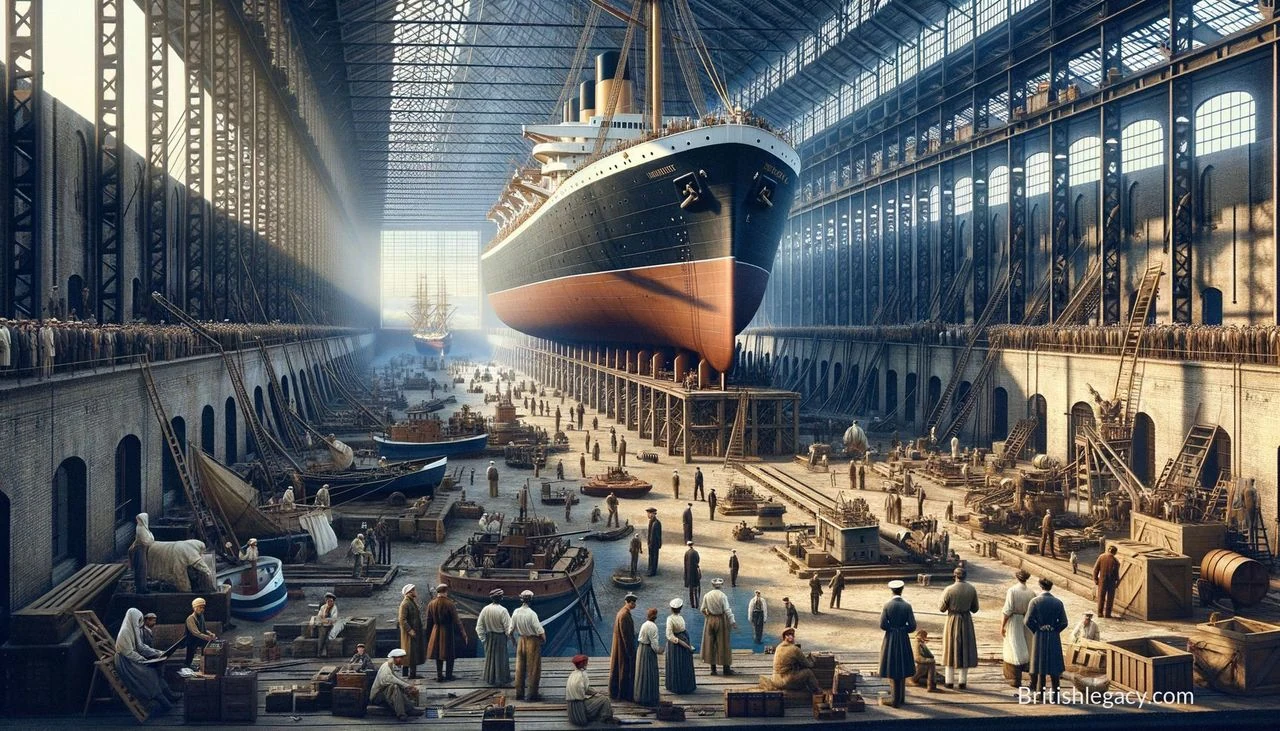
Ships depend on more than crews, cargoes and engines to stay in service. They must also be inspected and repaired, and time spent out of action matters to both navies and trading fleets. The supplied accounts credit Thomas Gray with a 19th-century floating dock designed to make that work more adaptable: a platform could be submerged, a vessel manoeuvred above it, and the platform raised to lift the ship clear of the water. The idea addressed a practical problem in an age when large vessels were central to maritime trade and national power.
A repair problem at sea
Ship maintenance was essential, but the original account describes older arrangements as difficult, labour-intensive and poorly suited to the demands of larger vessels. A ship awaiting repair could not carry out its usual work. For a naval vessel, that meant a potential loss of readiness; for a commercial ship, delay could interrupt cargo operations and transport. As ships became more important to economies and national power, the means of maintaining them mattered too.
The floating dock was presented as an answer to this bottleneck. Its purpose was not to do away with skilled workers or the need for repair. Instead, it offered a different way to position a vessel for inspection and maintenance. The supplied articles say the process could reduce the time and resources required, allowing ships to return to operation more swiftly. They do not quantify those savings, but the practical aim is clear: make necessary work easier to organise and the vessel more accessible.
That focus on maintenance gives the invention its particular interest. Famous ships and voyages may dominate maritime histories, but fleets also rely on the less visible systems that keep vessels serviceable. The floating dock belongs to that supporting infrastructure. It addressed the conditions in which repair crews worked, with potential consequences for the ships and industries that depended on them.
How the floating dock worked
The mechanism described in the supplied accounts is direct. The platform was lowered into the water, a ship was manoeuvred into position above it, and the dock was then raised to lift the vessel clear. Once out of the water, the ship could be inspected and repaired. The arrangement combined a floating structure with a task traditionally associated with facilities built on shore.
Mobility was part of the design’s stated advantage. Rather than serving only one fixed location, a floating dock could, according to the accounts, be deployed to different places. That offered flexibility in a maritime world organised around ports, routes and changing demands. A facility able to serve where it was needed could be useful to more than one harbour or fleet.
The dock did not make repair work effortless. Engineers and repair crews still needed the appropriate skills, and the source material does not provide a detailed technical specification or explain the precise construction of Gray’s design. Its central claim is more limited: lifting a vessel out of the water provided a practical position for maintenance, while mobility made the facility potentially adaptable. The value lay in making a cumbersome process more manageable, not in removing the work itself.
Value to naval service
The supplied accounts give particular attention to naval use. A navy needs vessels to be available for duty, and regular inspection and repair are part of keeping them in working order. The floating dock is described as enabling more frequent and thorough maintenance, which could help preserve operational readiness. In the period described by the accounts, maritime strength was closely connected to Britain’s position, so improvements to the care of naval vessels had significance beyond the repair site.
This is an infrastructural contribution rather than a story about battles or commanders. The dock’s proposed value lay in supporting the practical conditions on which naval capacity depends: ships must be serviceable if they are to be ready for use. The supplied material does not identify a particular Royal Navy installation, ship or episode of use, so its account is best read as an explanation of the design’s intended importance rather than a documented record of specific operational results.
Commercial shipping and mobility
Merchant vessels faced the same basic need for maintenance. A ship delayed by repair could not carry out its intended work, while dependable maritime transport relied on vessels being kept serviceable. The original import and current article describe faster servicing and reduced downtime as benefits for commercial shipping. In their account, the floating dock offered a way to help ships return to operation and support the regular movement of cargo.
Mobility made the proposal especially relevant to commercial use. A dock that could be moved between locations might serve changing needs across a network of ports, rather than being confined to a single fixed site. The supplied articles connect this flexibility with smoother maritime operations and support for trade routes. They provide no figures for costs, time saved or the volume of trade affected, so those broader effects cannot be measured from the material provided. What the accounts emphasise is the practical relationship: ships need repair, and a mobile facility could bring that capability to different locations.
Maintenance is easy to overlook when attention falls on shipbuilding, navigation and cargoes. Yet all three depend on vessels remaining in working order. By presenting the floating dock as useful to both naval and commercial fleets, the supplied accounts place Gray’s contribution in the wider system that sustained maritime activity.
A claimed legacy in dock engineering
The supplied material describes the floating dock as a foundation for later advances in dock technology. It also says that modern iterations are used around the world. These are claims made by the accounts; they do not name later designs, trace a technical lineage or offer examples of present-day installations. The history of that development therefore cannot be filled out from the evidence provided here.
Even so, the design’s underlying purpose is easy to understand. Ships continue to require inspection and repair, and lifting a vessel clear of the water offers one way to make it accessible for that work. The supplied articles present the dock’s legacy as functional: an idea that answered a continuing need and contributed to the development of maritime engineering. Its significance, as the accounts describe it, lies not simply in its novelty but in the work it was intended to support.
Both the current article and original import associate the floating dock with Thomas Gray and place it in the 19th century. They do not provide further biographical detail about Gray. This feature retains that established subject and attribution, while avoiding claims about his life, a particular first installation or the precise reach of his influence that the supplied material does not establish.
Why Thomas Gray and the Floating Dock deserve a place in British Legacy
The account of Thomas Gray and the floating dock draws attention to an achievement that can be easy to take for granted: improving the systems that allow other work to continue. Ships carried goods and served naval purposes, but neither role could be sustained without inspection and repair. The dock described in the supplied material was designed to address that need by lowering a platform beneath a vessel and raising the ship clear of the water. Its intended benefits—more accessible maintenance, less time out of service and the possibility of moving the facility—link an engineering idea to the practical demands of maritime life.
Its stated usefulness spans naval and commercial shipping. More adaptable maintenance could support the availability of naval vessels and the reliable operation of merchant ships; a mobile facility could serve at different locations. Those are specific reasons the invention matters in the supplied account, rather than a general claim about national character. The articles also associate it with later dock technology and modern use around the world, although they do not document that development in detail. British Legacy can preserve what is reported while keeping the scale of the claims in proportion: a British maritime idea presented as a practical contribution to ship repair, and a reminder that the infrastructure behind fleets and trade is part of their history too.