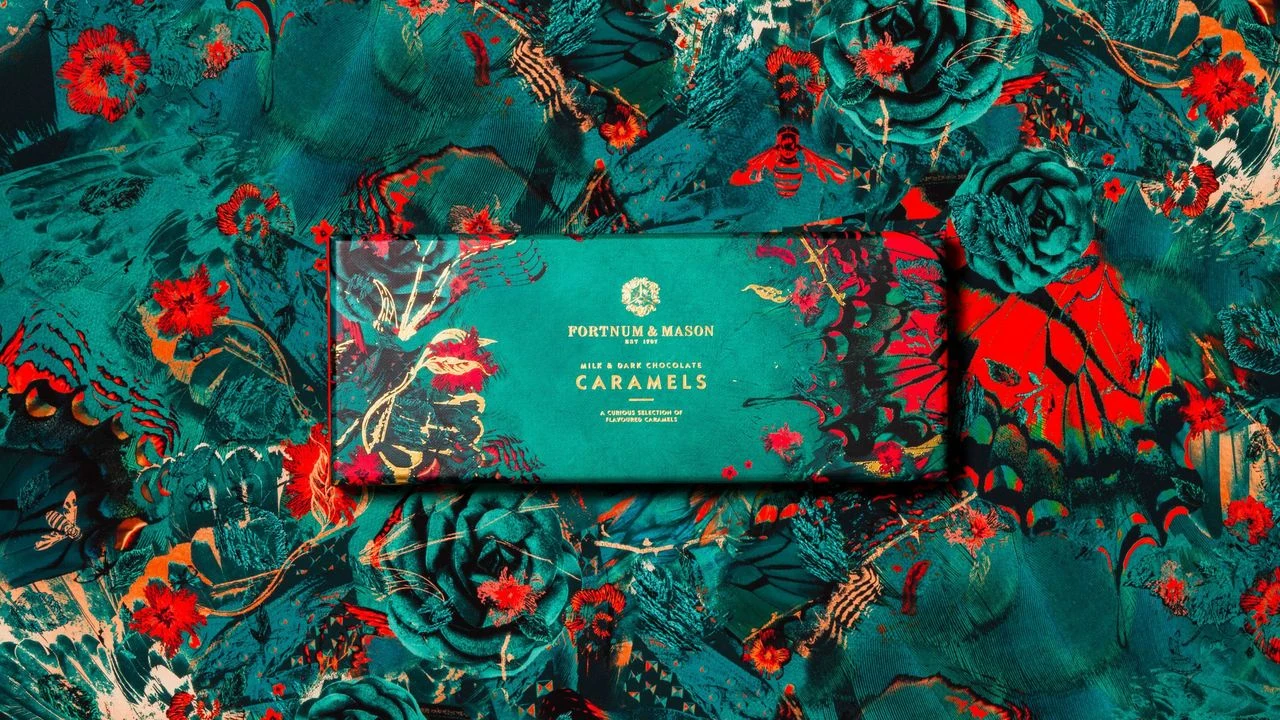
Fortnum & Mason began in 1707 as a small shop at St James’s Market. William Fortnum, a footman in Queen Anne’s household, resold the half-used candles left by the royal family and also ran a grocery business. He persuaded his landlord, Hugh Mason, to join him. More than three centuries later, the company’s main shop stands at 181 Piccadilly, while its business spans food, drink, gifts and retail beyond its original London address.
A shop built around provisions
The founders’ candle enterprise was only one part of the early business: Fortnum was already trading as a grocer when Mason became his partner. The shop’s royal connection developed further in 1761, when William Fortnum’s grandson Charles entered the service of Queen Charlotte. That link with the court helped increase the business. Fortnum & Mason’s early identity was not simply that of a luxury department store; it was a grocer whose reputation grew through the quality and range of the provisions it supplied.
During the Napoleonic Wars, the store supplied British officers with dried fruit, spices and other preserves. In the Victorian era it was called upon to provide food for prestigious court functions. During the Crimean War, Queen Victoria sent Fortnum & Mason’s concentrated beef tea to hospitals run by Florence Nightingale. These episodes connect the company’s commercial history to changing patterns of British life, from military campaigning to public and royal service.
The business also made a mark on Britain’s changing food market. Fortnum & Mason says it invented the Scotch egg in 1738, a claim best attributed to the company rather than presented as settled fact. In 1886, after buying the entire stock of five cases of a new product from H. J. Heinz, it became the first shop in Britain to stock tins of baked beans. The contrast is telling: the store’s history includes both specialist prepared foods and a product that would become an everyday staple.
Piccadilly, tea and the hamper
Fortnum & Mason’s name is closely associated with tea, specialist foods and hampers. Its offerings have included teas, chocolates, biscuits, cheese, charcuterie and wine, while the main shop has grown into a department store with other departments, restaurants and a tea shop. Food remains central to its identity: the company developed beyond its beginnings as a grocery without abandoning its association with provisions, including both luxury and more basic items.
The hamper brings several strands of that identity together. Filled with food and drink, it turns the shop’s range into a gift associated with celebrations and occasions such as Christmas and Easter. The format has helped make Fortnum & Mason recognisable beyond its Piccadilly premises. It also gives a practical form to the company’s longstanding specialism in selecting, packaging and presenting food, rather than relying on a general claim to elegance or tradition.
The store at 181–184 Piccadilly was rebuilt between 1926 and 1927 in a Neo-Georgian design by Wimperis, Simpson and Guthrie. In 1964, owner W. Garfield Weston commissioned a four-ton clock above the main entrance as a tribute to the founders. Each hour, figures of Fortnum and Mason emerge and bow to one another. The building and clock give the partnership a visible presence on Piccadilly, linking the founders’ names to the shop’s later architectural and retail history.
Ownership, warrants and new addresses
Canadian businessman W. Garfield Weston acquired the store in April 1951 and became its chairman. Fortnum & Mason has been privately owned by Wittington Investments since that year. After Weston’s death in 1978, the store was run by two of his granddaughters, Jana Khayat and Kate Hobhouse. Tom Athron joined the business in December 2020 as chief executive.
The royal-warrant story needs precision. Fortnum & Mason’s first warrant was granted by Queen Alexandra in 1910. The company has held warrants from several members of the royal family over time, but the supplied account identifies its current warrants as two, granted by King Charles III and Queen Camilla. King George VI’s warrant was temporarily lost in 1948 during post-war rationing and restored in 1951. The warrants reflect a particular history of royal custom and supply; they should not be confused with a claim that the shop is simply the official grocer to the Royal Family.
In 2007, the store marked its tercentenary with a £24 million refurbishment. In March 2012, Queen Elizabeth II, Camilla and Catherine made their first official joint visit to Fortnum & Mason. The Queen opened the Diamond Jubilee Tea Salon on the fourth floor, and each visitor received a personalised hamper. The visit brought together two of the shop’s enduring associations: royal patronage and food presented as a gift.
Fortnum & Mason has added locations beyond Piccadilly. Its first additional store opened at St Pancras International in 2013, followed by Heathrow Terminal 5 in 2014 and The Royal Exchange in 2018. It opened a store in Dubai in 2014 and a Hong Kong store at K11 Musea in 2019. In October 2025, it opened its first UK store outside London, at Bicester Village, alongside its first “On the Go” hospitality kiosk. Its main shop also contains a tea shop and several restaurants, while online sales and stockists extend its reach beyond its own premises.
Food culture and public debate
The company’s role in food culture includes more than retail. It runs annual food and drink awards recognising work across the industry, including writers, publishers, presenters and image-makers. The 2018 ceremony, hosted by Claudia Winkleman, recognised Nadiya Hussain, Nigel Slater and Jay Rayner. Such activity places the retailer in contact with the people who report on, present and shape public interest in food and drink.
Its history has also involved scrutiny and protest. From 2010, PETA UK and supporters demonstrated against the sale of foie gras, objecting to its production. In 2011, Westminster Trading Standards reprimanded the company for misleading customers about its animal-welfare standards; Fortnum & Mason then changed its corporate social responsibility document to specify that only UK suppliers had to meet those standards. In December 2020, the company stopped selling foie gras in favour of foie royale, an alternative described in the supplied account as more ethical.
In March 2011, UK Uncut protesters staged a sit-in at the store during a demonstration against tax-avoidance policies associated with Associated British Foods. Both businesses were owned by Wittington Investments. The episode shows how a prominent retail address could become a setting for a wider argument about corporate ownership and taxation. In 2024, the company also faced criticism after Paralympians were not included in an after-party following a Buckingham Palace reception for Olympic athletes, prompting disabled athletes to speak about unequal treatment.
Why Fortnum & Mason deserves a place in British Legacy
Fortnum & Mason belongs in British Legacy because its record offers a specific account of how a London grocery became a lasting part of British retail and food culture. Founded by a royal footman and his landlord, it grew through supplying provisions, from dried fruit and spices for British officers to food for court functions. Its concentrated beef tea was sent by Queen Victoria to Florence Nightingale’s hospitals during the Crimean War, while its early decision to stock Heinz baked beans connects the shop’s story to the arrival of a product that would become commonplace. These details make its history more than a succession of claims to luxury: they show a business adapting its trade to different customers and times.
The company’s continuing association with specialist food, tea and hampers gives that history a recognisable present-day expression. Its expansion from Piccadilly to railway, airport and other retail locations, as well as overseas, shows how a London institution has carried its name into new settings. Its annual food and drink awards extend that role into the wider industry. At the same time, the controversies over animal welfare, taxation and Paralympic inclusion matter to a rounded account of its public standing. Fortnum & Mason’s British legacy is therefore not a generic emblem of national elegance: it is a story of a particular shop, its food trade, its royal connections, its changing reach and the scrutiny that comes with prominence.
Sources
Adapted in part from Fortnum & Mason by Wikipedia contributors, under CC BY-SA 4.0. Text has been edited and combined with the existing article; this adapted text is shared under the same licence. Contributor history.