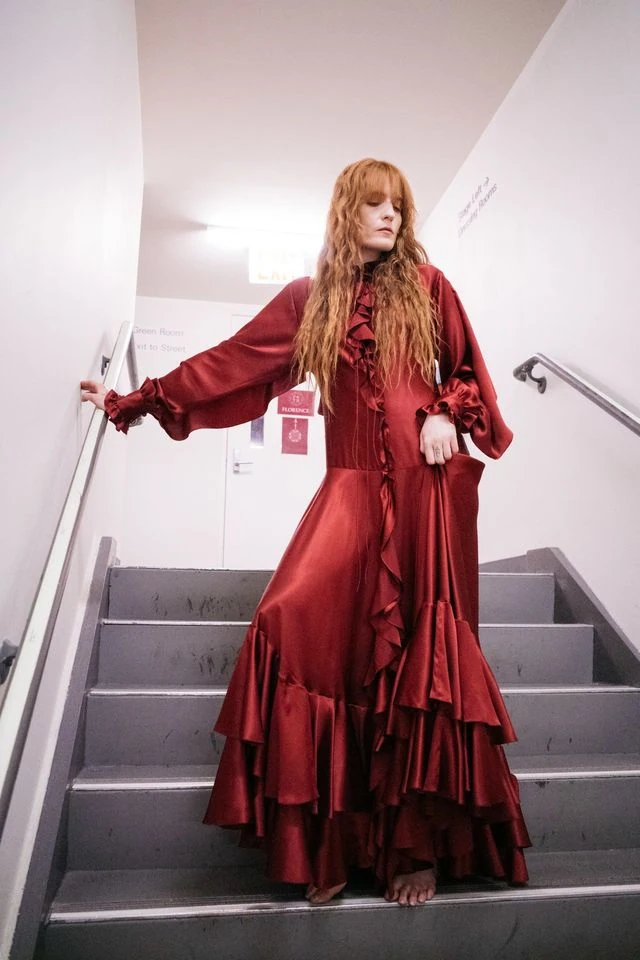
Florence Welch’s music makes room for feeling on a grand scale. As lead vocalist and primary songwriter of Florence + the Machine, she has built songs around love, death, time and pain, joining a forceful voice to lyrics rich in religious and natural imagery. Her stage presence and flowing, romantic clothes have become part of that artistic language. The result is a career in which music and image are closely linked, but the songs remain at its centre.
Finding a voice in south London
Florence Leontine Mary Welch was born in Camberwell, London, on 28 August 1986. She attended Thomas’s London Day School in Battersea and Alleyn’s School in south-east London. At school she was known for singing, sometimes too loudly for the choir. She later studied illustration at Camberwell College of Arts, but left to concentrate on music.
Her first performances came in small London venues in 2006, working with Isabella Summers under the name Florence Robot & Isa Machine. The eventual name Florence + the Machine grew from an earlier private joke between the two musicians. Before that partnership took shape, Welch recorded with the band Ashok; an early version of “Kiss with a Fist” appeared under the title “Happy Slap”. These beginnings were modest in scale, but they established the collaborative setting in which her own songwriting would develop.
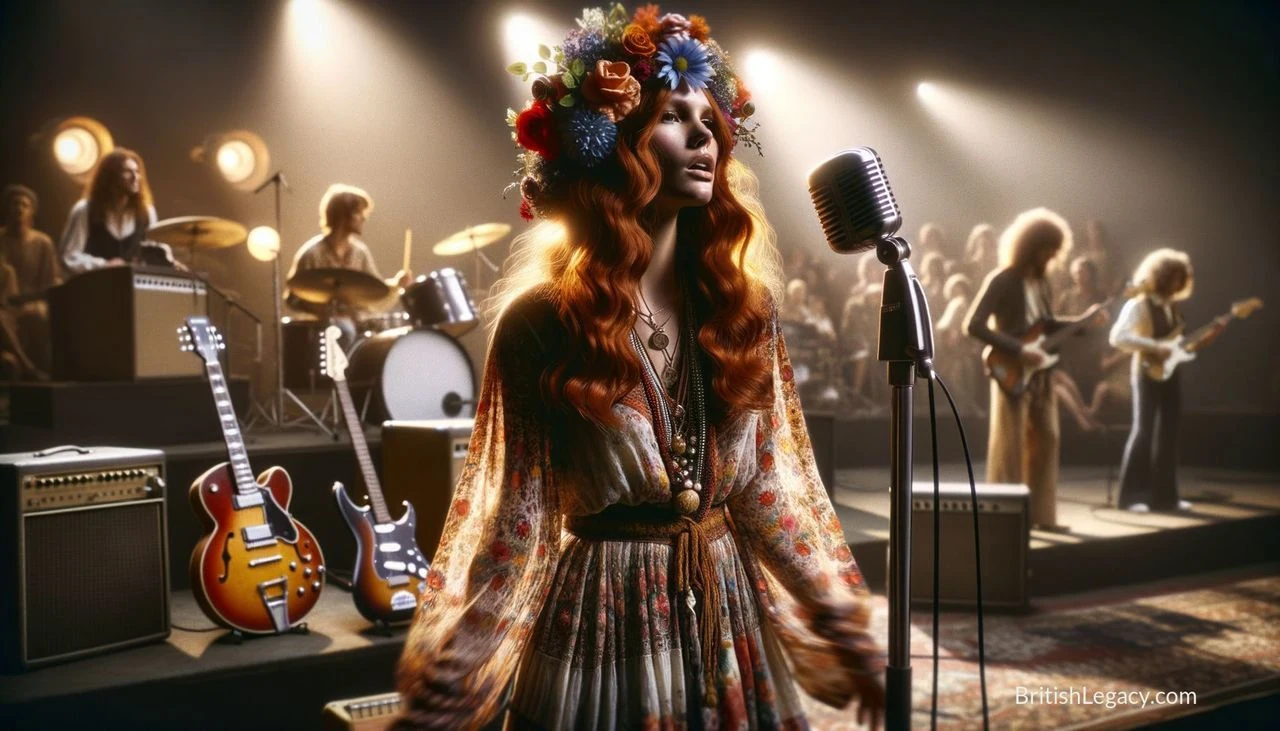
Welch’s musical world draws on varied influences. She has named Patti Smith, Stevie Nicks, Grace Slick and Alanis Morissette among her heroes, as well as artists including John Cale, Otis Redding, Siouxsie Sioux, David Byrne and Lou Reed. She has described wanting her songs to address enduring human themes, and the band’s work often gives those subjects a theatrical frame. Critics and listeners have placed its music across indie rock, art rock, baroque pop and related styles.
Lungs and the rise of Florence + the Machine
The band released its debut album, Lungs, in July 2009. It reached number one on the UK Albums Chart and won the Brit Award for Best British Album. Songs including “Dog Days Are Over”, “Rabbit Heart (Raise It Up)” and “Cosmic Love” helped establish Welch’s expressive voice and songwriting for a broad audience. The album’s success was not a one-off: the band’s next five albums also achieved chart success.
Welch’s work soon extended beyond the band’s own records. In 2010 she contributed vocals to David Byrne and Fatboy Slim’s Here Lies Love. The following year brought the release of Ceremonials, which reached number one in the UK and number six in the United States. Its repeated water imagery reflected an element Welch has described as an obsession with drowning. In 2012, “Spectrum”, remixed by Calvin Harris, became the band’s first UK number-one single; Welch also featured on Harris’s “Sweet Nothing”, which topped the UK singles chart.
The band’s third album, How Big, How Blue, How Beautiful, arrived in 2015 and reached number one in the UK, the United States, Australia and Canada. That summer, Florence + the Machine took over a headline slot at Glastonbury after Dave Grohl broke his leg, and headlined the festival for the first time. High as Hope followed in 2018. The same year Welch published Useless Magic: Lyrics and Poetry, bringing together her writing with illustrations and artwork associated with her albums.
In 2022 the band released Dance Fever, introduced by the singles “King”, “Heaven Is Here” and “My Love”. Welch’s work has continued to move between musical settings: Florence + the Machine performed with the Jules Buckley Orchestra at the Royal Albert Hall for the BBC Proms in 2024, and the performance was released as Symphony of Lungs. Welch also contributed music and lyrics to a musical adaptation of The Great Gatsby, which premiered at the American Repertory Theater in 2024.
Image, performance and the written word
Welch’s clothing has helped make her performances instantly recognisable. She has appeared in flowing dresses, sometimes barefoot and without jewellery, and described her stage style as a mixture of the Lady of Shalott, Ophelia and a gothic figure. Its romanticism draws on artistic references including the Pre-Raphaelite Brotherhood; she has also named Stevie Nicks as an influence on both her music and her fashion. Gucci dressed her for her 2011 summer tour, and she performed at a Chanel runway show during Paris Fashion Week that year.
Her lyrics and stage imagery often mingle the everyday with the mythical. Welch has spoken of wanting to bring together subjects such as sex, love, death and guilt with ordinary experiences, and of the influence that reading and literature have had on her. In 2018, Useless Magic made that relationship between song and page visible: it collected lyrics and poetry alongside artwork from the period of Lungs through High as Hope. The book extends her creative practice without separating the writing from the music that gave it an audience.
She has also pursued projects beyond recording and touring. In 2022, she received an honorary fellowship from the University of the Arts London. Her reading interests have found a public outlet in Between Two Books, a fan-run book club with which she has held events. Together, these activities show an artist whose creative life includes writing, visual presentation and shared engagement with literature, rather than music alone.
Speaking openly and taking a public position
Welch has spoken publicly about anxiety, depression, alcohol and an eating disorder. Her 2018 song “Hunger” draws on her experience of anorexia as a teenager. She has discussed the difficulty of panic attacks and the importance to her of sobriety, which she has said began in 2014. Those experiences inform parts of her work, but they do not reduce her music to autobiography: her songs place personal feeling within larger questions about the body, desire, faith and mortality.
She has also used her public platform to support causes. In 2016, she backed Remain in the UK’s referendum on European Union membership. She has supported LGBTQ+ rights, including by displaying a rainbow flag at concerts, and in 2018 voiced support for removing Ireland’s Eighth Amendment. In 2022, she expressed support for Ukraine after the band’s “Heaven Is Here” video had been filmed in Kyiv. These interventions sit alongside her musical career, rather than replacing it as the principal record of her work.
Why Florence Welch deserves a place in British Legacy
Florence Welch’s place in British Legacy rests first on a clearly documented musical achievement. As the lead vocalist and primary songwriter of Florence + the Machine, she helped carry a band from small London venues to the top of the UK album and singles charts. Lungs not only reached number one but won the Brit Award for Best British Album; later records sustained that success, while the band’s first Glastonbury headline performance marked a significant moment in its public career. Her work has travelled widely, but its beginnings and a substantial part of its story are rooted in London and the British music scene.
Her contribution is also distinctive in its combination of songwriting, performance and visual imagination. Welch’s lyrics return to subjects as enduring as love, death and time, while her dramatic arrangements and stage image give those concerns a recognisable form. She has extended that creative practice into poetry, illustration and a published collection of lyrics, and has shared her interest in reading through a book-club project. Her candid discussion of difficult experiences and her support for causes including LGBTQ+ rights add further dimensions to her public role. These are specific achievements and choices, not a claim that one artist represents all British creativity. Together they explain why Welch merits a place in a record of contemporary British music and culture.
Sources
Florence Welch (revision 1376631346)
Adapted in part from Florence Welch by Wikipedia contributors, under CC BY-SA 4.0. Text has been edited and combined with the existing article; this adapted text is shared under the same licence. Contributor history.