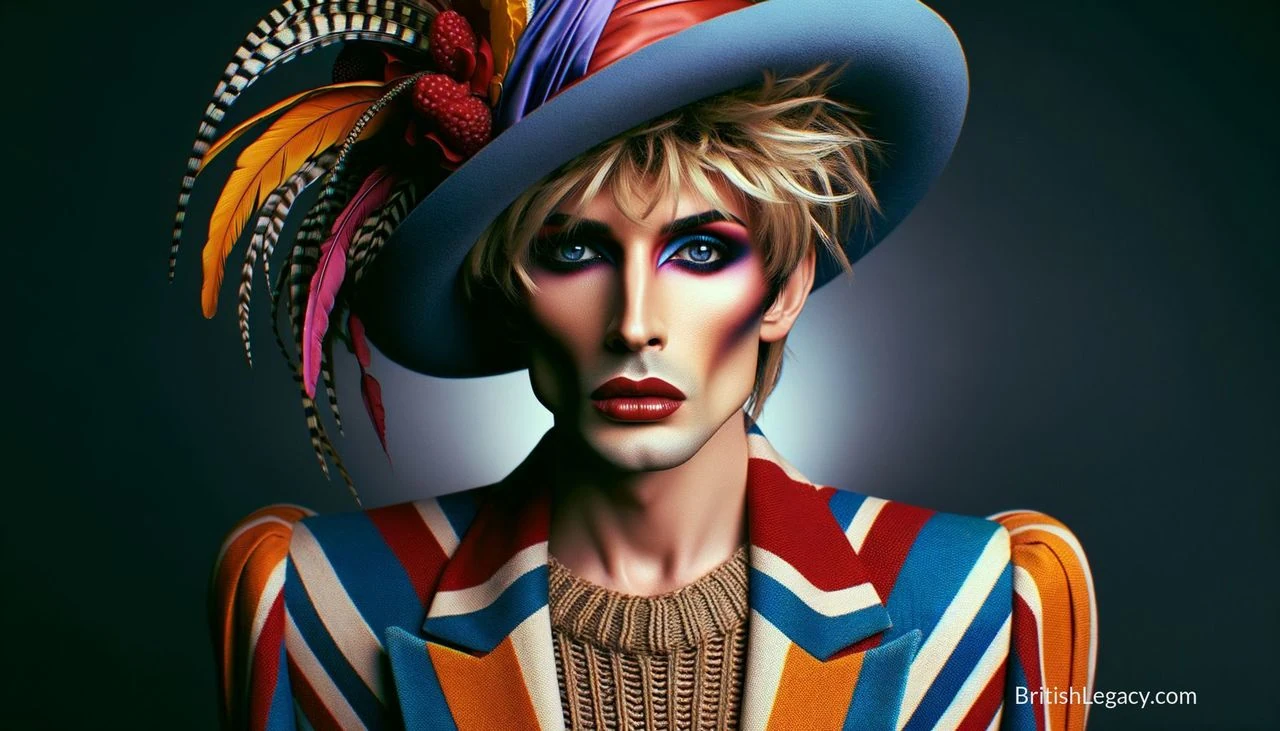
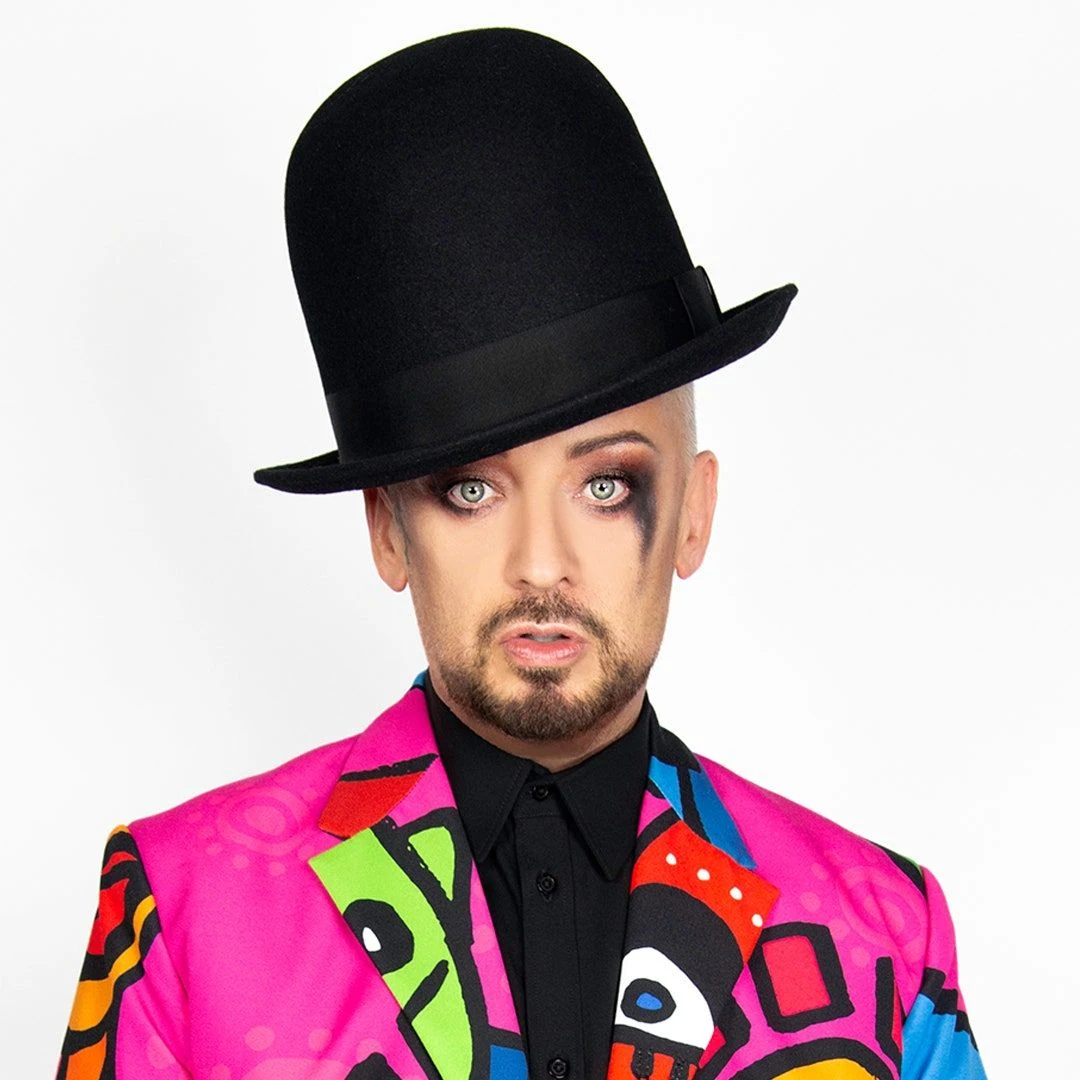
When Culture Club’s “Do You Really Want to Hurt Me” became an international hit in 1982, its singer was impossible to separate from the song’s appeal. Boy George’s gentle vocal delivery and striking, androgynous appearance gave the group a distinctive presence at a moment when British pop was reaching audiences around the world. His career would extend far beyond that breakthrough: as a solo musician, DJ, songwriter and mixed-media artist, he repeatedly moved between musical worlds and public roles.
Growing up in south-east London
Born George Alan O’Dowd on 14 June 1961 at Barnehurst Hospital in Kent, he grew up in Eltham, south-east London. He was the second of five children in a working-class Irish Catholic family. His father, Jerry O’Dowd, was a builder; his mother, Dinah, came from Dublin. George attended Middle Park Infant School and Eltham Green Secondary School. He later said that he left school without qualifications, having been more interested in art than in academic study.
Fashion and music offered another kind of education. As a teenager and young adult, he was drawn to the New Romantic movement that developed in Britain in the late 1970s and early 1980s. He and his friend Marilyn frequented Blitz, a London club associated with the scene. George later described Siouxsie Sioux as an early style inspiration, alongside the influence of David Bowie and Marc Bolan. For him, clothes and music belonged together: the look was part of the performance, not an accessory to it.
Before Culture Club, he briefly performed with Bow Wow Wow under the name Lieutenant Lush. He left the group and began building a band with bassist Mikey Craig. Drummer Jon Moss and guitarist Roy Hay joined the line-up, which settled on the name Culture Club in 1981. Their mix of personalities and sounds would soon carry them well beyond London’s club circuit.
Culture Club breaks through
Culture Club’s debut album, Kissing to Be Clever, appeared in 1982. Its single “Do You Really Want to Hurt Me” became a major international success, followed by “Time (Clock of the Heart)” and “I’ll Tumble 4 Ya”. The group’s sound drew on pop, soul and reggae, while George’s expressive voice gave its songs both warmth and vulnerability. Their records also came with a recognisable visual identity: George’s make-up, elaborate clothes and androgynous presentation stood apart from conventional pop-star styling.
The band’s second album, Colour by Numbers (1983), consolidated its success. “Church of the Poison Mind” and “Karma Chameleon” became major singles; the latter topped the UK chart and was the country’s best-selling single of 1983. Further hits included “Victims” and “It’s a Miracle”. The album’s international reach made Culture Club one of the defining British pop groups of the period, while George’s appearance brought questions of gender and self-presentation into the mainstream pop image.
Culture Club’s third album, Waking Up with the House on Fire, was released in 1984. That November, George joined the many British and Irish performers who recorded Band Aid’s charity single “Do They Know It’s Christmas?”. The record raised money for famine relief in Ethiopia and became the UK’s Christmas number one. Culture Club’s fourth album, From Luxury to Heartache, followed in 1986, but the group disbanded that year.
Finding other musical routes
George began a solo career in 1987 with Sold. Its singles included “Everything I Own”, which reached number one in the UK. In the years that followed, his work ranged from pop and soul to dance music. Under the name Jesus Loves You, a project he formed in 1989, he released songs including “Bow Down Mister” and “Generations of Love”. His solo recording “The Crying Game”, made for the film of the same name, brought him another chart success in 1992.
DJ work became a substantial part of his career. From the 1990s onwards, he mixed and compiled dance music, including releases for Ministry of Sound. His 1995 album Cheapness and Beauty took a more rock-oriented direction. Later releases included Ordinary Alien (2010) and This Is What I Do (2013), his first album of original material in 18 years. He also pursued work beyond recording: writing books, designing clothes, photography and mixed-media art.
Culture Club returned to performing on several occasions after its original break-up, including a reunion in 1998 and further activity in the 2010s. George’s work in theatre drew on the same period of British cultural history that had shaped his early career. The musical Taboo, set around the New Romantic scene, opened in London’s West End in 2002. George wrote its music and played the performance artist Leigh Bowery, rather than himself. The production ran for two years and earned him a Tony Award nomination for its score.
Public life and personal change
Success did not prevent difficult periods. George has spoken publicly about drug addiction and later said he had been sober since 2008. In 2009, he was sentenced to 15 months’ imprisonment after being convicted of assault and false imprisonment in connection with an incident in 2007. He was released after four months. These events form part of the public record of his life, alongside his artistic work, and need not be turned into a simple story of either scandal or redemption.
His career continued through television, performance and recording. He was a coach on The Voice UK in 2016 and later appeared on The Voice Australia. He released further music and continued to perform with Culture Club. In 2015, the British Academy of Songwriters, Composers and Authors recognised him with an Ivor Novello Award for outstanding services to British music. The award acknowledged a career that had connected chart success with a distinctive, evolving creative identity.
Why Boy George deserves a place in British Legacy
Boy George’s place in British cultural history rests first on the scale and character of Culture Club’s achievement. The group carried British pop into international charts with songs such as “Do You Really Want to Hurt Me”, “Time (Clock of the Heart)” and “Karma Chameleon”. Its success was musical, but it was also visual: George’s make-up, clothing and androgynous presentation made a different kind of pop frontman visible on television and record sleeves around the world. He did not simply stand in front of the songs; his voice and image formed part of the group’s artistic identity.
His wider career shows how a pop breakthrough can become a sustained working life rather than a single moment of fame. Solo records, the Jesus Loves You project, DJ work, theatre and later Culture Club reunions each opened another route for his creative interests. Taboo turned a formative British club culture into musical theatre, while the Ivor Novello Award placed his contribution within the country’s songwriting tradition. His story also reflects the reach of British popular culture: a performer shaped by London’s New Romantic scene became an internationally recognised musician whose work crossed genres and media. That combination of musical achievement, visual self-expression and continuing reinvention gives his legacy particular substance.
Sources
Boy George — Wikipedia, revision 1379646495
Adapted in part from Boy George by Wikipedia contributors, under CC BY-SA 4.0. Text has been edited and combined with the existing article; this adapted text is shared under the same licence. Contributor history.