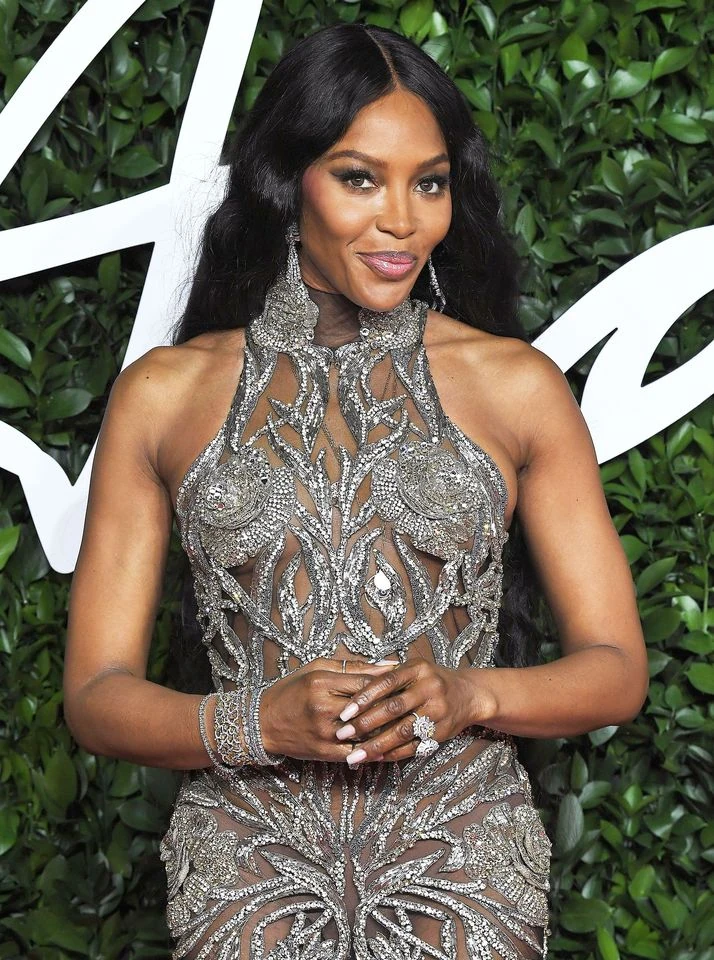
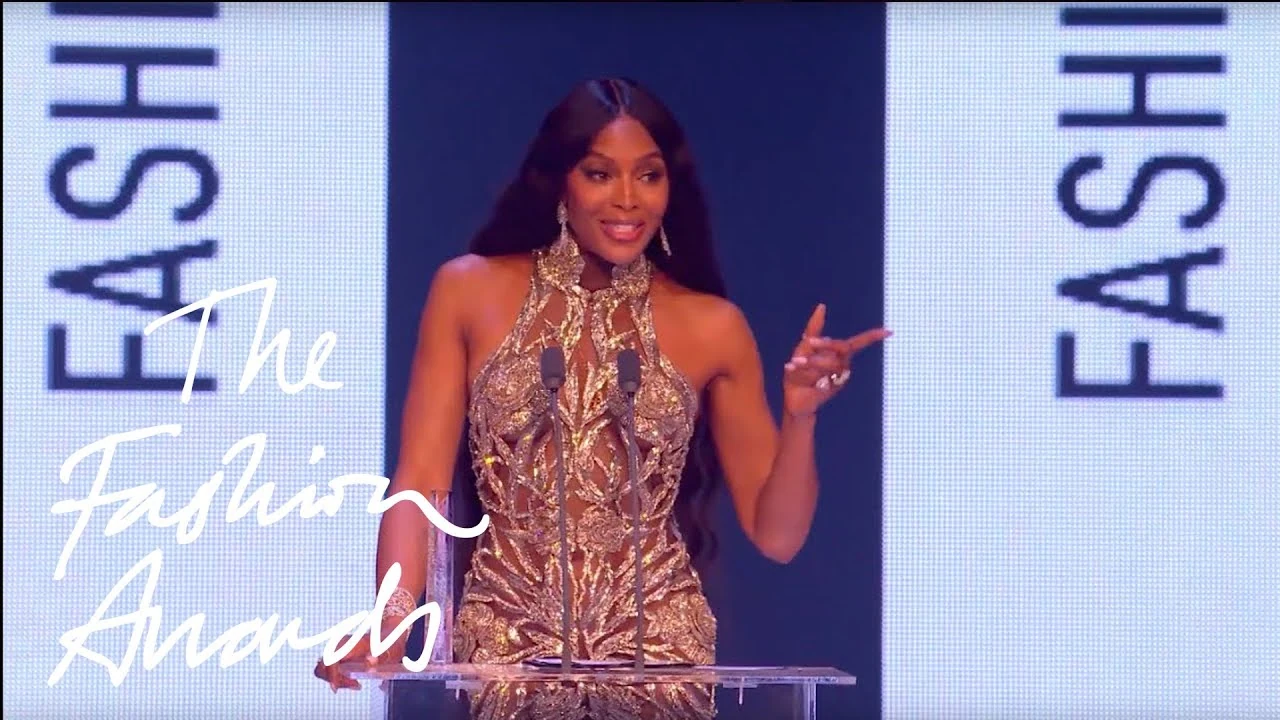
Naomi Campbell’s career began in London and took her to the centre of a fashion industry in which models of colour were rarely given equal visibility. Scouted in Covent Garden while still a teenager, she went on to break new ground on the covers of major magazines and the runways of leading designers. Her story is one of exceptional longevity and public influence, but also of persistent challenges over representation and, in later years, serious scrutiny of her charitable work.
London beginnings and an early start
Naomi Elaine Campbell was born on 22 May 1970 in Lambeth, south London, to Valerie Morris, a Jamaican-born dancer. She spent some of her early childhood in Rome, where her mother worked, and later returned to London. From the age of three she attended the Barbara Speake Stage School. She began studying ballet at the Italia Conti Academy of Theatre Arts after being accepted there at ten, and also attended Dunraven School.
Before modelling, Campbell appeared as a child performer. At eight, she was in the music video for Bob Marley and the Wailers’ “Is This Love”; she later tap-danced in videos for Culture Club. She had studied dance from childhood and initially intended to become a dancer. In 1986, while still a student, she was scouted by Beth Boldt of the Synchro Model Agency while window-shopping in Covent Garden. Shortly before her sixteenth birthday, Campbell appeared on the cover of British Elle.
Breaking through in fashion
Campbell’s early modelling career brought her to the work of designers including Gianni Versace, Azzedine Alaïa and Isaac Mizrahi, and photographers such as Peter Lindbergh, Herb Ritts and Bruce Weber. By the late 1980s, she was part of a prominent trio with Christy Turlington and Linda Evangelista, known as the “Trinity”. Her visibility grew at a time when Black models faced racial discrimination and were often excluded from the most influential assignments.
In December 1987, Campbell became British Vogue’s first Black cover model since 1966. In 1988 she became the first Black model on the cover of French Vogue; the account of that breakthrough notes that Yves Saint Laurent threatened to withdraw his advertising if the magazine did not feature her. The next year she appeared on the cover of American Vogue, the first Black model to front its September issue. In 1990, she appeared with Turlington, Evangelista, Cindy Crawford and Tatjana Patitz on a British Vogue cover photographed by Lindbergh. The models featured together in George Michael’s “Freedom! ’90” video, helping bring the new prominence of the supermodel into popular culture.
Campbell continued to make high-profile appearances on the runway. In 1991, she walked arm-in-arm with Turlington, Evangelista and Crawford in a Versace show, lip-synching to “Freedom! ’90”. She became the first Black model to open a Victoria’s Secret Fashion Show in 1996 and the first Black woman to open a Prada show in 1997. Her career also included a fall in Vivienne Westwood’s 1993 show, in platform shoes later displayed at London’s Victoria and Albert Museum.
More than the catwalk
Campbell’s work expanded into music, acting, publishing and television. Her novel Swan and album Babywoman were both released in 1994; the album’s single “Love and Tears” reached number 40 in Japan. She took roles in film and television, including appearances in Miami Rhapsody and Spike Lee’s Girl 6, and later played recurring characters in series including Empire and Star. From 2013, she hosted modelling competition programmes under The Face name in the United Kingdom, the United States and Australia.
She remained active in fashion across decades, appearing in campaigns and returning to major runways. In 2012, she took part in the London Olympic Games closing ceremony, modelling an Alexander McQueen design in a celebration of British fashion. In 2020, she began the YouTube series No Filter with Naomi, speaking with guests from fashion and entertainment. In 2022, the University for the Creative Arts awarded her an honorary doctorate for her impact on global fashion. London’s Victoria and Albert Museum opened the exhibition Naomi: In Fashion in 2024, presenting a selection of outfits from her modelling career alongside material from her archive.
Speaking out on representation
Campbell has spoken publicly about racial inequality in fashion, including the difference in opportunities and earnings between Black models and their white peers. In 2013, she joined fellow models Iman and Bethann Hardison in a Diversity Coalition. Their open letter to the organisers of fashion weeks criticised designers who used few or no models of colour in their shows. Campbell’s public profile gave that argument a prominent platform, while the milestones in her own career showed both the possibility of change and how exceptional Black visibility could remain.
Her charitable work has included support for the Nelson Mandela Children’s Fund and Breakthrough Breast Cancer. She founded Fashion for Relief, which organised fundraising fashion shows for causes including disaster relief. The charity’s record later became the subject of a Charity Commission investigation. In 2024, Campbell was banned from serving as a charity trustee in the UK for five years after the commission found multiple instances of misconduct or mismanagement at Fashion for Relief, including unauthorised payments. Campbell appealed the ban, saying she had been a victim of fraud and deception. The Commission’s action and Campbell’s response are both part of the public record of her charitable work.
Why Naomi Campbell deserves a place in British Legacy
Campbell’s place in British cultural history rests first on the scale and significance of her work as a model. From a Covent Garden discovery to the covers of British, French and American Vogue, she became one of the most visible figures in an industry that had long marginalised Black models. Her milestones were specific: she was British Vogue’s first Black cover model since 1966, the first Black model on the cover of French Vogue, and the first Black model to open a Prada show. These achievements made her career part of a wider history of who was seen, hired and celebrated in fashion.
Her British connection is more than birthplace. Campbell’s London career links fashion’s international reach to institutions and events at home: she modelled for the closing ceremony of the 2012 London Olympics, received an honorary doctorate from the University for the Creative Arts, and was the subject of a major exhibition at the Victoria and Albert Museum. Her advocacy, including the 2013 Diversity Coalition, also brought questions of representation into public discussion. A balanced legacy must include the later Charity Commission findings and her appeal, rather than allowing either fame or controversy to stand for the whole career. Campbell’s story belongs in British Legacy because it documents both a consequential British career and the continuing debate over equality, accountability and influence in the fashion industry.
Sources
Naomi Campbell (revision 1378673295)
Adapted in part from Naomi Campbell by Wikipedia contributors, under CC BY-SA 4.0. Text has been edited and combined with the existing article; this adapted text is shared under the same licence. Contributor history.