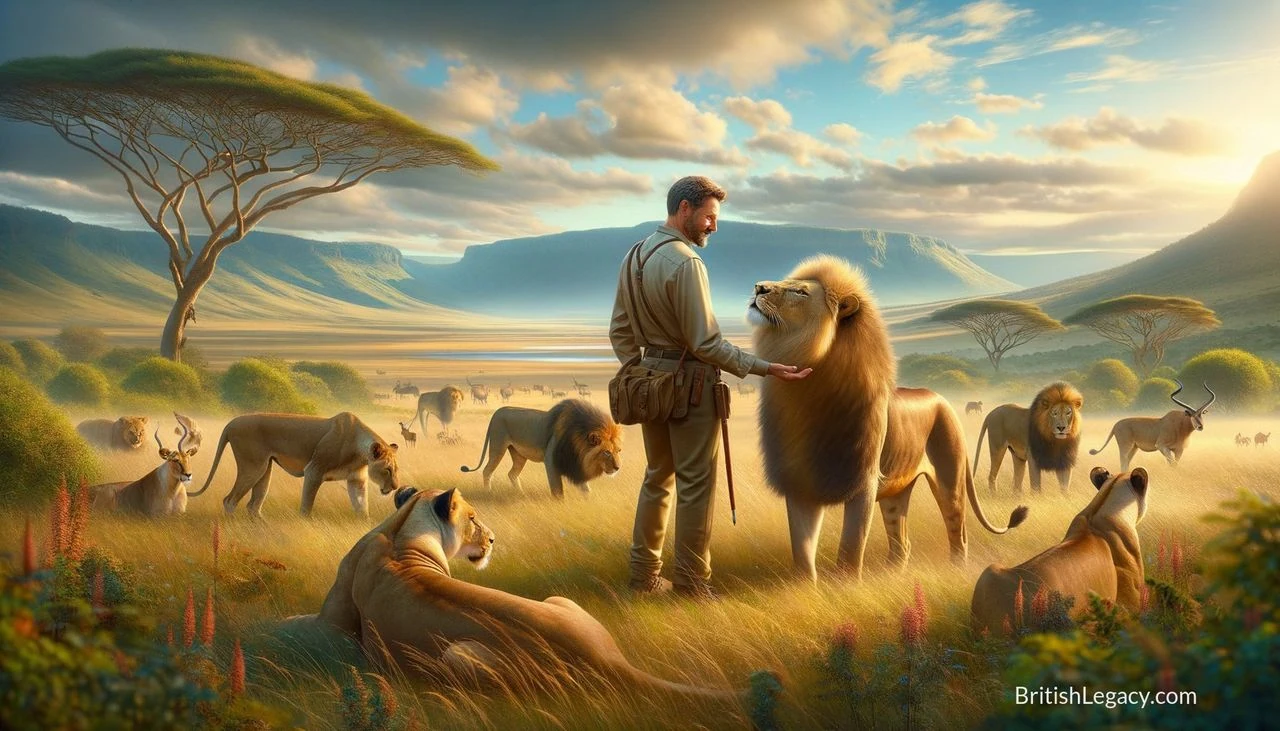
George Adamson: The Lion Man of Africa and a Beacon of British Conservation Legacy
In the grand tapestry of the British legacy, where tales of empire, innovation, and cultural influence abound, there is a unique story that emanates from the wild savannas of Kenya. It's the story of George Adamson, the British-born conservationist whose extraordinary life and work with lions left an indelible mark not just on British heritage, but on global efforts to conserve wildlife.
The Early Years and the Call of the Wild
George Adamson was born on February 3, 1906, in India, but it was the rugged, untamed landscapes of Africa that would become his true home. At the age of eighteen, he migrated to Kenya, then a British colony, where his initial ventures as a farmer and gold prospector eventually led him to a career with the African Game Department. This role was the catalyst for his profound relationship with African wildlife, particularly lions.
Elsa the Lioness: A Legacy Begins
The defining moment of Adamson's life arrived in 1956, when he and his wife, Joy Adamson, adopted an orphaned lion cub named Elsa. The Adamsons made the unprecedented decision to reintegrate Elsa back into the wild rather than keeping her in captivity. This groundbreaking experiment and the success that followed were documented in Joy Adamson’s book, "Born Free," which later became an award-winning film and a heartwarming cultural phenomenon.
Elsa's story did more than touch hearts; it ignited a global awareness about wildlife conservation. The narrative demonstrated that wild animals, even those born in captivity, could live freely in their natural habitats and highlighted the importance of preserving these environments.
Championing Conservation
Beyond the tale of Elsa, George Adamson’s work extended to broader conservation efforts. After Elsa's death, Adamson continued to rescue and rehabilitate orphaned and injured lions at his sanctuary in Kora National Park, Kenya. There, he provided a haven for these magnificent creatures and worked tirelessly to prepare them for life in the wild.
Adamson's approach was revolutionary. He eschewed traditional zoological practices and advocated for a deep, empathetic understanding of animal behaviour. His methods influenced contemporary conservation strategies, promoting the idea that effective conservation involves not just over-seeing animals in captivity but fostering their natural behaviours in native habitats.
Enduring Influence and Tragic End
George Adamson’s dedication came at a high personal cost. He lived a life of considerable hardship and danger, isolated in the Kenyan wilderness, and was ultimately killed in 1989 by poachers. His death was a stark reminder of the ongoing threats faced by wildlife and those who champion their cause. However, his legacy endures in multiple facets of today’s conservation efforts.
Adamson’s influence permeates the work of modern conservationists who continue to seek innovative ways to protect endangered species. His story has inspired numerous non-governmental organisations, wildlife trusts, and protected area projects worldwide. Films like "Born Free" and its subsequent adaptations, as well as various documentaries, continue to inspire generations to care deeply about the natural world.
A Heritage of Compassion and Action
George Adamson’s life and work are a testament to the profound impact one individual can have on the world. For Britain, he represents a remarkable offshoot of its global legacy - a legacy not only of exploration and science but one of compassion and stewardship of the planet.
Through his unwavering commitment to the conservation of lions, Adamson helped spark a worldwide movement dedicated to the protection and understanding of wildlife. This movement remains a critical part of our global effort to preserve biodiversity and ensure that future generations will inherit a planet rich with the wonders of the natural world.
In summary, George Adamson’s pioneering efforts in wildlife conservation, his innovative approach to rehabilitation and release, and his profound influence on global conservation practices, contribute significantly to the great British legacy. His story is an inspiring chapter in the ongoing narrative of humanity’s quest to harmoniously coexist with nature.