Glyn Maxwell’s work moves between poems, plays, novels and opera libretti, but a concern with how language works runs through them all. Born and raised in Welwyn Garden City, he studied English at Oxford and later travelled to Boston to study poetry and drama with Derek Walcott. His career has taken him between Britain and the United States, while his writing has brought verse into theatres, radio broadcasts and opera houses as well as books.
Welwyn Garden City, Oxford and Boston
Maxwell was born in 1962 and grew up in Welwyn Garden City, Hertfordshire. He studied English at Worcester College, Oxford, where he began an MLitt before leaving the course. In 1987 he moved to the United States to study poetry and drama with Derek Walcott at Boston University. He returned to the UK and began publishing poetry in the 1990s.
Before his books appeared, Maxwell was already bringing plays to an audience. In 1991, 1993 and 1995 he staged performances of his work in his parents’ garden in Welwyn Garden City; the productions attracted coverage in the national press and on radio. The setting was modest, but the work was public, and the early productions point to a career in which writing for performance would remain as important as writing for the page.
After marrying and the birth of his daughter, Alfie, Maxwell moved with his family to the United States. He lived and taught first in Amherst, Massachusetts, and then in New York City, before returning to the UK in 2006. That movement between countries became part of his professional life: he has taught at American institutions as well as the universities of Warwick and Essex, and later taught on the Poetry School’s MA course in London.
Poems built to last beyond the page
Maxwell’s first three collections—Tale of the Mayor’s Son (1990), Out of the Rain (1992) and Rest for the Wicked (1995)—were gathered in The Boys at Twilight: Poems 1990–1995 (2000). His collection The Nerve won the Geoffrey Faber Memorial Prize in 2004. Other collections, including The Breakage, Hide Now and Pluto, were shortlisted for major poetry prizes. He received the Society of Authors’ Cholmondeley Award in 2014, having been named one of the New Generation poets in 1994 and received the E. M. Forster Award in 1997.
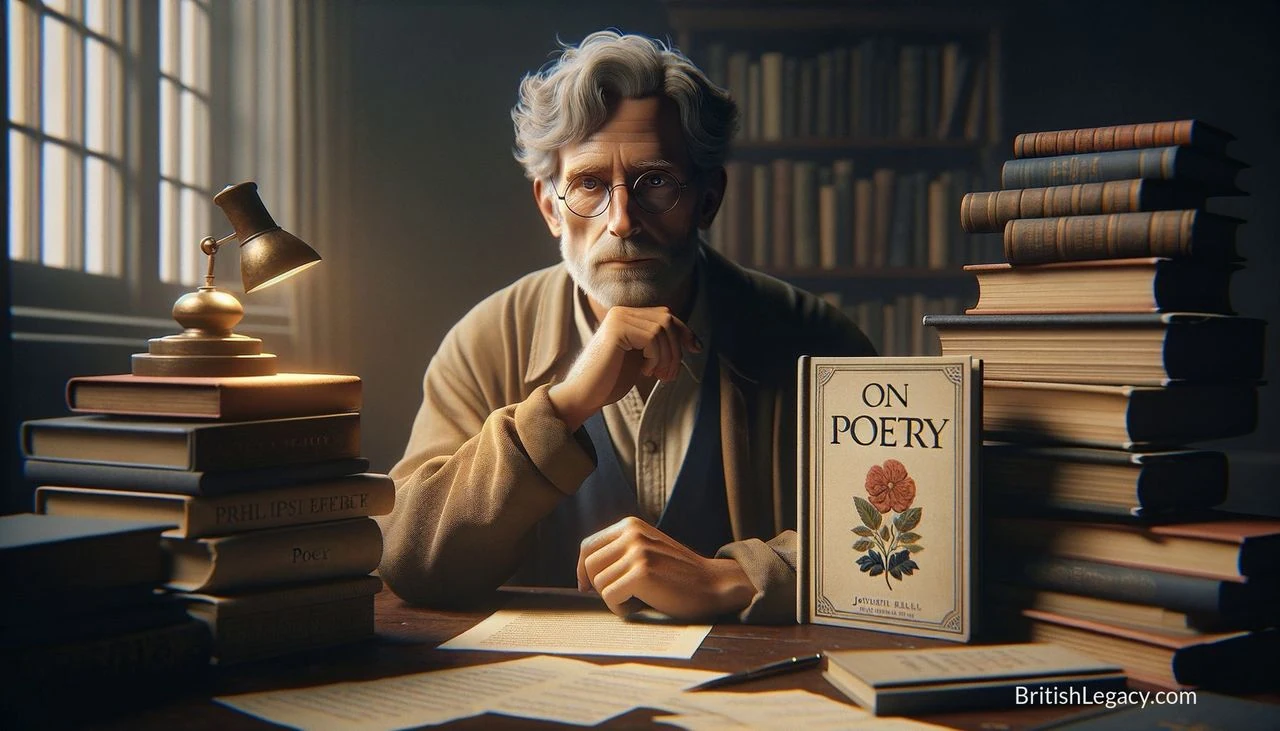
His commitment to metre, rhyme and established poetic structures is a defining feature of his work. That formal attention does not confine his subject matter to the past: it gives him a framework for writing about contemporary experience. The tension between inherited forms and present-day life is also the subject of On Poetry, his 2012 critical guide to the craft. The book approaches poetry through questions of making and reading, offering an account of how decisions about form shape what a poem can say.
Maxwell’s relationship with literary institutions has not always been straightforward. In 1999 he left Faber & Faber after an editorial disagreement over his poem “Time’s Fool”; his work was subsequently published by Picador in the UK. In 2014 he edited The Poetry of Derek Walcott 1948–2013, bringing together the work of the poet with whom he had studied in Boston. His own later collection How the Hell Are You was published in 2020.
Writing for the stage, screen and opera
Maxwell’s plays draw on classical drama, historical subjects and familiar stories, often reshaping existing material for a new audience. After Troy retells Euripides’ Women of Troy; Liberty, about the French Revolution, premiered at Shakespeare’s Globe in 2008 and toured the UK. His play The Lifeblood, concerning the last days of Mary, Queen of Scots, was first performed in 2001 and later named the British Theatre Guide’s “Play of the Fringe” at Edinburgh in 2004.
He also wrote extensively for Chester’s Grosvenor Park Open-Air Theatre and Storyhouse, including versions of Cyrano de Bergerac, The Wind in the Willows and Alice in Wonderland. The Wind in the Willows and The Secret Seven were nominated for Best Play for Young People at the British Theatre Awards. In 2020, Maxwell directed his own play The City of Tomorrow at the Barn Theatre in Welwyn Garden City as part of the town’s centenary celebrations.
His writing for performance extended beyond the stage. Maxwell co-wrote the screenplay for The Beast in the Jungle, a dance film based on Henry James’s novella, which premiered at the Rotterdam Film Festival in 2019. He also wrote radio plays for BBC Radio 3 and BBC Radio 4, including Lexicon, Shakespeare’s Fire and The City of Tomorrow. These commissions brought his work into British broadcasting, where verse, drama and performance could reach listeners beyond the theatre.
Opera offered another route into collaboration. His libretto for David Bruce’s The Firework Maker’s Daughter, based on Philip Pullman’s story, was nominated for an Olivier Award in 2014 and performed at the Royal Opera House’s Linbury Theatre, in New York and on a UK tour. Maxwell also worked with composers on Seven Angels, The Lion’s Face and Nothing, the last staged at Glyndebourne in 2016 before a production in Aarhus, Denmark.
Poetry in conversation with other writers
Maxwell has worked as a critic and editor as well as a writer. He was poetry editor of The New Republic from 2001 to 2007 and reviewed for publications including the Times Literary Supplement, The Sunday Times, The Observer and the London Review of Books. His essays and teaching sit alongside creative work rather than apart from it: each is another way of examining how poems are made, performed and passed on.
His prose includes the novel Blue Burneau (1994), shortlisted for the Whitbread First Novel Prize, and The Girl Who Was Going to Die (2008). Moon Country (1996), written with fellow poet Simon Armitage, grew from a journey to Iceland and a Radio 3 series. The pair later travelled to Brazil for another radio series. In 2016 Maxwell published Drinks with Dead Poets: The Autumn Term, a work in which deceased poets appear as characters and speak in words drawn from their writing.
Across these forms, Maxwell’s career is not simply a matter of transferring a poetic voice from one medium to another. A libretto must serve music; a play must be spoken and staged; a radio script must create a world through sound. His varied commissions show a writer repeatedly testing what verse and dramatic language can do when placed in different settings.
Why Glyn Maxwell deserves a place in British Legacy
Glyn Maxwell belongs in British Legacy not because his work stands for a single, settled idea of British poetry, but because it shows that tradition can be active: shaped, tested and carried into new forms. Born and raised in Hertfordshire, educated at Oxford and later active in British theatres, broadcasting and universities, he has built a career that connects a distinct local beginning with a wide range of cultural institutions. His poetry’s attention to metre and rhyme makes formal inheritance visible, while his plays and libretti put language to work in front of audiences, in collaboration with actors, musicians and directors.
The record of that work is concrete. The Lifeblood brought a historical British subject to the Edinburgh stage; Liberty toured the UK after its Globe premiere; and his versions of stories for Chester theatres included work nominated for a British Theatre Award. His libretto for The Firework Maker’s Daughter reached the Royal Opera House and a UK tour, while his writing for BBC radio carried drama to listeners across the country. Maxwell has also contributed as an editor, critic and teacher, including through his guide On Poetry and his work at British universities and the Poetry School. Taken together, these activities show a British writer sustaining poetry not only as a printed art, but as something taught, debated, broadcast and performed.
Sources
Glyn Maxwell — Wikipedia, revision 1347548786
Adapted in part from Glyn Maxwell by Wikipedia contributors, under CC BY-SA 4.0. Text has been edited and combined with the existing article; this adapted text is shared under the same licence. Contributor history.