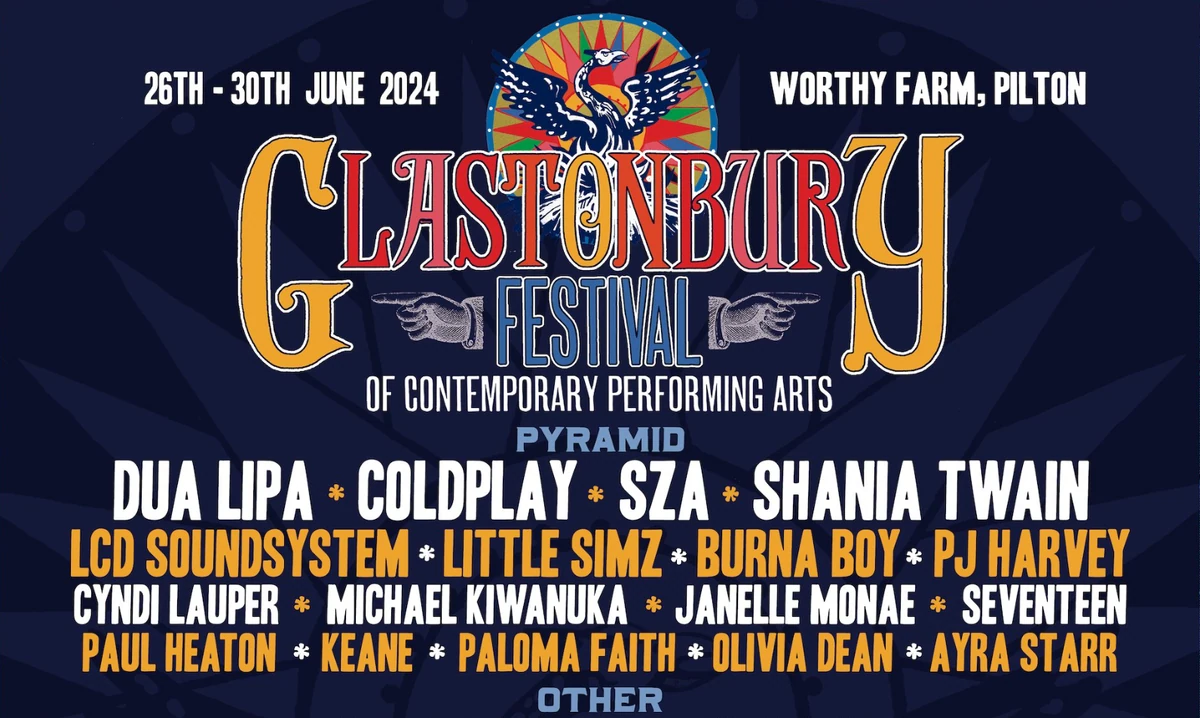
Glastonbury Festival began in 1970 as an open-air gathering organised by Michael Eavis. Its first edition offered T. Rex, tickets costing £1 and free milk from the farm. The event has since grown into a major music and performing arts festival at Worthy Farm in Somerset, combining headline concerts with theatre, dance and other performances. Its history is also a story of how a local farm became a recurring meeting place for artists, audiences and volunteers.
From a farm gathering to a festival
Eavis was inspired to organise the first festival after attending an open-air event at the Bath Festival of Blues and Progressive Music. The early combination of live music, a rural setting and an inexpensive ticket set a different scale from the festival’s later reputation. Worthy Farm, in the Vale of Avalon, remains the setting described in the supplied account, while the event has developed into one of the world’s best-known music and performing arts festivals.
The programme extends well beyond its headline acts. The Rolling Stones, David Bowie, Beyoncé and Kendrick Lamar are among the performers named in the supplied article as having played its stages. Its range also includes the Dance Village, Acoustic Tent, and Circus and Theatre Fields, with offerings described as spanning electronica, spoken-word poetry, acrobatics and theatre. This mixture gives the festival more than one centre of attention: audiences can encounter popular music alongside performance and fringe arts.
Music, performance and participation
Glastonbury’s scale depends on more than performers. The supplied article describes a large volunteer network, including stagehands and litter pickers, helping make the gathering possible. Their work is part of the practical effort behind a festival that brings together concerts and activities across a broad site. The article also describes the event as a place for social and political discussion. That is a useful way to understand its reach, provided it is not mistaken for proof that every edition or performance has the same purpose.
Mud, costumes and self-expression recur in familiar images of the festival. They help convey its informal, participatory character, but the appeal is not reducible to atmosphere: the programme’s combination of music, theatre, dance and spoken word offers different reasons to attend. The original account also presents the setting as spiritually significant and describes attendance as transformative. Those are impressions rather than verifiable features, so the festival’s documented programme and history offer firmer ground for explaining its place in cultural life.
Charitable and environmental aims
The supplied account connects Glastonbury with charitable giving and names Oxfam, WaterAid and Greenpeace among organisations to which the festival has contributed. It also describes an environmental initiative called “Love the Farm, Leave No Trace”, encouraging recycling and other practices intended to reduce the event’s environmental footprint. These details show that the festival’s identity, as presented in the source, reaches beyond entertainment. Its claims about the scale of charitable contributions and the effectiveness of environmental measures are not independently documented in the material provided, so they should not be treated as quantified outcomes here.
Why Glastonbury Festival deserves a place in British Legacy
Glastonbury belongs in British cultural history not simply because it is famous, but because its development links a specific British place and organiser with a programme that has widened far beyond its first event. The 1970 gathering at Worthy Farm, inspired by Eavis’s visit to the Bath Festival of Blues and Progressive Music, began with a modest ticket price and free milk. The festival’s later combination of major musical performers and spaces for theatre, dance and spoken word shows how a recurring event can make room for different forms of culture in one setting.
Its legacy also includes the work that makes such a gathering possible: volunteers, performers and organisers contributing to an event whose stated charitable and environmental aims connect festival-going with wider responsibilities. The supplied account does not establish the full scale or results of those efforts, and those claims deserve care rather than repetition as fact. Even so, Glastonbury’s documented breadth—music alongside performance, a rural Somerset location and a history stretching from 1970—gives it a clear British connection. It offers a distinctive example of how a festival can become part of the country’s shared cultural calendar.