When David Attenborough began presenting Zoo Quest in 1954, natural history television was still finding its form. The series combined studio sequences with filming abroad; the approach gave viewers a way to follow animals in their environments and made Attenborough the guide to a world few could see for themselves. Over the following decades, he helped turn that kind of broadcasting into a sustained body of work, while also shaping the BBC as a senior executive and increasingly using his programmes to address environmental change.
A Leicester childhood and a route to the BBC
David Frederick Attenborough was born in Isleworth, Middlesex, on 8 May 1926, and grew up in Leicester, where his father, Frederick, was principal of University College, Leicester. As a child, he collected fossils, stones and other natural specimens. A lecture by the conservationist Grey Owl, which Attenborough attended with his brother Richard in 1936, helped bring the case for protecting wildlife into view.
After attending Wyggeston Grammar School for Boys, Attenborough studied geology and zoology at Clare College, Cambridge, graduating in natural sciences. National service in the Royal Navy followed. He then worked editing science textbooks before applying to the BBC. Although his first application, for a radio role, was unsuccessful, his curriculum vitae attracted Mary Adams, head of factual broadcasting for the new television service. He joined the BBC in 1952 and initially worked as a producer.
His early assignments included programmes about animals and folk music. Natural history became central after he produced and presented Animal Patterns, a studio series that used animals from London Zoo to examine subjects such as camouflage and courtship. Attenborough then worked with the zoo’s reptile-house curator, Jack Lester, on a proposed animal-collecting expedition. When Lester fell ill, Attenborough took over as presenter for Zoo Quest, which first aired in 1954.
Making room for ambitious television
Attenborough’s work at the BBC extended beyond the screen. When the Natural History Unit was established in Bristol in 1957, he declined to join it, preferring to remain in London with his young family. Instead, he formed the Travel and Exploration Unit, which allowed him to continue making Zoo Quest and other programmes. He later left the BBC’s permanent staff to pursue postgraduate study in social anthropology at the London School of Economics, but returned when he was invited to become controller of BBC Two.
Appointed controller in 1965, Attenborough inherited a channel still building its identity. He broadened its schedule, making room for programmes across the arts, science, drama, sport and entertainment. Among the commissions made during his tenure were Civilisation, presented by Kenneth Clark, The Ascent of Man, presented by Jacob Bronowski, and Monty Python’s Flying Circus. He also backed Pot Black, which demonstrated colour television’s possibilities through snooker. In 1969, he became director of programmes for BBC Television, responsible for output across both channels.
Management took him away from the programme-making he wanted to do. He left his senior post in 1973 and returned to freelance broadcasting. That decision cleared the way for Life on Earth, a major natural-history series developed with the BBC Natural History Unit. The project required international co-production funding and several years of preparation before it reached television.
From Life on Earth to the oceans
Broadcast in 1979, Life on Earth set out to tell the story of evolution through the diversity of living things. Its scale, worldwide locations and attention to new filming techniques helped establish a model for ambitious wildlife series. Attenborough’s presence connected the scientific subject matter to a broad audience, while the programme-makers sought to capture behaviour that had previously been difficult to film. The series began a larger collection of programmes that followed the same guiding question: how do living things develop and adapt?
The Living Planet followed in 1984, organising its account around ecology and the relationship between organisms and their environments. The Trials of Life, in 1990, examined animal behaviour through the stages of life. Attenborough then took on subjects that presented particular technical challenges. The Private Life of Plants (1995) used time-lapse photography to show growth and movement; The Life of Birds (1998) explored bird behaviour; and The Life of Mammals (2002) drew on low-light and infrared cameras to film nocturnal animals. With Life in the Undergrowth (2005) and Life in Cold Blood (2008), he completed a set of surveys across the major groups of animals and plants. He later described the undertaking as a completed evolutionary story, while recognising that future filmmakers would tell it in new ways.
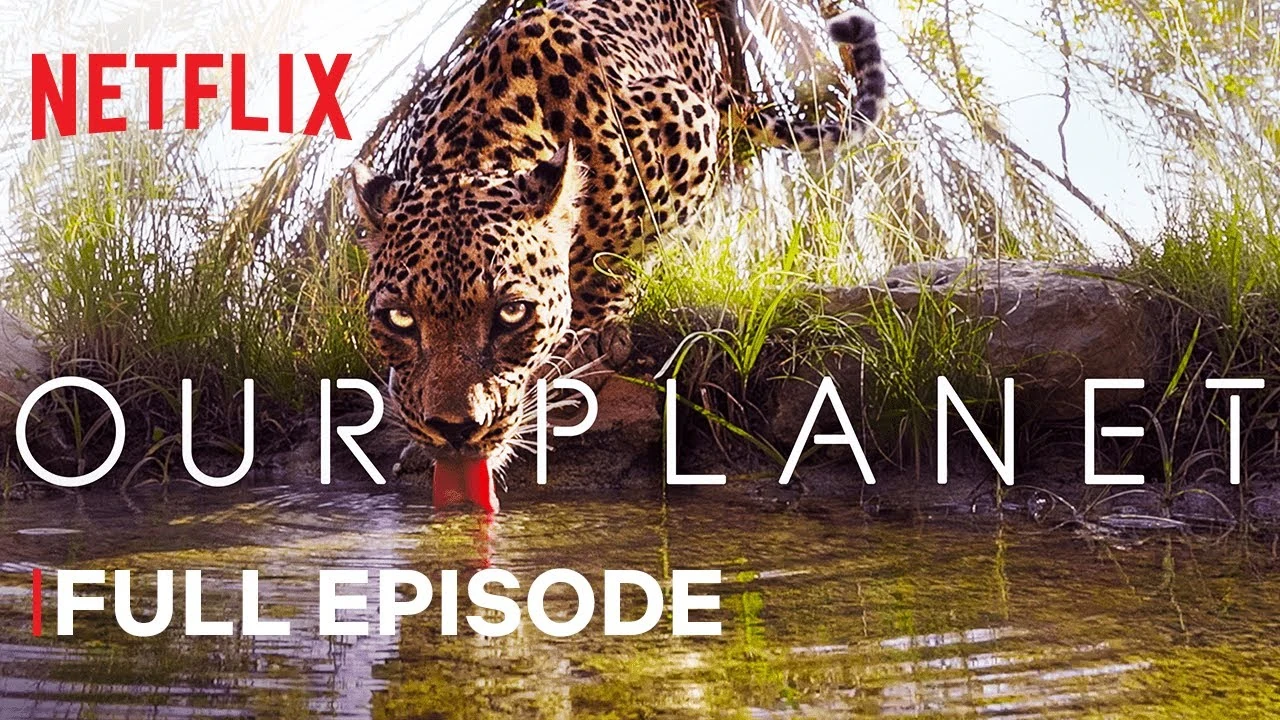
Alongside these authored series, Attenborough narrated programmes including Wildlife on One, which ran from 1977 to 2005, and more than 50 episodes of Natural World. He was also associated with The Blue Planet (2001), a comprehensive series on marine life, and Planet Earth (2006), the BBC’s first wildlife series filmed in high definition. Subsequent projects included Blue Planet II, broadcast in 2017, and Planet Earth II. In 2019, he narrated Our Planet, which placed greater emphasis on the damaging effects of human activity. His later work also included the climate and biodiversity documentaries Climate Change – The Facts and Extinction: The Facts, and the 2020 film David Attenborough: A Life on Our Planet.
A more direct environmental argument
Environmental concerns were present in Attenborough’s work well before they became its most explicit theme. The last episode of The Living Planet focused on human damage to the environment and possible ways of reversing it. In later programmes, he addressed climate change, biodiversity loss and population growth more directly. His public advocacy has included support for conservation organisations and projects: he backed efforts to protect albatross from longline fishing and helped promote a rainforest reserve in Ecuador in memory of Life on Earth producer Christopher Parsons. He also supported the creation of ARKive, a digital library of natural-history media.
That stronger emphasis has not been without debate. Some critics have argued that presenting wilderness as a separate, pristine world can understate the human pressures affecting it. Attenborough himself once cautioned that repeated warnings in wildlife programmes might turn viewers away. Later films such as Extinction: The Facts and A Life on Our Planet adopted a more urgent tone. His advocacy has also reached international forums: he spoke at the opening of the 2021 United Nations Climate Change Conference, COP26, and in 2022 the United Nations Environment Programme named him a Champion of the Earth for his work documenting and advocating for the protection and restoration of nature.
Honours, influence and a continuing career
Attenborough was appointed a Commander of the Order of the British Empire in 1974, elected a Fellow of the Royal Society in 1983 and knighted in 1985. He became a Member of the Order of Merit in 2005 and received a Knight Grand Cross of the Order of St Michael and St George in 2020 for services to television broadcasting and conservation. His awards also include the BAFTA Fellowship, the Kalinga Prize for the popularisation of science and, in 2024, the Stephen Hawking Medal for Science Communication. His programmes have earned recognition across successive changes in television technology, including black-and-white, colour, high-definition and 3D.
His influence is visible in the work of wildlife filmmakers who followed him and in the unusual number of natural-history names that commemorate him. A British polar research ship bears his name. He has also continued to work into later life: in 2025 he presented Wild London, and the BBC announced that he would narrate Blue Planet III. His career links field-based natural history to the changing craft of television, from early location filming to high-definition and 3D production.
Why David Attenborough deserves a place in British Legacy
David Attenborough’s place in British Legacy rests on more than longevity or fame. His work made the natural world a central subject of British television, and series such as Life on Earth, The Living Planet and The Blue Planet gave complex accounts of evolution, ecology and marine life a form that audiences could follow. The achievement depended on collaboration: presenters, scientists, camera crews, editors and producers developed the techniques and knowledge that allowed animals and habitats to be filmed in new ways. Attenborough’s distinctive role was to connect that work to viewers without making himself the subject of it.
His contribution also reaches beyond presenting. As controller of BBC Two, he supported a varied public-service schedule that included arts, science and experimental comedy, while later returning to programme-making on a scale that helped define the BBC’s natural-history output. In recent decades, his films have increasingly connected the wonder of wildlife with the pressures threatening it. That change matters: showing people what exists can deepen understanding, while explaining human impact makes conservation harder to treat as a distant concern. The British connection is specific and substantial: a career built within the BBC and British institutions has helped shape how audiences at home and abroad encounter nature. Attenborough’s legacy is therefore both a landmark in broadcasting and an enduring public invitation to take the living world seriously.
Sources
David Attenborough — Wikipedia revision 1377734588
Adapted in part from David Attenborough by Wikipedia contributors, under CC BY-SA 4.0. Text has been edited and combined with the existing article; this adapted text is shared under the same licence. Contributor history.