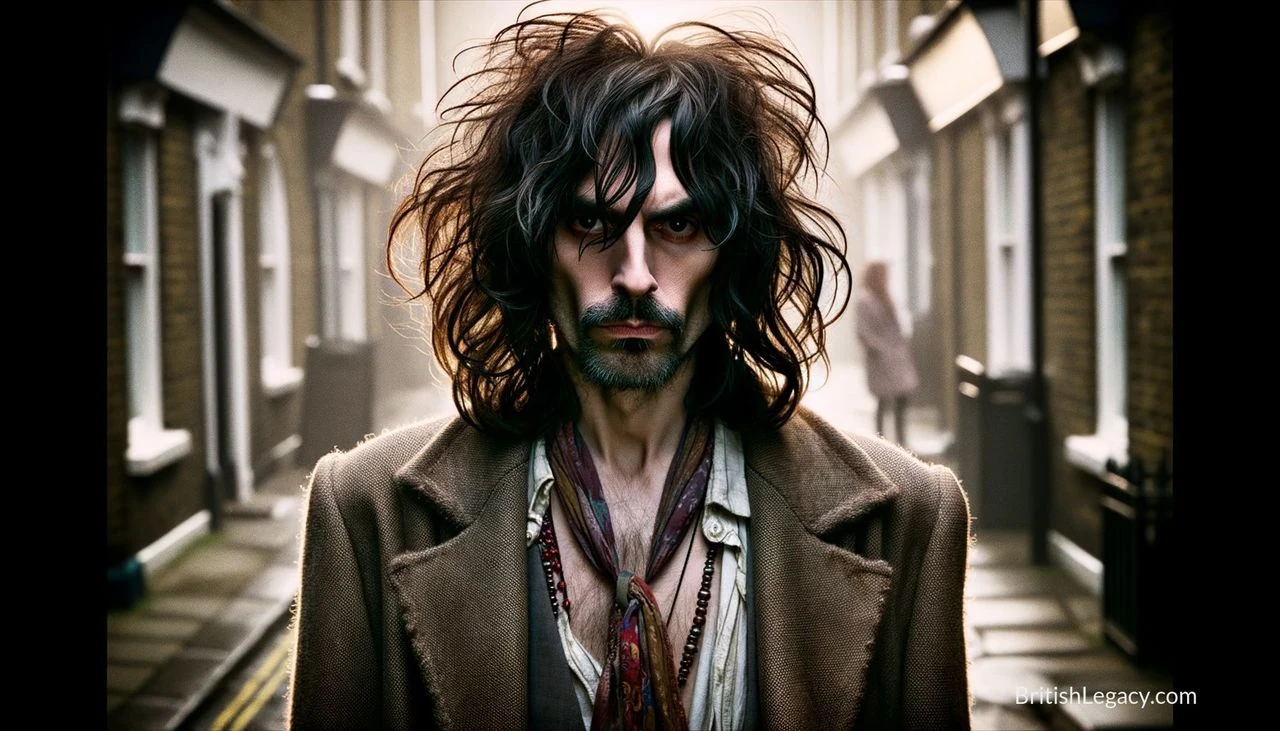
Russell Brand’s career began on British stages and screens before carrying him to Hollywood, bestselling books and a prominent, often contentious, place in political debate. His comedy, presenting and acting made him familiar to audiences in Britain and abroad; his later online commentary brought a different kind of attention. That public story now includes serious allegations and criminal charges, which Brand denies. Taken together, the turns in his career reveal a performer who has made reinvention part of his work, while the disputes around him make any account of his influence inseparable from questions of conduct and responsibility.
From Grays to the comedy circuit
Russell Edward Brand was born in Grays, Essex, on 4 June 1975. His parents separated when he was six months old, and he was raised by his mother. He attended Grays School and, after a school production of Bugsy Malone at 15, began working as a film extra. In 1991 he was accepted by the Italia Conti Academy, with his first year’s tuition funded by Essex County Council. He was later expelled for poor attendance and illegal drug use. Brand has said that a tutor sexually abused him.
Brand made his stand-up breakthrough at the Hackney Empire New Act of the Year final in 2000, finishing fourth. That year he also appeared at the Edinburgh Festival Fringe in Pablo Diablo’s Cryptic Triptych. His early performances drew on confessional material, including his experience of heroin addiction. He took the one-man show Better Now to Edinburgh in 2004, toured nationally with Shame in 2006, and followed it with Only Joking in 2007. In 2009, he toured the UK, America and Australia with Scandalous.
Television presenting gave Brand a wider British audience. He began on MTV UK in 2000, hosting Dancefloor Chart and Select, and later presented the cultural documentary-comedy series RE:Brand. From 2004 he hosted E4’s Big Brother’s Eforum, which became Big Brother’s Big Mouth. He also presented Channel 4 programmes including Ponderland and The Russell Brand Show, and hosted the Brit Awards in 2007. His radio work included The Russell Brand Show on BBC Radio 6 Music and Radio 2.
That radio career ended in 2008 after Brand and Jonathan Ross broadcast lewd telephone messages left for actor Andrew Sachs. Brand resigned from the BBC and Ross was suspended without pay. The BBC Trust later described the calls as a “deplorable intrusion with no editorial justification”; the broadcaster was fined by Ofcom. The episode remains a defining example of how Brand’s appetite for provocation could spill beyond performance into consequential professional misconduct.
Film roles and a second career in writing
Brand’s first major film role was Flash Harry in the British comedy St Trinian’s (2007). He reached a much larger international audience as Aldous Snow, a rock star, in Forgetting Sarah Marshall (2008), then returned to the character in Get Him to the Greek (2010), alongside Jonah Hill. Other screen roles included Trinculo in Julie Taymor’s The Tempest, Dr Nefario in the Despicable Me films, the title role in the 2011 remake of Arthur and Lonny in Rock of Ages. He later voiced Creek in Trolls and appeared in Death on the Nile (2022).
Writing became another channel for Brand’s personal and political voice. His autobiography, My Booky Wook, appeared in 2007, followed by Booky Wook 2: This Time It’s Personal in 2010. He also published Irons in the Fire, a collection of writing about West Ham United and the England national football team, and Articles of Faith, which brought together his columns on philosophy and football. His later books included Revolution (2014), Recovery: Freedom from Our Addictions (2017) and Mentors: How to Help and Be Helped (2019). His children’s book The Pied Piper of Hamelin: Russell Brand’s Trickster Tales, illustrated by Chris Riddell, was published in 2014.
Activism, addiction and online commentary
Brand’s public engagement with addiction has combined personal testimony and campaigning. In 2012 he spoke to a parliamentary committee about drug addiction and argued for decriminalisation, saying that criminal penalties did not address the needs of people dependent on drugs. A BBC Three documentary, Russell Brand: From Addiction to Recovery, followed later that year. He also made End the Drugs War for the channel in 2014, exploring drug policy and approaches to people who use illicit drugs. Brand was a patron of the Focus 12 treatment programme, which he had used; the charity closed in 2018.
His activism broadened into criticism of economic inequality, corporate power and political institutions. In 2013 he guest-edited a special issue of the New Statesman on revolution and drew wide attention after telling Jeremy Paxman on Newsnight that he had never voted and would not do so. He argued for a socialist, egalitarian system and a substantial redistribution of wealth. In 2014 he launched the YouTube series The Trews and published Revolution. He subsequently changed his position on voting: during the 2015 general election campaign he interviewed Labour leader Ed Miliband, released conversations with Green Party politicians and urged viewers to vote Labour, while also supporting Green MP Caroline Lucas in Brighton.
Brand’s political activity has not followed a single stable direction. During the COVID-19 pandemic, his YouTube output increased and shifted towards material that critics described as promoting denialism and conspiracy theories. YouTube removed one of his videos in 2022 over its medical misinformation policy; Brand then moved his channel to Rumble and started the daily show Stay Free. He has also used podcasts, including Under the Skin, to interview guests on subjects such as politics, spirituality and culture. His media work has consequently been both a platform for his arguments and a continuing source of criticism.
Allegations, charges and the limits of the public record
In September 2023, an investigation by The Times, The Sunday Times and Channel 4’s Dispatches reported allegations by several women of sexual assault, sexual misconduct and emotional abuse. The reported allegations concerned incidents between 2006 and 2013. Brand denied criminal wrongdoing and said his relationships had been consensual. The investigation also prompted renewed attention to earlier complaints about his conduct in broadcasting and to comments he had made on air.
Police investigations and legal proceedings followed. In April 2025, the Metropolitan Police charged Brand with one count of rape, one count of indecent assault, one count of oral rape and two counts of sexual assault, relating to alleged offences against four women between 1999 and 2005. Brand denied the charges and said he would defend himself in court. The Crown Prosecution Service authorised two further charges, one of rape and one of sexual assault, in December 2025. The account of the proceedings in the referenced article states that Brand pleaded not guilty to the earlier charges and that a trial was scheduled to begin in October 2026. These are allegations and charges, not findings of guilt.
Separate civil claims have also been reported, including a case concerning an alleged incident during production of the film Arthur. Brand has denied the allegations. The distinction matters: allegations, criminal charges and civil claims are different kinds of proceedings, and none should be presented as a proven account of events. Their significance to his public story lies in the seriousness of the claims and the legal processes they have prompted, alongside Brand’s stated denials.
Why Russell Brand deserves a place in British Legacy
Brand’s place in a record of British public life rests first on a career built across recognisably British institutions and forms: stand-up at the Hackney Empire and Edinburgh Festival Fringe, television on MTV UK, E4 and Channel 4, and radio on the BBC. His work then crossed into international film, most visibly through Forgetting Sarah Marshall and Get Him to the Greek. That route—from British comedy and broadcasting to Hollywood—shows how performers can move between national media cultures, carrying a distinctive stage persona with them. His books, from the confessional My Booky Wook to the political argument of Revolution, also demonstrate how a comedian can turn a public profile into a continuing presence in publishing and debate.
His legacy cannot be reduced to an uncomplicated story of influence or inspiration. Brand used personal experience to draw attention to addiction and drug policy, including through parliamentary testimony and documentaries, while his political interventions shifted from rejecting electoral participation to urging people to vote. Those changes are part of the record, not evidence of a settled programme. So too are the serious allegations and charges, which he denies and which must be described without treating them as proven. For British Legacy, the value of including Brand is precisely that his career connects comedy, broadcasting, popular culture and political argument—and that examining it honestly requires attention both to his work and to the disputes that now shape how it is received.
Sources
Adapted in part from Russell Brand by Wikipedia contributors, under CC BY-SA 4.0. Text has been edited and combined with the existing article; this adapted text is shared under the same licence. Contributor history.