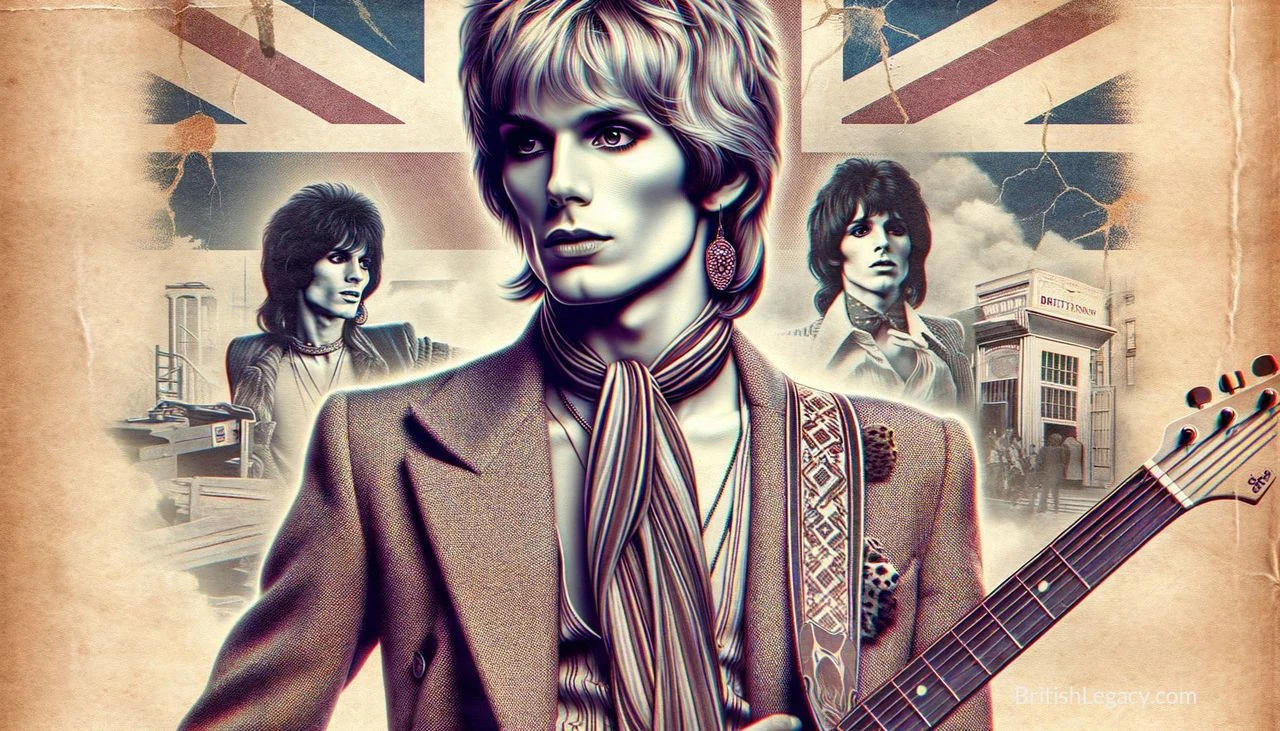
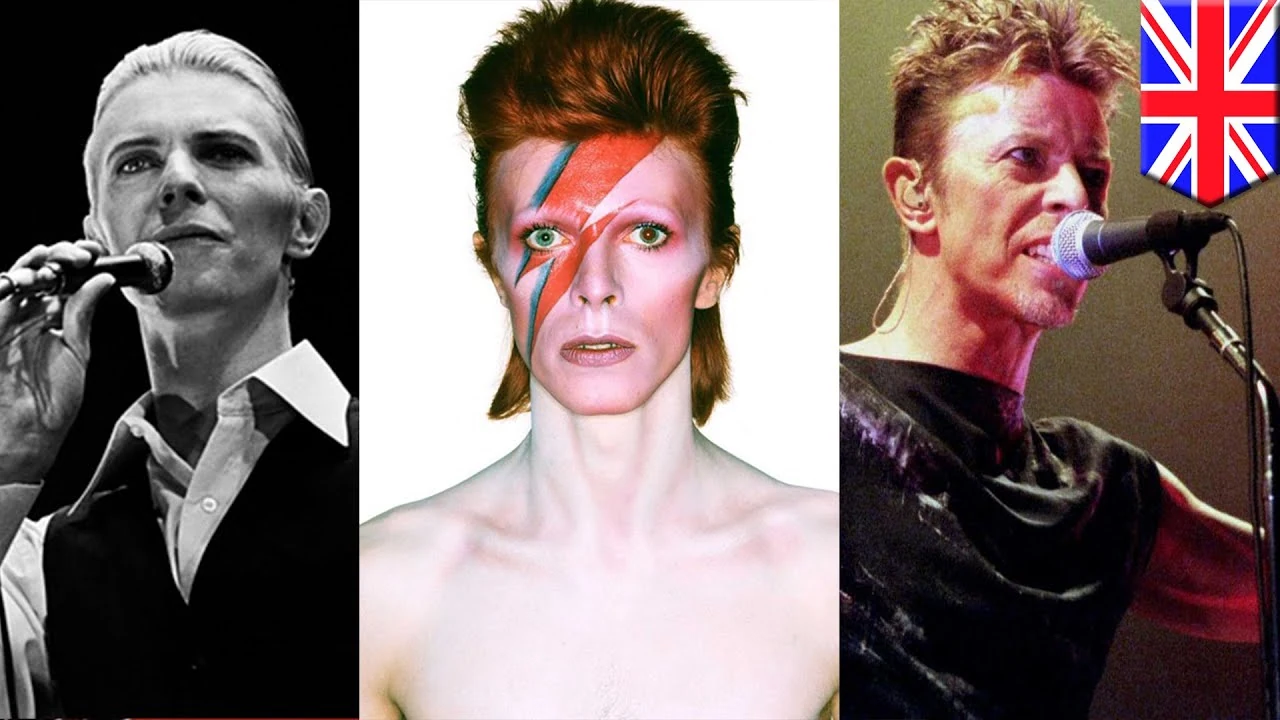
David Bowie made reinvention part of his art. A singer and songwriter who moved between glam rock, soul, electronic music and art rock, he used characters, clothes and stagecraft to give each change of direction a visible form. His career began in London bands and reached a British breakthrough with “Space Oddity”; it went on to reshape popular music and fashion, while his selective acting roles carried his presence on to screen.
Finding a voice in London
Born David Robert Jones in Brixton, London, on 8 January 1947, Bowie studied art, music and design before pursuing a career in music. At 15, he formed the Konrads, the first in a succession of local groups. Early singles and his self-titled debut album did not find a wide audience. He adopted the name David Bowie in the mid-1960s, distinguishing himself from Davy Jones of the Monkees.
His breakthrough came in 1969 with “Space Oddity”, a song about the fictional astronaut Major Tom. It reached the UK top five and established a distinctive early success. Bowie continued to change musical direction: The Man Who Sold the World moved towards hard rock, while Hunky Dory brought together art pop and melodic pop rock. The latter also showed how readily his songs could turn from personal or playful subjects to direct tributes to artists who had shaped him.
Ziggy Stardust and the art of transformation
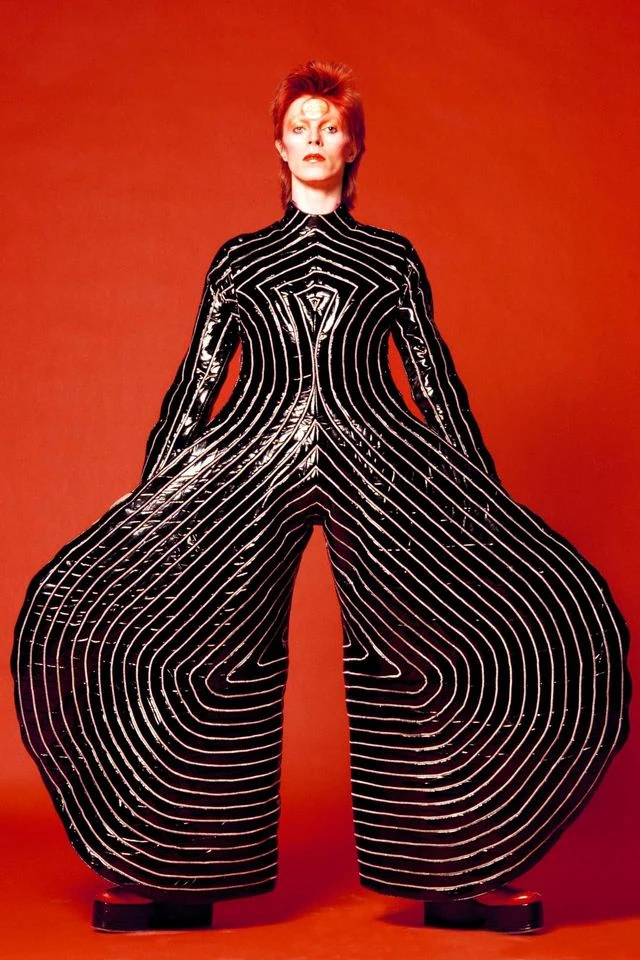
In 1972, Bowie introduced Ziggy Stardust, an imagined rock star from another world. The character gave its name to The Rise and Fall of Ziggy Stardust and the Spiders from Mars, and the album and stage show brought him to a wider audience. The theatrical performance, red hair and striking costumes made the persona inseparable from its music. Bowie later said that remaining in character had become difficult; in July 1973, he abruptly announced Ziggy’s retirement on stage at the Hammersmith Odeon in London.
He did not settle into a new fixed identity. Diamond Dogs introduced Halloween Jack; Station to Station brought the Thin White Duke. The 1975 album Young Americans marked a move towards soul and produced “Fame”, a US number-one single made in collaboration with John Lennon. On Station to Station, Bowie began turning towards art rock and electronic sounds, directions he explored further in the Berlin-era albums Low, “Heroes” and Lodger.
Those shifts were more than changes of genre. Bowie treated performance, image and sound as parts of a single artistic decision. Yet the characters could carry risks as well as creative possibilities: he later described the strain of becoming too closely identified with Ziggy. His career’s many transformations were not simply a sequence of costumes; they changed the music and the way an audience encountered it.
Music, clothes and the stage
Bowie’s style made clothing a conspicuous part of that encounter. Ziggy’s vivid, otherworldly look and the more restrained dress associated with the Thin White Duke showed how deliberately he could change his public image. His costumes did not merely accompany the songs: they helped audiences read the characters and the worlds he built around them. Over his career he worked with designers including Kansai Yamamoto, and his visual choices became an enduring part of his influence on fashion.
The androgynous presentation of Ziggy and other personas challenged conventional expectations of masculine appearance. Bowie’s sexuality, meanwhile, is a more complicated subject than a simple story of public declaration: he called himself bisexual in interviews in the 1970s, but later said that his public statement had been a mistake. His changing accounts should not be reduced to a claim that his position was consistent. His performance and image nevertheless became important points of reference for many LGBTQ audiences and for people confronting narrow ideas about gender and identity.
His musical range also extended beyond his best-known 1970s work. Let’s Dance brought broad commercial success in 1983, while his later albums continued to experiment with new sounds. In 1988, he put his solo career on hold to front Tin Machine, a hard-rock band, before returning to solo work. After a decade away from recording, he released The Next Day in 2013. His final studio album, Blackstar, appeared on his 69th birthday, two days before his death in New York on 10 January 2016.
Beyond the recording studio
Acting was another strand of Bowie’s career. He took the lead role of Thomas Jerome Newton in Nicolas Roeg’s The Man Who Fell to Earth (1976), later appearing in films including Merry Christmas, Mr Lawrence, Labyrinth and The Prestige. He tended to choose supporting roles and cameos rather than build a conventional leading-man career. On stage, he played Joseph Merrick in the Broadway production of The Elephant Man; his performance, without stage make-up, drew critical praise.
Bowie also worked with the emerging possibilities of the internet. Through BowieNet, launched in 1998, subscribers could access exclusive material and communicate with other fans. The service offered a more direct relationship between artist and audience than a conventional promotional channel. His ventures into online music and art were part of a wider curiosity about how creative work could reach people, even when music remained his central practice.
Recognition followed across music and culture. Bowie received six Grammy Awards and four Brit Awards, was inducted into the Rock and Roll Hall of Fame in 1996 and received the Brits Icon award posthumously in 2016. The Victoria and Albert Museum’s exhibition David Bowie Is, which opened in 2013, attracted more than 300,000 visitors in London before travelling internationally. In 2017, he was also featured on a series of UK postage stamps.
Why David Bowie deserves a place in British Legacy
Bowie’s British legacy rests on a career that made popular music a place for sustained experiment. “Space Oddity” established him in the UK; Ziggy Stardust then brought together songwriting, theatrical performance and a deliberately constructed visual identity. Rather than repeat that success, he repeatedly changed his sound, from the soul-influenced Young Americans to the more exploratory Berlin albums. That willingness to take creative risks helped make reinvention a practical artistic method, not merely a slogan. His influence reaches beyond records: costumes and stage images became part of how audiences understood his songs, while his screen roles and work with BowieNet extended his activity into film and digital culture.
His connection to Britain is also visible in the public life of his work: the London breakthrough of “Space Oddity”, the Ziggy performance at the Hammersmith Odeon, and the V&A’s major exhibition all locate important parts of his story here. The exhibition’s international tour showed how a British museum could present popular music, clothing and stage design as cultural history. His career also left a more personal legacy for audiences who found possibility in his refusal to conform to expected appearances. Bowie’s own statements about sexuality changed over time, but his androgynous characters became significant to many people who felt constrained by rigid ideas of gender. Remembering him in British Legacy means recognising both the music and the wider creative permission his work offered: to change direction, make an image part of an idea, and treat popular culture as a serious field for invention.
Sources
David Bowie (revision 1377341632)
Adapted in part from David Bowie by Wikipedia contributors, under CC BY-SA 4.0. Text has been edited and combined with the existing article; this adapted text is shared under the same licence. Contributor history.