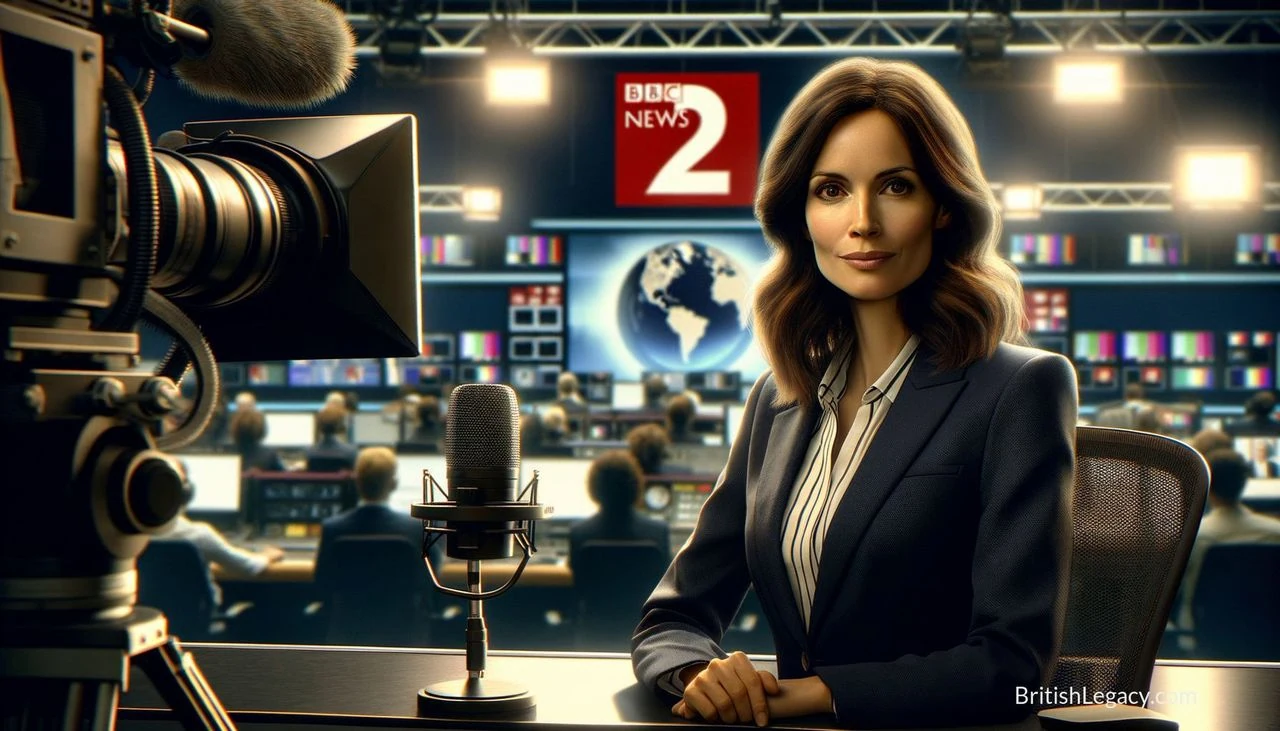
Victoria Derbyshire’s broadcasting career has moved between radio and television, daily news and long-form current affairs. At BBC Radio 5 Live she became a regular presenter of its morning programmes; on television, her own current affairs show brought interviews and debate to BBC Two and the BBC News channel. She has also spoken publicly about breast cancer, recording video diaries during treatment that were viewed millions of times.
Training in Lancashire
Victoria Antoinette Derbyshire was born on 2 October 1968 at Fairfield General Hospital in Bury, Lancashire. She attended Bury Grammar School for Girls, then studied English language and literature at the University of Liverpool. She went on to take a postgraduate diploma in radio and television journalism at Preston Polytechnic, now the University of Lancashire.
Her first broadcasting work included reporting for BBC CWR and BBC GMR Radio. In 1998 she joined BBC Radio 5 Live, initially deputising for Jane Garvey on the breakfast programme. She later became a regular co-presenter with Julian Worricker. The programme won Gold Sony Awards in 1998 and 2002. When Worricker left the breakfast show in January 2003, Derbyshire presented it with Nicky Campbell. After maternity leave, she took over the station’s morning news programme in August 2004.
Radio gave Derbyshire a daily platform for interviews and news, but it also gave her opportunities to question the organisation around her. In 2010 she interviewed her own superior, Radio 5 Live controller Adrian Van Klaveren, about his decision not to move to MediaCityUK in Salford when the station relocated. She continued to present from London rather than moving to Salford. Her final Radio 5 Live programme was broadcast on 5 September 2014.
From daily radio to television current affairs
Derbyshire’s television work included news and political programmes, Panorama, Watchdog and This Week. She also presented SportsTalk, a Saturday-morning sports chat show on Channel 4, and co-presented the final episode of Central Weekend Live in 2001. In 2013 she began presenting Newsnight while continuing to host her daily Radio 5 Live programme. She made her debut on Have I Got News for You in 2011.
Her own current affairs programme began after she proposed the idea to James Harding, then head of BBC News; he commissioned it three days later. First broadcast on 7 April 2015, The Victoria Derbyshire Show appeared on BBC Two and the BBC News channel. It combined television broadcasting with a digital presence and covered subjects including domestic abuse, mental health and politics. Interviews with public figures and people discussing their own experiences formed part of its approach.
The BBC announced the programme’s cancellation in January 2020, citing its cost and its failure to attract young and diverse audiences. The last edition was broadcast in March that year. Derbyshire subsequently presented BBC News at 9 on BBC Two, the BBC News channel and BBC World News. During the first COVID-19 lockdown, she appeared on screen with the National Domestic Abuse hotline number written on her hand, drawing attention to the risks for people isolating with abusive partners. She became joint lead presenter of Newsnight with Kirsty Wark in September 2022.
Reporting, recognition and public candour
Derbyshire’s journalism has included difficult interviews as well as daily news presentation. In 2009 she received the Nick Clarke Award for an interview with a man accused, and later cleared, of date rape. She was named PinkNews Broadcaster of the Year in 2015 and 2016, and was nominated for the Royal Television Society’s Network Presenter of the Year award in 2016 and 2017.
In August 2015, Derbyshire announced that she had breast cancer and would undergo a mastectomy, while continuing to present when possible. She recorded video diaries documenting her treatment, including mastectomy, chemotherapy and radiotherapy. The diaries were viewed millions of times. In 2018 she joined seven other women affected by breast cancer in ITV’s The Real Full Monty: Ladies’ Night, a programme intended to encourage women to check their bodies for signs of the disease.
Her public discussion of treatment sits alongside her reporting on sensitive subjects: both placed personal experience and difficult questions in front of a large audience. In 2020 she presented a Panorama programme about domestic abuse during the COVID-19 lockdown. The work linked a subject explored in her current affairs journalism to a practical public message about finding help.
A continuing television career
After the end of her daily current affairs programme, Derbyshire continued in television news and current affairs. Her presenting work has included BBC News at 9, Newsnight and Panorama. The move from Radio 5 Live to programmes across BBC television has made her career one of sustained work in British news broadcasting rather than a story confined to a single show.
That continuity matters to the shape of her work. A daily radio programme depends on keeping pace with the news and questioning guests in the moment; a television current affairs programme can give interviews and reported stories a different form. Derbyshire has worked in both settings, as presenter, interviewer and reporter, while also appearing in programmes that bring specific public issues to viewers.
Why Victoria Derbyshire deserves a place in British Legacy
Victoria Derbyshire deserves a place in British Legacy for a body of work that connects radio journalism, television current affairs and public service broadcasting. At Radio 5 Live she moved from deputising on the breakfast programme to presenting its morning news, then carried that experience into television. Her eponymous BBC programme, which she proposed and helped bring to air, placed interviews and discussion of subjects such as domestic abuse and mental health on BBC Two and the BBC News channel. Her later work on Newsnight and Panorama extends that record across different kinds of reporting.
Her contribution also includes making a health experience visible to viewers. By recording treatment diaries after her breast cancer diagnosis and taking part in The Real Full Monty: Ladies’ Night, she helped put information and awareness about breast cancer into public broadcasting. During the first lockdown, her on-screen display of the domestic abuse hotline number connected an urgent public message with her role as a news presenter. These are specific examples of broadcasting used not only to report events but to direct attention to issues affecting people’s lives. Her British legacy rests in that combination of sustained journalism, interview work and public communication across the BBC and other UK broadcasters.
Sources
Victoria Derbyshire — Wikipedia revision 1378191144
Adapted in part from Victoria Derbyshire by Wikipedia contributors, under CC BY-SA 4.0. Text has been edited and combined with the existing article; this adapted text is shared under the same licence. Contributor history.