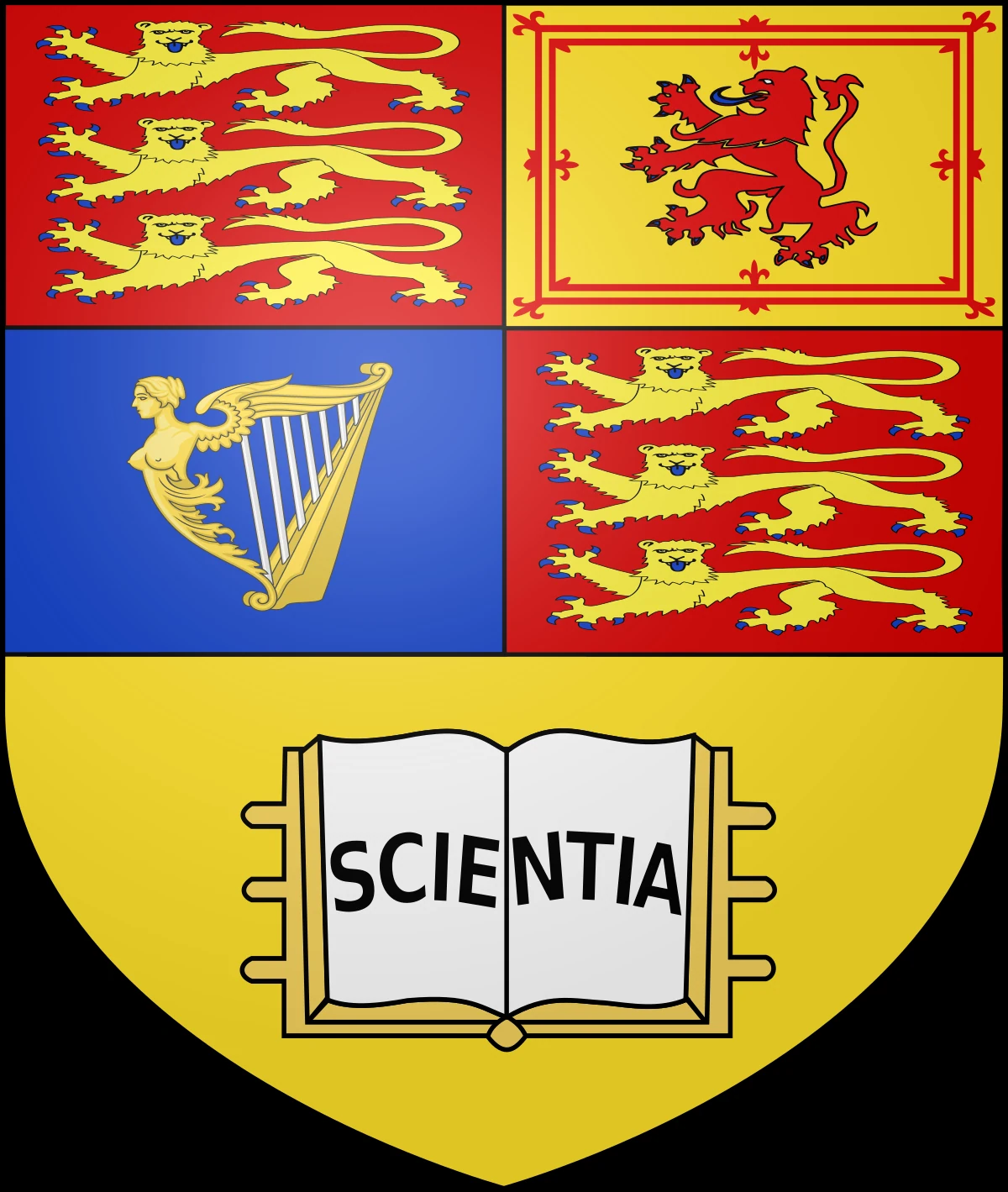
Imperial College London began with an ambition to bring scientific and technical education together in South Kensington. Its institutional story is not a single merger in 1907, as the older account suggests: a Royal Charter established the college that year by incorporating the Royal College of Science and the Royal School of Mines, while the City and Guilds College joined in 1910. Imperial later developed into an independent university with teaching and research across engineering, medicine, natural sciences and business.
A South Kensington project takes shape
The college’s roots reach back to the Royal College of Chemistry, founded in 1845 with support from Prince Albert and Parliament. The Royal School of Mines grew from the chemistry institution, while other colleges and medical schools would eventually contribute to Imperial’s structure. South Kensington itself had been shaped by the Great Exhibition of 1851. Its proceeds were assigned to developing an area for cultural and scientific advancement, where museums, colleges and other institutions followed.
The Royal College of Science took shape from the Normal School of Science, established in 1881 under Thomas Huxley and renamed by royal consent in 1890. The Central Institution of the City and Guilds of London Institute opened as a technical education school in 1884. Against this background, concern that Britain was falling behind Germany in scientific and technical education prompted a government committee to consider the future of the Royal College of Science.
On 8 July 1907, Edward VII granted a Royal Charter establishing the Imperial College of Science and Technology. The Royal College of Science and Royal School of Mines were incorporated; the charter provided for City and Guilds College to join once governance conditions were met. The college joined the University of London in 1908, and City and Guilds followed in 1910. The distinction matters: Imperial’s foundation was a process, not the simultaneous amalgamation of all three institutions.
From college to independent university
Imperial’s relationship with the University of London shaped its early academic life. Students initially had to study separately for London degrees. In 1925, the university changed its regulations so that courses taught only at Imperial could be examined by the University of London, allowing students to earn a Bachelor of Science. Imperial received its own degree-awarding powers in 2003 and became fully independent of the University of London in July 2007.
The institution grew through changes to its teaching and research as well as through its constituent colleges. Medical education, whose roots lay in several London schools, was brought into Imperial through mergers. St Mary’s Hospital Medical School joined in 1988; further mergers followed, and the Imperial College School of Medicine was formally established under the Imperial College Act 1997. The Imperial Business School was established in 2003 and opened in 2004.
Today Imperial is organised into four faculties: engineering, medicine, natural sciences and business. Its South Kensington campus remains the principal site for teaching and research. The setting places the college among the cultural and scientific institutions of Albertopolis, close to the Science Museum, the Natural History Museum and the Victoria and Albert Museum. Queen’s Tower, a surviving part of the former Imperial Institute, stands at the heart of the campus.
Research, medicine and enterprise
Imperial’s work spans fundamental science, engineering, clinical research and business. Its medical faculty developed through the joining of hospital-based schools, and its teaching and research are connected to hospitals across London. The college also participates in national research institutes, including the Francis Crick Institute, which opened in 2016. Its interdisciplinary centres address areas including climate change, energy, infection, global health and data science.
Research at Imperial has also been linked to commercial development. The college promotes the transfer of research into products and companies, in part through its technology-transfer company, Imperial Innovations. Researcher Narinder Singh Kapany made important contributions to fibre optics, an example of the scientific work associated with the institution. Such activity connects university research with applications beyond the laboratory, while the breadth of its faculties brings different kinds of expertise into the same academic community.
White City has become a second major campus, with facilities for research, postgraduate accommodation and commercialisation. The Innovation Hub opened as Imperial began moving into the campus in 2016; the Molecular Sciences Research Hub followed and was officially opened in 2019. The campus also includes the Invention Rooms, a hackerspace and community outreach centre. These facilities give a concrete form to Imperial’s stated interest in entrepreneurship and collaboration between academic research and industry.
Imperial’s international work sits alongside its London base. It is a member of the Russell Group and other university networks, and its long-standing partnership with the Massachusetts Institute of Technology dates to a formal collaboration during the Second World War. The college has also collaborated with institutions in Britain and abroad through research programmes and shared institutes. Its reach is therefore not separate from its local history: international partnerships and London-based teaching and research form parts of the same institution.
People, teaching and public life
Imperial’s academic record includes researchers and graduates associated with major contributions in science and mathematics. Fourteen Nobel Prize winners and three Fields Medal winners are associated with the college or institutions that later merged with it, according to the supplied account. Its wider community includes academics, engineers, medical researchers, business figures, politicians, writers and musicians. These associations reflect the institution’s range, but they should not be mistaken for a single measure of its work: teaching, research and the everyday life of the college are equally central to its identity.
Student life brings together academic departments and older traditions inherited from the constituent colleges. Imperial College Union supports clubs, societies and student media, including the newspaper Felix. The annual Bottle Match between the Royal School of Mines and the University of Exeter’s Camborne School of Mines preserves a rivalry between mining schools; the first recorded match dates to 1902. The college also funds student expeditions through its Exploration Board, established in 1955.
Imperial’s public role is visible in its South Kensington surroundings and in events that bring science and the arts to wider audiences. It is a partner in the Great Exhibition Road Festival, which grew from the Imperial Festival and is held with neighbouring institutions. The college’s main graduation ceremony, Commemoration Day, recalls a 1945 visit by King George VI and Queen Elizabeth marking the centenary of the Royal College of Chemistry. These links connect present-day activity with the institutions and civic ambitions that helped create the college.
Why Imperial College London deserves a place in British Legacy
Imperial belongs in British Legacy because its history records a sustained national investment in scientific and technical education. Its formation joined institutions with distinct histories: the Royal College of Science and Royal School of Mines came together under the 1907 charter, and City and Guilds College joined in 1910. Later changes—from medical-school mergers to independent degree-awarding status—show how that foundation adapted rather than remaining fixed. The result is a London university whose work spans engineering, natural sciences, medicine and business.
The college’s legacy is also visible in the connection it has built between education, research and practical application. Its medical schools developed through relationships with London hospitals; its researchers contribute to shared institutes such as the Francis Crick Institute; and facilities at White City support research, outreach and commercialisation. These are specific routes by which academic work can reach patients, industries and communities. Imperial’s place in South Kensington, among major museums and cultural institutions, adds another dimension: scientific learning sits within a wider public landscape rather than behind closed doors.
That British connection is not a claim that Imperial’s achievements belong only to Britain. The college has international students, researchers and partners, and its scientific work crosses national boundaries. Its significance lies in the institutions built in London, the education and research conducted there, and the networks those activities sustain. Remembering Imperial means recognising both the long development of British technical education and the value of universities that turn knowledge into shared capability.
Sources
Imperial College London (revision 1379528685)
Adapted in part from Imperial College London by Wikipedia contributors, under CC BY-SA 4.0. Text has been edited and combined with the existing article; this adapted text is shared under the same licence. Contributor history.