
James Lovelock made instruments that could detect chemicals in the atmosphere and advanced an idea that changed how many people think about the relationship between life and the Earth. The electron capture detector helped reveal the widespread presence of chlorofluorocarbons, while the Gaia hypothesis proposed that living and non-living parts of the planet interact as a complex system. His career also encompassed medical research, work on instruments for planetary exploration and outspoken, sometimes disputed arguments about climate and energy.
From medical research to a life of invention
James Ephraim Lovelock was born in Letchworth Garden City, Hertfordshire, on 26 July 1919. He studied chemistry at the University of Manchester and, after receiving his doctorate from the London School of Hygiene and Tropical Medicine in 1948, spent two decades at the National Institute for Medical Research in London. His early work included research into disinfection and the effects of freezing and thawing on living cells. In the 1950s, he experimented with freezing rodents and reviving them, work that later influenced ideas about cryopreservation.
Lovelock was an inventor as well as a researcher. Among his instruments was the electron capture detector, a sensitive device for identifying trace quantities of certain compounds. The Royal Society’s account of his election noted its use in pollution studies. Working with the detector, Lovelock detected the widespread presence of chlorofluorocarbons, or CFCs, in the atmosphere. In 1972 he measured CFC-11 in air samples collected from the northern hemisphere to Antarctica aboard the research vessel RRS Shackleton.
Those results established that CFCs were widespread; they did not, by themselves, establish the later-discovered damage to the ozone layer. Lovelock initially judged the concentrations to pose no conceivable toxic hazard, a position he later clarified as referring to toxicity. The link between CFCs and ozone depletion was subsequently proposed by other researchers. His measurements nevertheless provided useful evidence of the compounds’ presence throughout the atmosphere.
From the early 1960s, Lovelock also designed sensitive instruments for NASA’s planetary exploration programme. His work on planetary atmospheres helped lead him towards a question that would define his public reputation: how might scientists recognise life on another world? Comparing the chemical make-up of Mars’s atmosphere with Earth’s, he reasoned that the two planets’ contrasting atmospheric conditions offered clues about the presence of life. It was in the context of this work, rather than as a simple product of serving as a consultant on the Viking mission, that he developed the Gaia hypothesis.
Gaia: a proposal about the Earth as a system
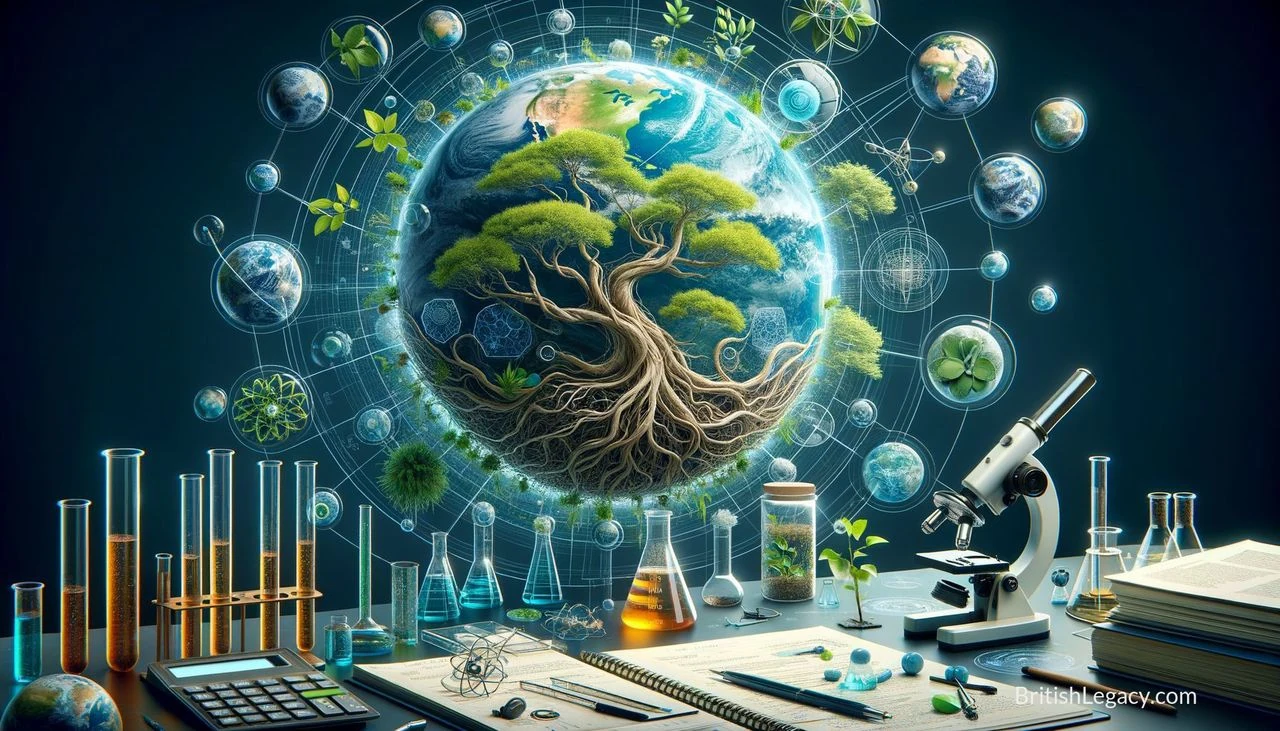
Lovelock formulated the hypothesis in the 1960s, drawing on earlier work in biology and Earth science. The novelist William Golding suggested the name Gaia, after the Greek goddess of the Earth. The hypothesis describes the biosphere and the planet’s physical environment as a complex interacting system: living things can affect the conditions around them, while those conditions in turn shape life. Lovelock argued that biological processes could contribute to the regulation of the environment in ways that help sustain life.
The idea was influential, but its reception should not be mistaken for scientific consensus. It appealed to many environmentalists, while prominent critics questioned how natural selection acting on individual organisms could produce regulation at a planetary scale. Lovelock and Andrew Watson addressed one version of that challenge in their 1983 computer model, Daisyworld. In the model, black and white daisies with different abilities to absorb or reflect heat compete on a planet receiving changing amounts of energy from its star. Changes in the balance between the daisies can moderate the planet’s temperature. The model showed how interactions among organisms could produce a system-level effect without requiring the organisms to act for the good of the whole planet.
Gaia gave Lovelock a framework for writing about Earth as an interconnected system, and he returned to it in books including Gaia: A New Look at Life on Earth (1979). His later books, such as The Revenge of Gaia (2006) and The Vanishing Face of Gaia (2009), extended his arguments about human influence, climate and the capacity of natural systems to absorb change. The hypothesis became a significant point of reference in environmental discussion, but neither its reach nor its appeal removed the scientific disagreements about how its proposed mechanisms should be understood.
Climate warnings, energy and changed predictions
Lovelock used the Gaia framework to argue that human activity could place pressure on the systems that support life. His climate predictions were often stark. In the 2000s he warned of severe consequences from global warming, including the possibility of extensive damage to human civilisation. He also supported nuclear power, arguing that it could provide energy with lower greenhouse-gas emissions than fossil fuels. That position put him at odds with many environmentalists who opposed nuclear energy.
His public record also includes reassessment. In 2012, Lovelock said he had been alarmist about the timing of climate change and had extrapolated too far, while maintaining that the climate was warming. He criticised what he saw as excessive certainty and rejected the claim that the science was settled in a way that removed uncertainty. These statements matter to an account of his influence: Lovelock’s climate writing helped bring urgent questions before a wide audience, but some of his predictions were later moderated by their author.
He continued to propose ways of responding to environmental change, including ocean pumps intended to encourage algal growth and draw carbon from the atmosphere. The proposal attracted criticism, including questions about whether it would work and what effects it might have. Lovelock said that it was intended to stimulate research. In his later work, including Novacene (2019), he turned to the possibility that advanced machine intelligence might shape the future of life. His public arguments were wide-ranging; their value lies not in treating every proposal as established science, but in recognising how persistently he tested large questions about the planet’s future.
Recognition, writing and later years
Lovelock was elected a Fellow of the Royal Society in 1974. His honours included the CBE in 1990, the Heineken Prize for Environmental Sciences that year, and the Companion of Honour in 2003. The Geological Society of London awarded him its Wollaston Medal in 2006. He served as president of the Marine Biological Association from 1986 to 1990 and worked as an independent scientist from a converted barn laboratory on the Devon–Cornwall border.
His books brought scientific ideas to readers well beyond specialist research. Alongside his writing on Gaia, he published an account of his life as an independent scientist, Homage to Gaia (2000). He also appeared on television and radio, discussing his hypothesis and the way it had been received. In 2019, he turned 100. Lovelock died at his home in Abbotsbury, Dorset, on 26 July 2022, his 103rd birthday, from complications related to a fall.
Why James Lovelock deserves a place in British Legacy
Lovelock’s place in British Legacy rests first on the practical reach of his scientific work. The electron capture detector was not simply a clever device: it made it possible to identify minute quantities of compounds and helped researchers establish that CFCs were widespread in the atmosphere. That evidence formed part of the scientific story of atmospheric pollution. His career also connected British medical research with international work on planetary exploration, showing how methods developed for one field could help frame questions in another.
His second contribution was an idea that travelled far beyond the laboratory. Gaia offered a memorable way to discuss interactions among organisms, the atmosphere and the rest of the planet. It became influential in environmental thought while remaining contested within science, and Lovelock’s Daisyworld model addressed one important objection by showing how planetary regulation might emerge from competition among organisms. His later climate interventions, his support for nuclear power and his retreat from some earlier predictions make his legacy more complex than a simple story of prescience. That complexity is part of its value: he made scientific ideas public, provoked argument, and sometimes revised his own claims. His work continues to give British readers a substantive example of how invention, environmental science and public debate can meet.
Sources
James Lovelock — Wikipedia, revision 1372742301 · James Lovelock — Wikipedia
Adapted in part from James Lovelock by Wikipedia contributors, under CC BY-SA 4.0. Text has been edited and combined with the existing article; this adapted text is shared under the same licence. Contributor history.
.jpg)