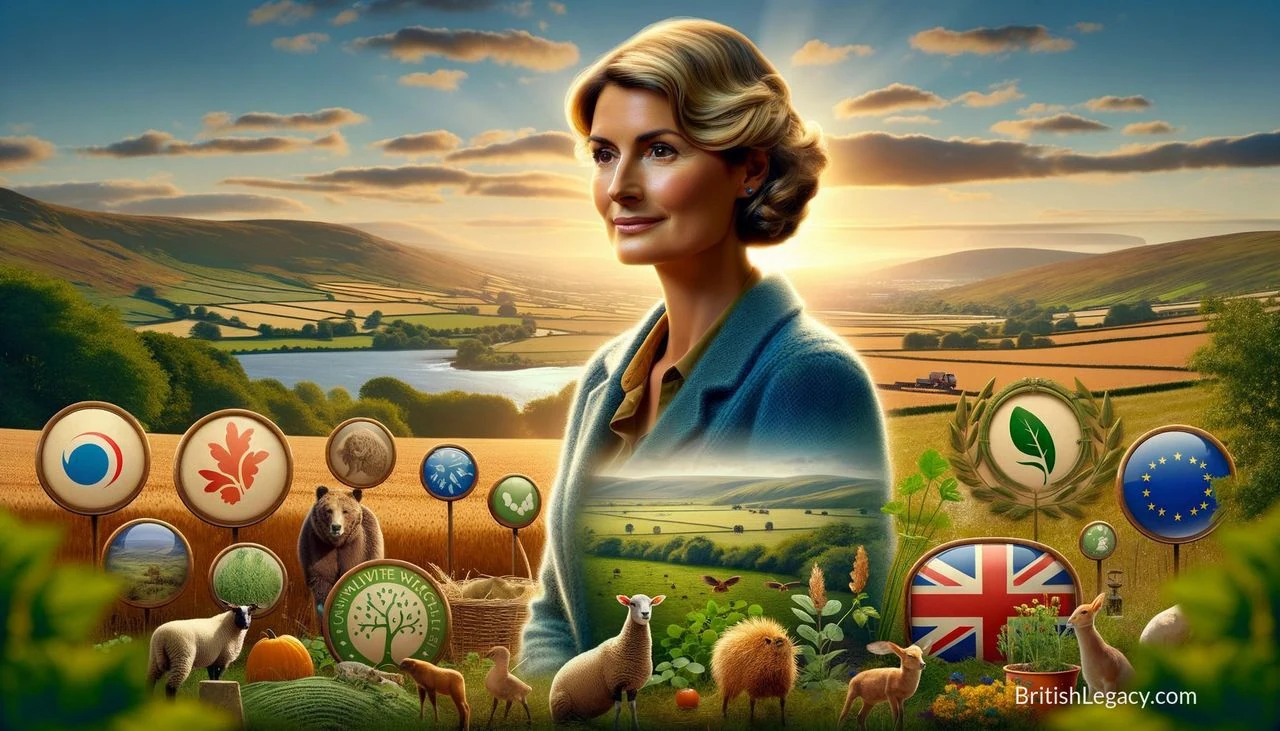
Kate Humble’s television career has ranged from wildlife programmes to science challenges and travel. Her best-known work, including Springwatch and Animal Park, has brought animals and the natural world into British homes; outside broadcasting, she has led the Royal Society for the Protection of Birds and established a farm in Wales. The thread running through these roles is a practical interest in how people encounter nature: on screen, in the countryside and through the organisations that protect wildlife.
A start in television, and a journey through Africa
Humble was born in Wimbledon, London, on 12 December 1968. Her family moved to Bray in Berkshire when she was nine months old, and she attended the Abbey School in Reading. After leaving school, she travelled through Africa from Cape Town to Cairo, taking jobs that included waitressing, driving safari trucks and working on a crocodile farm. The journey became an early part of a working life that would repeatedly bring travel, animals and television together.
She began in television as a researcher and moved into presenting. Her early screen work included Top Gear, Tomorrow’s World and Holiday: You Call the Shots, a series in which the team travelled in response to viewers’ suggestions. She had also appeared as an actress in the 1990 television production Spymaker: The Secret Life of Ian Fleming. Rather than following one narrow presenting format, she moved between popular factual television, travel and science.
That range was especially clear in Rough Science, which she presented from 2000 to 2005. In the series, scientists were set problems to solve with basic tools and supplies. The format made scientific methods visible through experiments and practical challenges. Humble also presented programmes including Countryfile and Holiday, building experience in factual television before becoming closely associated with wildlife broadcasting.
Wildlife on screen
Humble presented Animal Park, set at Longleat Safari Park, and Springwatch, which follows British wildlife through the seasons. She presented Springwatch from 2005 to 2011, working with Bill Oddie, Simon King, Chris Packham and Martin Hughes-Games at different points. She also presented Autumnwatch and Seawatch. The programmes offered different ways into the natural world: the lives of animals in a managed park, seasonal changes in the British countryside and wildlife along the coast.
Animal Park returned to her work at Longleat, where programmes followed the animals and the people responsible for their care. Springwatch and its companion series instead put seasonal observation at the centre, inviting viewers to pay attention to wildlife in Britain as it changed over time. Across those formats, presenting did more than convey information: it gave audiences a regular point of contact with animals and habitats that can otherwise be easy to overlook.
Her factual work continued to draw on travel and science. In The Hottest Place on Earth, she spent a month with the Afar people in Ethiopia’s Danakil Depression. She followed the history and trade of spices in The Spice Trail, and co-presented the science series Orbit with Helen Czerski in 2012. Other projects included Volcano Live and the BBC series Wild Shepherdess with Kate Humble. These programmes placed wildlife and the environment within wider stories about people, places and the forces shaping the natural world.
From broadcasting to conservation and farming
Humble’s work with conservation organisations gave her a role beyond presenting. She served as president of the Royal Society for the Protection of Birds from 2009 to 2013. In 2018, she became president of the Wildfowl & Wetlands Trust. She is also an ambassador for Living Streets, a UK walking charity. These roles connect her public profile to organisations concerned with birds, wetlands and the everyday experience of walking.
In 2007, she founded Stuff Your Rucksack, a website intended to match travellers with items needed by organisations around the world. The idea linked travel with practical support: people going abroad could find out what goods local organisations required and take them along. It was a different kind of initiative from a television series, but it similarly depended on making a connection between people and places.
Humble and her husband, television producer Ludo Graham, moved from Chiswick to Trellech in Monmouthshire in 2007. She later established her own farm after working on Lambing Live, the BBC series she presented from 2010 to 2014. Her broadcasting has included programmes about rural life, while the farm has brought her closer to the day-to-day work of keeping animals and managing land. She has also written about walking and country life: Thinking on My Feet: The Small Joy of Putting One Foot in Front of Another was shortlisted for the 2019 Wainwright Prize.
A varied body of work
Humble’s television work has not been confined to wildlife. In 2009, she presented The Frankincense Trail, following the historic trade route across the Middle East. She has also presented documentaries on subjects including the Battle of Britain and the communities featured in Extreme Wives with Kate Humble. Her books include Humble by Nature, Friend for Life: The Extraordinary Partnership Between Humans and Dogs, and Home Cooked.
This breadth matters to the shape of her career. A presenter may be known chiefly for a small number of programmes, but Humble’s work has moved among natural history, science, travel, rural life and history. She has repeatedly returned to subjects that involve close observation—whether testing what scientists can achieve with limited equipment, following a seasonal change in wildlife or exploring the work involved in farming.
Why Kate Humble deserves a place in British Legacy
Kate Humble’s place in British Legacy rests on a substantial contribution to the way factual television has made wildlife and science accessible. Springwatch and Autumnwatch gave seasonal observation a prominent place in British broadcasting; Animal Park brought the daily management of animals at Longleat to viewers. Her work on Rough Science, Orbit and other science programmes extended that public-facing role beyond natural history. These achievements are specific to her career: she has helped present subjects that require attention and explanation in formats designed for a broad audience.
Her contribution also reaches beyond the screen. As president of the RSPB and later the Wildfowl & Wetlands Trust, she held leadership roles in two organisations focused on wildlife and habitats. Founding Stuff Your Rucksack was a practical attempt to connect travellers with requests from organisations, while her work on Lambing Live and her own farm in Wales has linked her public interest in nature with rural life. Together, these strands give her British legacy substance: broadcasting that encourages people to notice wildlife, alongside direct involvement with conservation bodies and farming. Her career shows how a television presenter can bring the natural world into public view while taking on responsibilities connected to its protection and management.
Sources
Kate Humble — revision 1378776605 · Kate Humble
Adapted in part from Kate Humble by Wikipedia contributors, under CC BY-SA 4.0. Text has been edited and combined with the existing article; this adapted text is shared under the same licence. Contributor history.