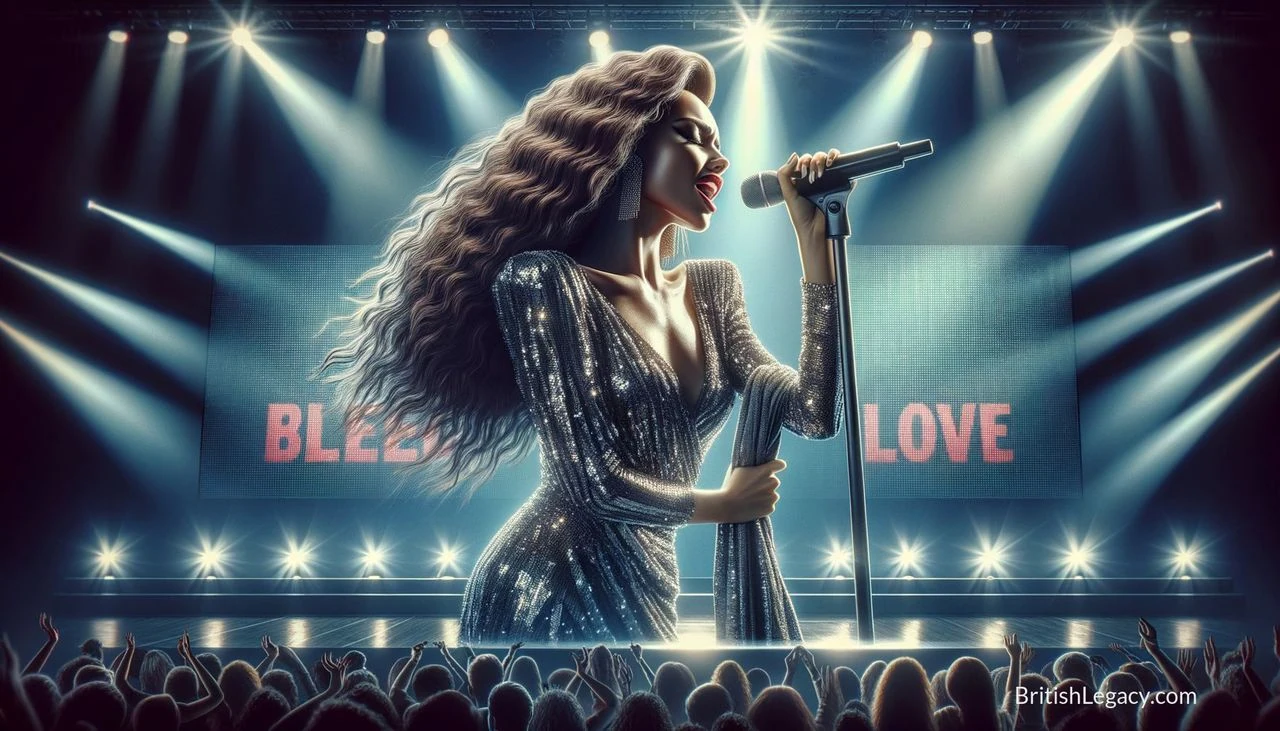
Leona Lewis’s rise to international success began with a song chosen for a television talent competition. In December 2006, she won the third series of The X Factor; within a year, her debut album, Spirit, had reached number one in the UK and Ireland, and “Bleeding Love” had become a chart-topper on both sides of the Atlantic. The breakthrough was dramatic, but it followed years of music-making, auditions and work to fund studio sessions. Lewis went on to build a career across recording, live performance and acting, while maintaining a public interest in charitable causes, particularly animal welfare.
Learning her craft in London
Lewis was born in London on 3 April 1985. Her parents recognised her interest in singing and enrolled her at several performing-arts schools, including the BRIT School for Performing Arts and Technology in Croydon. At 17, she decided to leave the BRIT School and pursue a music career. She was already writing and recording her own material, but needed to earn money for studio time, working as a receptionist at a solicitor’s office and as a waitress at Pizza Hut.
Early opportunities did not immediately lead to a record deal. At 18, she secured a lead role in a production of The Lion King in Paris, but withdrew after injuring her back while ice-skating. She recorded demo albums, including Twilight, made with the Fulham-based production company Spiral Music, and Best Kept Secret. Neither secured her an album contract. One of the latter’s tracks, “Private Party”, found an audience on London’s underground urban music scene in 2005.
Lewis later explained that she turned to The X Factor after trying unsuccessfully to secure a record deal on her own. The programme offered a national platform, but her television breakthrough followed years of pursuing opportunities and recording without the backing of a major contract.
Winning The X Factor
Lewis auditioned for the third series of The X Factor in 2006, singing “Over the Rainbow”. She was placed in the 16–24 category and mentored by Simon Cowell. During the competition, she performed songs associated with singers including Mariah Carey, Whitney Houston and Céline Dion. She won the final on 16 December, receiving 60 per cent of more than eight million votes cast by telephone.
The prize was a £1 million recording contract with Cowell’s Syco Music. Her winner’s single, a cover of Kelly Clarkson’s “A Moment Like This”, was released the following day. It reached number one in the UK and stayed there for four weeks. The song also set a digital-download record, reaching 50,000 downloads in less than 30 minutes. The win established Lewis as a major new presence in British popular music; it also set in motion a recording career that quickly expanded beyond the television audience.
Spirit and an international breakthrough
In February 2007, Lewis signed a five-album contract in the United States with Clive Davis’s J Records. Her debut album, Spirit, was recorded in several cities, including London, Miami, Los Angeles, New York and Atlanta, with songwriters and producers such as Dallas Austin, Walter Afanasieff, Salaam Remi, Steve Mac, Stargate and Ne-Yo. The album was released in November 2007, entered the UK and Irish charts at number one and became the fastest-selling debut album in both countries at that time.
“Bleeding Love”, written by Jesse McCartney and Ryan Tedder and produced by Tedder, became the album’s defining single. Released in the UK in October 2007, it spent seven weeks at number one there and reached the top of charts in a range of other countries, including the United States, Canada, Australia and Germany. It became Britain’s best-selling single of 2007. In the US, it reached number one on the Billboard Hot 100 in 2008, making Lewis the first British female artist to top that chart since Kim Wilde in 1987.
Spirit also reached number one on the US Billboard 200 when released there in 2008, making Lewis the first British artist to achieve that position with a debut album. The album’s other singles extended its reach: “Better in Time” was released in aid of Sport Relief, and Lewis travelled to South Africa for the charity. Her version of Snow Patrol’s “Run”, issued as a download-only single in the UK, reached number one and became the UK’s fastest-selling download-only single at the time. These successes made the album’s story more than a single-song phenomenon.
Lewis represented the UK at the 2008 Summer Olympics closing ceremony in Beijing, performing “Whole Lotta Love” with Led Zeppelin guitarist Jimmy Page as part of the handover to London, the host city for the 2012 Games. That year she also performed on the charity single “Just Stand Up!” and received two MOBO Awards for Spirit and “Bleeding Love”. She was nominated for three Grammy Awards and four BRIT Awards in 2009.
Recording, touring and acting
Lewis’s second album, Echo, followed in 2009. She described it as more guitar-driven than Spirit; it reached number one in the UK. Its lead single, “Happy”, was co-written by Lewis, Tedder and Evan Bogart. She also recorded “I See You”, the theme song for James Cameron’s film Avatar, and began touring with The Labyrinth in 2010, her first tour. A recording of the show, made at the O2 in London, was later released as a live DVD and CD.
Her third album, Glassheart, arrived in 2012 after a change in direction and a delay from its originally announced release date. It drew on electronic and dance influences, and its lead single, “Trouble”, reached number seven in the UK. The following year, Lewis released Christmas, with Love, a collection of seasonal covers and original songs. “One More Sleep” became one of her most successful later singles, reaching number three in the UK in December 2013.
Lewis left Syco Music in 2014 and signed with Island Records UK. Her fifth studio album, I Am, was released in 2015, followed by a concert tour in 2016. Her work has also included performances and roles beyond recording: she made her film debut in the musical Walking on Sunshine in 2014, and in 2016 made her Broadway debut as Grizabella in the revival of Cats. Later screen work included a recurring role in the series The Oath and judging on the singing competition Queen of the Universe.
Lewis has continued to perform and record, including a 2023 Christmas tour across UK arenas and theatres. In 2025, she announced her first concert residency, A Starry Night, in Las Vegas. Her career has thus moved between British chart success, international releases, touring and performance on stage and screen.
Causes beyond music
Lewis has publicly supported charitable causes, with animal welfare a particular focus. In 2008, she declined an offer to open a Harrods sale, explaining that the store stocked clothing made from animal fur. She said accepting the offer and donating the money to charity would have contradicted her position. In 2013, she became a brand activist for The Body Shop and released a cruelty-free make-up range.
Her charitable work has also included fundraising performances and collaborations. In 2016, she released “(We All Are) Looking for Home” with songwriter Diane Warren for a public-service announcement opposing the Yulin Dog Meat Festival. She has supported Hopefield Animal Sanctuary and worked with MTV Staying Alive on HIV/AIDS education. In 2021, she became patron of the Hackney Empire, where she was to mentor students and host workshops. These projects sit alongside her music career rather than replacing it: they show how she has used performances, partnerships and public visibility to support causes she has chosen to champion.
Why Leona Lewis deserves a place in British Legacy
Lewis’s place in British musical history rests first on a clearly traceable set of achievements. She won the third series of a major UK television competition, then turned that exposure into the success of Spirit, which topped the UK and Irish album charts. “Bleeding Love” travelled further, reaching number one in the United States and numerous other national charts. Her performance with Jimmy Page at the Beijing Olympics closing ceremony connected a British pop success to the handover to London’s 2012 Games. Together, these milestones show how a career launched through British television became internationally recognised without losing its connection to the UK charts and stages.
Her career also demonstrates that popular music does not end at the recording studio. Lewis has toured, performed in film and on Broadway, and continued to take on new projects after the intense attention surrounding her debut. Her support for animal welfare, HIV/AIDS education and the Hackney Empire adds a distinct public dimension: the latter connects an established performer with mentoring and arts workshops for students at a historic London venue. A British legacy is not simply a claim of national pride. In Lewis’s case, it is grounded in the reach of her recordings, her contribution to high-profile British cultural moments and the practical charitable and arts work associated with her career.
Sources
Adapted in part from Leona Lewis by Wikipedia contributors, under CC BY-SA 4.0. Text has been edited and combined with the existing article; this adapted text is shared under the same licence. Contributor history.