Lily Cole’s career has moved between the fashion runway, film and environmental advocacy. She began modelling as a teenager, became a leading face of British fashion in the 2000s and later took on acting, writing and business projects. Alongside those pursuits, she has backed causes ranging from water access and environmental justice to more sustainable clothing production.
A Devon childhood and a Cambridge degree
Cole was born in Torquay, Devon, on 27 December 1987. Her mother, Patience Owen, is an artist and writer; her father, Chris Cole, is a fisherman and boat builder. He left when Cole was a baby, and she and her sister were raised by their Welsh mother in London. Cole attended Hallfield Primary School, the Sylvia Young Theatre School and St Marylebone School, then studied for her sixth form at Latymer Upper School. She achieved A grades in English, politics, and philosophy and ethics.
In 2006, Cole gained a place at King’s College, Cambridge, to read social and political sciences, deferring entry twice. She later switched to history of art and graduated in 2011 with a double first. Her academic work ran alongside a modelling career that had already begun as a teenager, rather than following a conventional progression from university into professional life.
From first bookings to international fashion
Cole was photographed by Mariano Vivanco in 2001, aged 13. Her modelling career began in 2003 after Benjamin Hart of Storm Models approached her in the street. That year she was photographed by Steven Meisel for Italian Vogue. She was 16 when she was booked for her first British Vogue cover, rather than appearing on its cover in 2003 as the earlier account claimed.
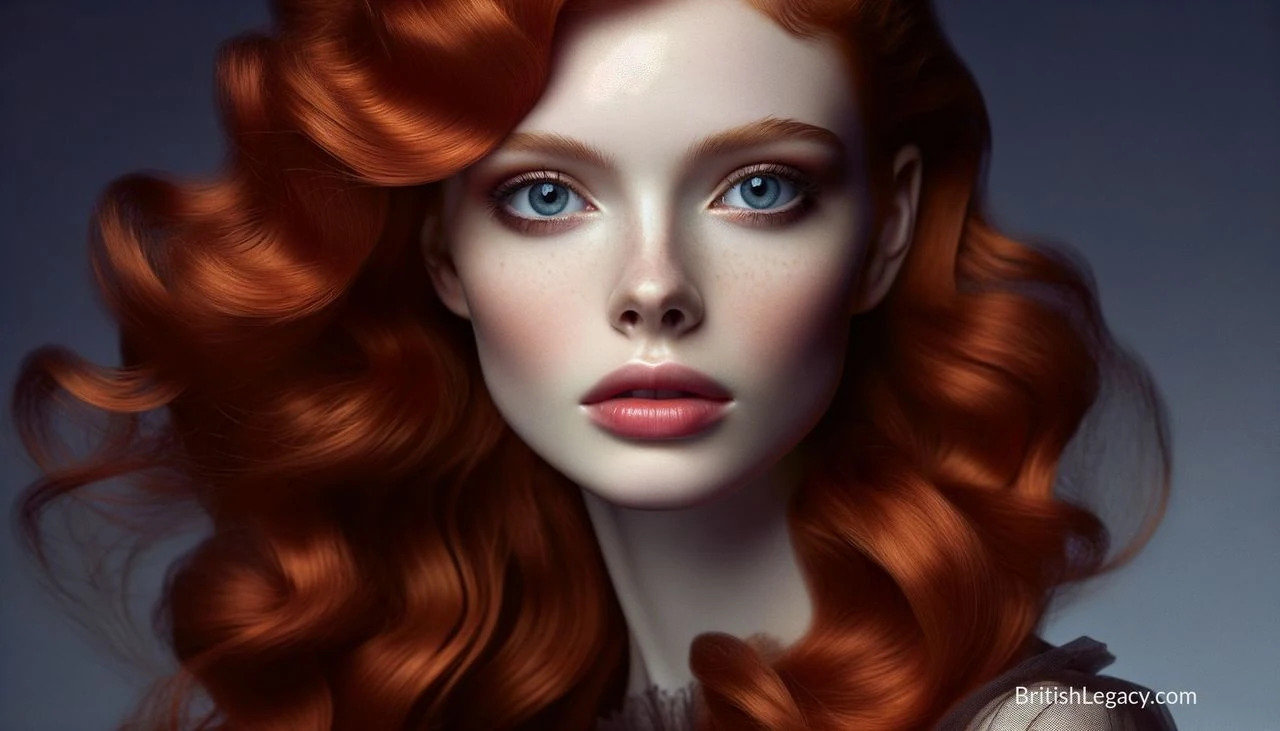
Her red hair became a conspicuous feature of her public image, and she worked with designers and fashion houses including Alexander McQueen, Chanel, Louis Vuitton, Jean Paul Gaultier and Moschino. She appeared on international runways and in campaigns for brands including Longchamp, Anna Sui, Rimmel and Cacharel. At the 2004 British Fashion Awards she was named Model of the Year; she was nominated for the award again in 2007. In 2009, Vogue Paris included her among its top 30 models of the decade.
Her work also connected her to events beyond the fashion industry. During the closing ceremony of the London 2012 Olympics, Cole was among the British models wearing clothes created for the occasion by British designers. In 2013, Glasgow Caledonian University awarded her an honorary degree for her contribution to humanitarian and environmental causes.
Acting on screen and stage
Cole made her film debut as Polly in the 2007 comedy St Trinian’s. Her first leading role was Valentina in Terry Gilliam’s The Imaginarium of Doctor Parnassus (2009). She went on to appear in films including There Be Dragons and The Moth Diaries, and played the title role in Channel 5’s three-part 2017 miniseries Elizabeth I.
Her screen work has ranged from feature films to television and music videos. In 2011, she appeared as the Sea Siren in the Doctor Who episode “The Curse of the Black Spot”. She made her stage debut in a student production of Chekhov’s The Seagull at Cambridge’s ADC Theatre, after an earlier planned appearance at the Old Vic was cancelled because of scheduling commitments. These roles added acting to a career that had first brought her into public view through fashion.
Causes, clothing and Impossible
Cole has supported humanitarian and environmental organisations through campaigns and fundraising. Her work has included speaking for WaterAid’s End Water Poverty campaign and supporting the Environmental Justice Foundation. In 2005, she said she would stop modelling for De Beers after learning about the eviction of Kalahari Bushmen from their land in Botswana. She later supported Trees for Cities, wrote a foreword for Tamsin Blanchard’s Green Is the New Black and took part in projects raising awareness and funds for conservation.
In 2009, Cole became involved in creating The North Circular, an environmentally minded knitwear company. Its products were hand-knitted in the UK using British yarns. Five per cent of profits, as well as all of Cole’s own profits, went to the Environmental Justice Foundation. The company launched a womenswear range in 2010. The work linked a fashion business to British-made clothing and an identified environmental cause, rather than treating sustainability only as a campaign message.
In 2013, Cole founded Impossible.com. It began as a gift-economy social network encouraging people to exchange help and generosity; it later became an innovation group and incubator under the name Impossible People. Cole’s other public-facing work has included her 2020 book Who Cares Wins: How to Protect the Planet You Love, which considers how human lives affect the planet and how people might respond to the climate emergency. In 2021, the book was adapted into a podcast in which she invited guests with different perspectives to discuss issues and their environmental connections.
Why Lily Cole deserves a place in British Legacy
Cole’s place in British Legacy rests on more than her prominence as a model. Her career offers a clear record of movement between British fashion, screen work, education and public advocacy. She was named Model of the Year at the British Fashion Awards, represented British designers at the London 2012 Olympics closing ceremony and completed a double first in history of art at Cambridge while building an international modelling career. Her acting work, including the title role in Elizabeth I, broadened that public presence into film and television.
Her environmental and humanitarian activity gives that cultural career a practical dimension. The North Circular used British yarns and UK hand-knitting, with profits directed in part to the Environmental Justice Foundation. Her campaigns have included support for WaterAid, environmental justice and urban tree planting, while Impossible.com tested a digital model centred on giving and exchange. These projects do not erase the commercial nature of fashion or resolve the wider challenges of climate change. They do show how a public figure can connect visibility with specific organisations, products and conversations. Cole’s British legacy is therefore not a single defining role, but a varied body of work linking fashion and entertainment to education and causes with tangible aims.
Sources
Lily Cole — Wikipedia revision 1372282180
Adapted in part from Lily Cole by Wikipedia contributors, under CC BY-SA 4.0. Text has been edited and combined with the existing article; this adapted text is shared under the same licence. Contributor history.