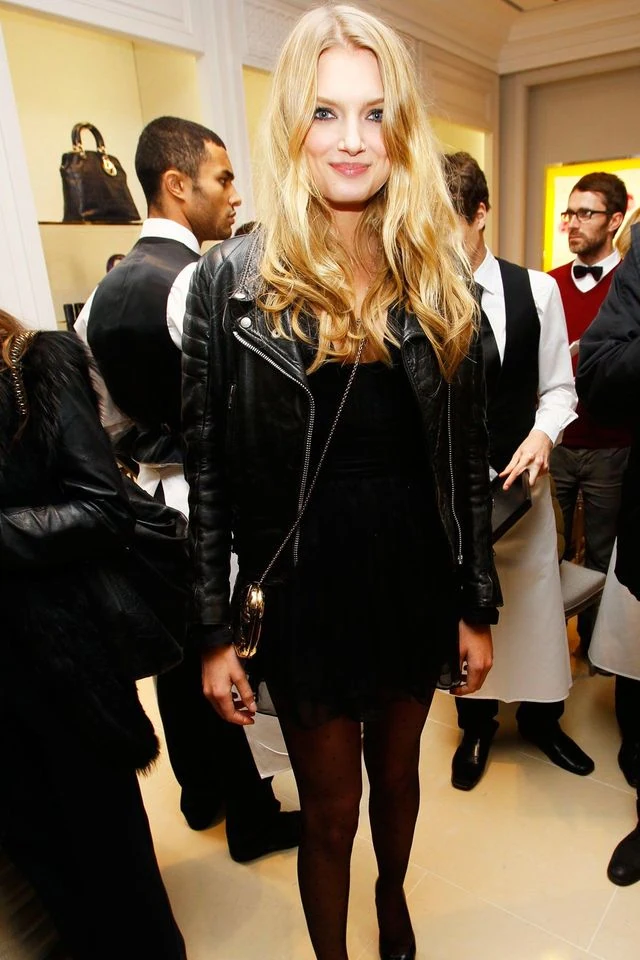
Lily Donaldson’s modelling career began in Camden, where she was scouted while shopping in 2003, aged 16. A year later she made her runway debut in the autumn/winter season, walking for labels including Chanel, Louis Vuitton, Moschino, Missoni and Jil Sander. From there, her work took her across fashion shows, advertising campaigns and magazine covers around the world. One of its most visible British moments came at the London 2012 Olympic closing ceremony, where she modelled a gold gown by Vivienne Westwood.
A London beginning
Donaldson was born in Chelsea, London, on 27 January 1987. Her father, Matthew Donaldson, is a photographer. She attended Camden School for Girls and lived with her parents in Kentish Town. Her family includes a younger sister, Aurelia, and a younger half-brother, Jesse.
In 2003, Select Model Management scouted her while she was shopping in Camden. She was 16. The following autumn/winter season brought her first runway appearances, among them shows for Chanel, Louis Vuitton, Moschino, Missoni and Jil Sander. The sequence is a useful measure of how quickly her early work entered the international fashion calendar: discovery in London, followed by a debut season featuring established designers.
Fashion modelling is work across several different settings, and Donaldson’s career soon encompassed more than runway shows. She took part in campaigns for Burberry, Gucci, Versace and Gap, and was the face of Monsoon Accessorize’s spring/summer 2011 campaign. Burberry and Monsoon Accessorize connect her professional record to British fashion businesses; the other campaigns show the international range of the labels with which she worked.
Magazine covers and recognition
Donaldson’s editorial profile grew alongside her work for designers. In May 2007, she appeared on the cover of American Vogue with nine other models in an issue presenting them as “World’s Next Top Models”. The same year, British Vogue named her a “Head Girl” in its September issue, identifying her as a model to watch in the coming season. These were distinct forms of recognition: one placed her in an international group feature, while the other marked her out for the British edition’s readers.
Donaldson has appeared on 30 international Vogue covers. The editions listed include those from Britain, the United States, Italy, China, Australia, Japan, Turkey, Taiwan, Korea, Portugal, Spain and Russia. That spread illustrates the reach of a magazine career that crossed national editions rather than resting on a single market. In 2009, Vogue Paris included her among its top 30 models of the 2000s.
Her work also included the Victoria’s Secret Fashion Show. Donaldson made her debut there in 2010 and appeared in the shows from 2011 through 2016. These appearances followed a different format from editorial shoots and designer collections, adding a sequence of large-scale fashion events to a career already documented through runways, campaigns and magazine covers.
London 2012 and British design
At the closing ceremony of the London 2012 Olympic Games, Donaldson was among the British models presenting clothes made by British designers for the event. She wore a gold ball gown designed by Vivienne Westwood. The presentation also featured Naomi Campbell, Kate Moss, David Gandy, Karen Elson, Jourdan Dunn, Georgia May Jagger and Stella Tennant.
The ceremony put British models and designers together in a public celebration of the Games. Donaldson’s appearance was a particularly clear meeting of her international modelling career with British fashion: the event took place in London, and the gown was the work of a British designer. It is a specific connection, rather than a claim that one model speaks for the whole fashion industry.
Her own time in London had resumed before the ceremony. After living in New York for five years, she moved back to London in late 2010. She had also worked with other models in collaborative settings: she was close friends with Gemma Ward and Irina Lazareanu, and appeared with Lazareanu in two Mulberry campaigns. Such partnerships are part of the work’s professional landscape, alongside individual runway and editorial credits.
A career across fashion’s different stages
Donaldson’s milestones trace a sustained international career. The 2003 scouting in Camden was followed by a 2004 runway debut; prominent Vogue appearances came in 2007, and the recognition from Vogue Paris followed in 2009. The Victoria’s Secret shows began in 2010, while campaigns and international magazine editions continued to place her work before different audiences. The dates show progression without requiring the story to depend on claims about personal qualities or a sudden, unmeasured rise.
The settings matter because modelling is not a single kind of public appearance. A runway gives a model a role in presenting a collection; a campaign associates her image with a label; a magazine cover reaches readers through a publication’s own editorial choices. Donaldson’s documented work crossed all three. Her record ranges from the designer shows of her first season to commercial campaigns, international covers and a major event staged in her home city.
Nor was the career solely London-based. Donaldson’s New York residence, the global range of Vogue editions and her work for fashion houses with international audiences all point to an industry that operates across borders. The British connection is found in her London origins and return, her campaigns for British labels, and the London 2012 presentation of a Westwood design. Those links sit within, rather than replace, the wider international course of her work.
Why Lily Donaldson deserves a place in British Legacy
Donaldson’s place in British Legacy rests on a career that connects a London beginning with a visible role in international fashion. She was scouted in Camden, began walking for designers the following year, and later appeared on 30 international Vogue covers. Her work for Burberry and Monsoon Accessorize provides concrete links to British fashion businesses, while her campaigns and shows beyond Britain demonstrate the international reach of the profession in which she made her name.
The London 2012 closing ceremony offers the clearest single example of that connection. Donaldson modelled a gold gown by Vivienne Westwood as part of a presentation of designs created by British designers for the Games. The event brought fashion into a national celebration and placed a London-born model in a showcase for British design. Her career should not be made to stand for every part of British fashion, nor does the evidence require grand claims about her influence. Its documented achievements are sufficient: a sustained international modelling career, extensive magazine visibility, work for British labels and participation in a major public presentation of British designers. Together, they make Donaldson a relevant figure in the story of contemporary British fashion and its presence on the world stage.
Sources
Adapted in part from Lily Donaldson by Wikipedia contributors, under CC BY-SA 4.0. Text has been edited and combined with the existing article; this adapted text is shared under the same licence. Contributor history.