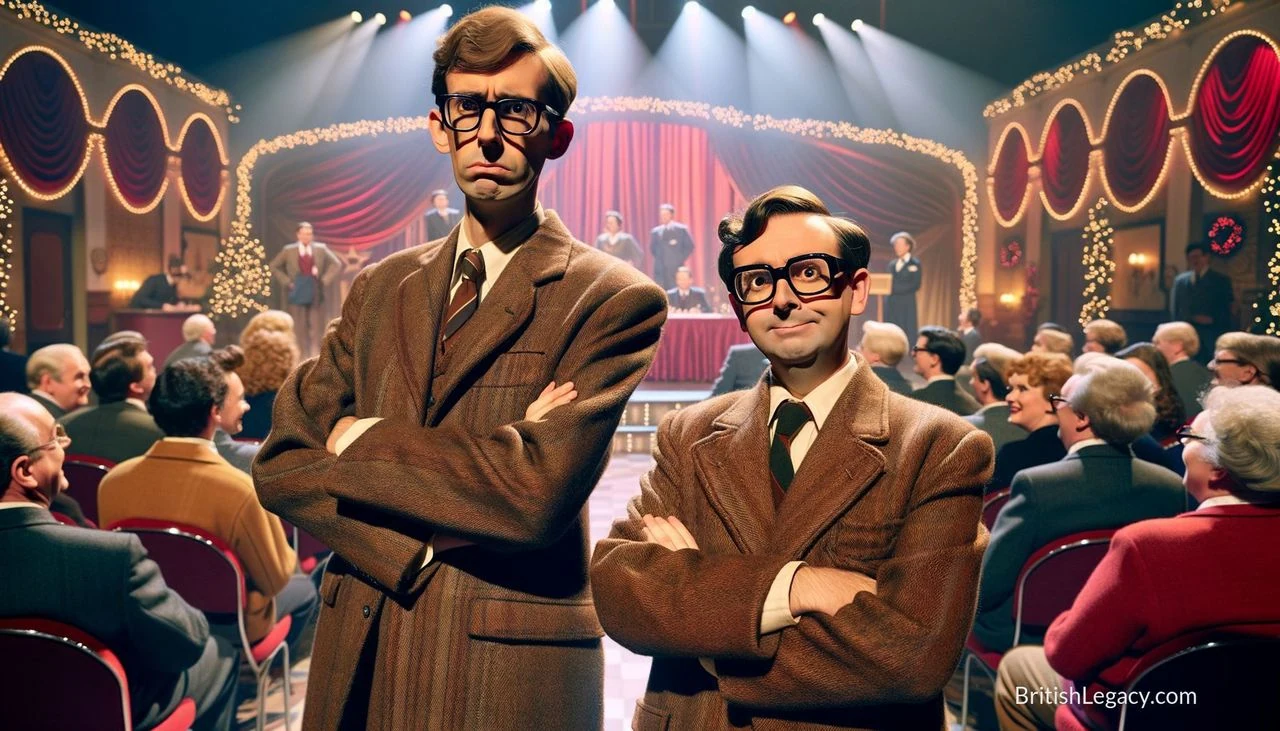
Eric Morecambe and Ernie Wise built a comedy partnership that moved from variety performance to television and, at its height, made their Christmas specials a national event. Their programmes combined sketches, musical comedy and celebrity guests; their most memorable moments could send up high culture as readily as domestic routine. The familiar double act—Eric’s restless mischief against Ernie’s composed self-regard—gave the format its centre.
From variety to television
Morecambe, born John Eric Bartholomew, and Wise, born Ernest Wiseman, met as teenagers in 1941 while performing in Jack Hylton’s revue Youth Takes a Bow. They went on to work together in variety theatres and radio before turning to television. The partnership developed across changing entertainment formats: stage performance and radio preceded the screen work that brought them their broadest audience.
Their first major television success was Two of a Kind, which ran from 1961 to 1968. It provided a sustained platform for their combination of comic interplay and variety material. In 1968, their eponymous show began a run on the BBC that lasted until 1977; the programme then continued on ITV until 1983. Across those years, sketches, musical comedy and guest appearances formed the framework for a show built around the duo’s contrasting comic personas.
Sketches, guests and a shared comic language
Their comedy made room for a running imbalance between Eric’s irreverence and Ernie’s attempt to preserve dignity. Eric’s catchphrase, “What do you think of it so far? Rubbish!”, captured the self-mocking tone. Their humour could be intelligent without relying on formality, and its familiar rhythms made the sketches accessible to a wide television audience.
Some of the best-known routines placed an everyday activity or a high-status performance in the path of their comic disruption. In the “Breakfast Sketch”, they danced to “The Stripper” while preparing breakfast. In “Anthony and Cleopatra”, guest star Glenda Jackson took part in a sketch that played with the gap between grand subject matter and comic delivery.
The appearance of conductor André Previn became another celebrated meeting of musical prestige and comic disorder. Eric called him “Andrew Preview” and attempted Grieg’s Piano Concerto in A minor. The routine’s famous verdict—“I’m playing all the right notes, but not necessarily in the right order”—made the joke legible even to viewers without specialist musical knowledge. The humour came not from dismissing the music, but from setting the duo’s familiar chaos against the expectations surrounding a concerto performance.
Christmas television at its height
The Christmas shows brought together the elements that had become central to the act: sketches, musical turns and guest appearances. They became an annual tradition for many British families. The 1977 Christmas edition reportedly drew more than 28 million viewers, a measure of the programme’s reach at its peak. That audience figure also helps explain why the duo’s television work became so closely associated with shared seasonal viewing.
Their success rested on more than a collection of catchphrases. Repeatedly placing their own personas inside the comedy gave the audience a recognisable framework, while the changing sketches and guests supplied variety. A breakfast routine, a literary parody and a musical set-piece could all belong to the same programme because the central relationship remained consistent: Eric unsettled the performance, and Ernie tried to maintain control.
A legacy beyond the original run
Eric Morecambe died in 1984 and Ernie Wise in 1999. Their partnership ended, but its defining sketches and television performances have continued to be remembered as part of British popular culture. The original account describes their work as still reaching new audiences through broadcasts and online clips; without current evidence for that continuing availability, the more secure point is the enduring place of the routines themselves in the duo’s reputation.
Morecambe and Wise are also presented as an influence on later British entertainers, including David Walliams, Matt Lucas, Ant and Dec. That specific influence claim is not substantiated here, so their importance need not rest on it. Their own body of work shows how a comedy partnership could make a variety programme feel distinctive: the format changed around them, but their comic contrast remained its organising principle.
Why Morecambe and Wise deserve a place in British Legacy
Morecambe and Wise deserve a place in British Legacy because their television work became part of the country’s shared entertainment history. Their Christmas specials brought sketches, music and celebrity appearances together for audiences on a remarkable scale: the 1977 edition reportedly attracted more than 28 million viewers. That is a specific measure of reach, not simply a claim that they were popular. Their programmes made the variety format memorable by giving it a strong centre in the relationship between two contrasting performers.
Their comedy also showed how recognisable cultural reference points could be turned into an invitation to laugh rather than a barrier to entry. The Previn sketch made a classical concerto part of a comic routine; the breakfast dance found performance in an everyday setting. Alongside the “Anthony and Cleopatra” sketch and their recurring verbal jokes, these moments gave viewers different ways into the duo’s work. The British connection lies in their documented place in British television and in the audiences who gathered around their programmes. Their legacy is carried by the particular craft of the partnership: a stable comic relationship able to make music, domestic life and grand performance part of the same show.