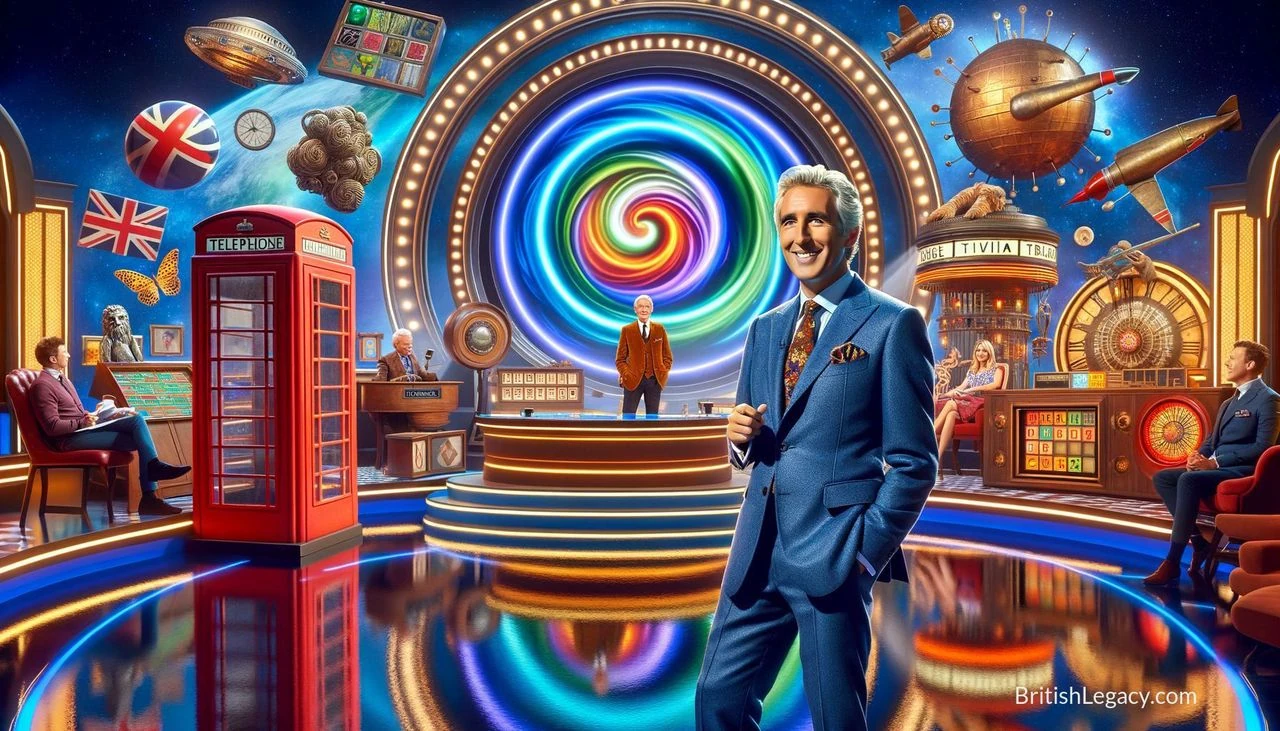
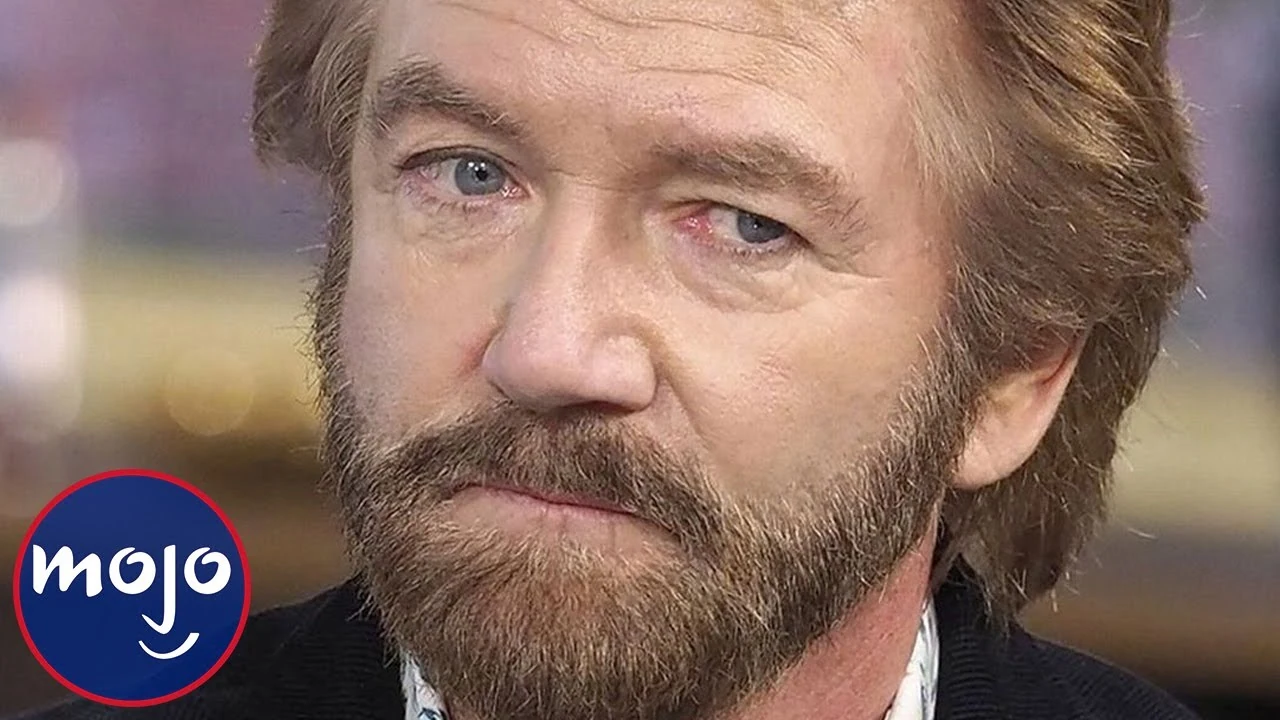
Noel Edmonds’s television career was built on formats that invited viewers to take part. They could phone in, answer questions, be caught on hidden cameras or watch contestants weigh up a sealed box. From children’s Saturday-morning television to the long-running Deal or No Deal, Edmonds moved between radio and television while making audience participation a recurring feature of his work.
From Radio Luxembourg to the breakfast show
Born in Ilford, Essex, on 22 December 1948, Noel Ernest Edmonds began his broadcasting career in radio. In 1968, after sending recordings to offshore stations, he was offered work as a newsreader at Radio Luxembourg. The following year he joined BBC Radio 1, first recording programme trailers and filling in for other presenters. He went on to host his own programmes, including the Radio 1 Breakfast Show from June 1973 until April 1978. He left the station in 1983.
Edmonds’s move into television began while he was establishing himself on radio. He presented Top of the Pops at various points during the 1970s and became a familiar face to younger viewers as host of Multi-Coloured Swap Shop, which ran from 1976 to 1982. The live Saturday-morning programme combined music, interviews and viewers’ calls. Edmonds also presented other programmes during this period, among them Top Gear, Lucky Numbers and a revival of Juke Box Jury.
Swap Shop brought Edmonds together with fellow presenters Maggie Philbin and Keith Chegwin in the musical trio Brown Sauce. Their single, “I Wanna Be a Winner”, reached number 15 in the UK singles chart in 1981. In 1980, Edmonds introduced the UK entry at the Eurovision Song Contest final in The Hague. These varied assignments show the breadth of his early television work: music, motoring, children’s programming and live entertainment all sat within his presenting career.
Saturday-night television, and a difficult turning point
After Swap Shop, Edmonds presented The Late, Late Breakfast Show, a Saturday-evening BBC programme broadcast live from 1982 to 1986. Its viewer-participation feature, “Give it a Whirl”, included stunts. In November 1986, Michael Lush died during rehearsals for a bungee-jump stunt intended for the show. Edmonds resigned from the BBC immediately afterwards; the programme was cancelled two days later. It was a grave event in the history of the series and an abrupt break in his presenting career.
His subsequent return to Saturday evenings came with Noel’s Saturday Roadshow, broadcast from 1988 to 1990. Although it appeared to travel to different locations, the programme used studio sets dressed as places such as the North Pole, Hollywood and Niagara Falls. Its mix of phone-in quizzes, celebrity interviews and performances drew on familiar television ingredients, while Edmonds’s self-deprecating manner could acknowledge the artificiality of the settings. The Roadshow also tested features that would later appear in a more successful form.
In 1991, the series developed into Noel’s House Party, set in Edmonds’s home in the fictional village of Crinkley Bottom. The BBC One programme ran until 1999. Its recurring features included NTV, which used hidden cameras in viewers’ homes, and the “Gotchas”, in which celebrities were caught in staged situations. The “Gotcha Oscars” and the programme’s other pranks became part of its identity. Mr Blobby, a pink-and-yellow-spotted character first used in a “Gotcha” segment, grew into a regular presence and had a Christmas number one single in 1993.
At its peak, Noel’s House Party attracted audiences of 15 million. Its audience later fell, as the programme approached the end of its run; the final edition was broadcast on 20 March 1999. Edmonds’s work in this period also included Telly Addicts, a BBC quiz about television programmes that he hosted and owned the format for, and Noel’s Christmas Presents, an annual programme featuring gifts such as trips for ill or disadvantaged children and family reunions. The latter ran on the BBC from 1989 to 1999, with later editions on Sky.
A return with Deal or No Deal
After a break from television presenting, Edmonds returned in 2005 to host Deal or No Deal. The format placed contestants before a set of sealed boxes containing different sums of money. As boxes were opened, contestants had to decide whether to continue or accept the offer made by the unseen banker. The suspense rested on a simple choice made under uncertainty, while Edmonds’s role was to guide the game and give its pauses room to work.
The programme began its UK run on Channel 4 on 31 October 2005. It was initially recorded at Paintworks in Bristol and later moved to a dedicated studio at The Bottle Yard Studios. Edmonds had first been approached about the format by Endemol chief executive Peter Bazalgette and initially declined before agreeing to a short run. The show became a sustained part of Channel 4’s schedule, running for 11 years and ending in 2016, after almost 3,000 programmes had been recorded. It also spawned celebrity editions and a UK tour. The final episodes were filmed in varied locations, including a Boeing 737, the Flying Scotsman, Blackpool Tower and a cave in Somerset.
Deal or No Deal was a different kind of programme from the live, feature-packed House Party, but it again made the audience’s attention follow a sequence of choices. Edmonds also continued to present other formats. On Sky One he hosted Are You Smarter than a 10 Year Old? and Noel’s HQ, a live entertainment programme with a charitable purpose. In 2017, he created and presented Cheap Cheap Cheap, a game show set in a fictional shop, where contestants had to identify the cheapest of three similar products.
His television work included more than studio entertainment. In 1985, he was involved in the Live Aid concerts, transporting performers between venues by helicopter and introducing the joint set by Sting and Phil Collins at Wembley. He presented major events including the BAFTA Awards, the Brit Awards and the launch of the UK National Lottery. In 2018, he took part in I’m a Celebrity…Get Me Out of Here!, leaving the competition after being voted out.
Business, setback and life beyond the studio
Edmonds also developed business interests. In 1985 he formed the Unique Group, which encompassed several operations, including an independent audio-production business supplying programmes to the BBC and other radio outlets. The group also had interests in broadcasting and vehicles. Edmonds resigned as a non-executive director of the audio company in 2006, the year after Deal or No Deal began.
The collapse of Unique Group in 2005 became a major personal and business setback. Edmonds blamed the loss of the business on fraud involving the HBOS Reading branch. In 2017, bankers and others involved in the fraud were convicted. In 2019, Lloyds Banking Group agreed a compensation deal with Edmonds and apologised for the distress he had suffered. The story is a reminder that his public career also involved business risks and a prolonged dispute, rather than an uninterrupted sequence of television successes.
His name was also attached to theme-park attractions based on Crinkley Bottom and Mr Blobby. Attractions opened at existing parks in Somerset and Suffolk, while a separate project in Morecambe ended amid disappointing visitor numbers and legal disputes with the local council. A district auditor later found that the council had acted unlawfully in its dealings with Edmonds; the episode became known in the media as “Blobbygate”.
Edmonds married Liz Davies in 2009. He and Davies moved to New Zealand in 2019, where he later established Positivity Radio, an online network of community radio stations. His broadcasting work therefore extended beyond the UK after his best-known television programmes had ended. He was also president of the British Horse Society from 2004 to 2007.
Why Noel Edmonds deserves a place in British Legacy
Noel Edmonds’s place in British broadcasting history rests on the range of programmes he helped make familiar to large audiences, and on the ways those programmes used participation. Multi-Coloured Swap Shop made viewers’ calls part of a Saturday-morning television experience. Noel’s House Party developed hidden-camera features, celebrity pranks and a recurring fictional setting into a recognisable Saturday-night format. Deal or No Deal, by contrast, built its tension around contestants’ decisions and the contents of sealed boxes. Across these very different shows, Edmonds’s presenting role connected the format to the people watching it.
His career also records changes in British television across several decades: from live radio and children’s broadcasting to studio entertainment, phone-in features and a daily game show. Its less straightforward chapters matter too. The death of Michael Lush during a stunt rehearsal brought The Late, Late Breakfast Show to an end, while the collapse of Unique Group and the subsequent compensation agreement with Lloyds show the precariousness that can sit behind a familiar public profile. Remembering Edmonds means recognising both the scale of his audience-facing work and the risks and consequences that shaped it. His programmes, from Swap Shop to House Party and Deal or No Deal, remain specific landmarks in the story of British popular television.
Sources
Noel Edmonds — revision 1377651275
Adapted in part from Noel Edmonds by Wikipedia contributors, under CC BY-SA 4.0. Text has been edited and combined with the existing article; this adapted text is shared under the same licence. Contributor history.