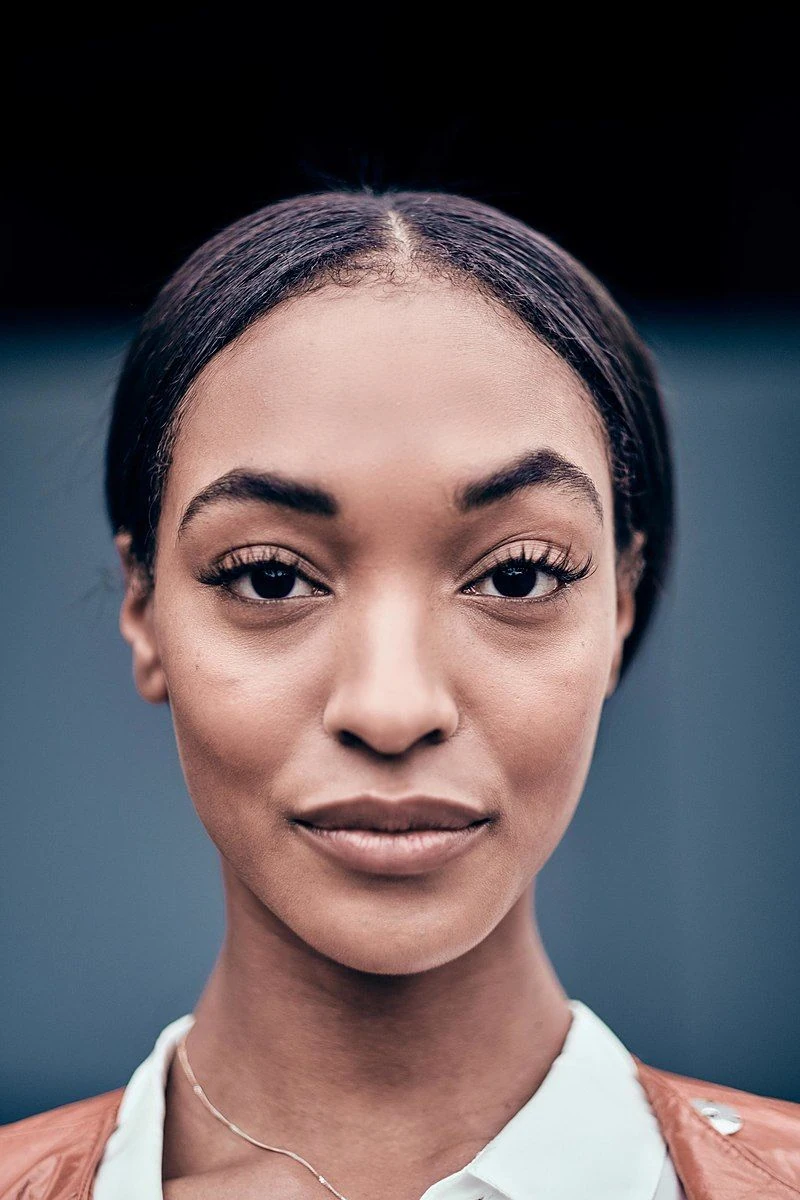
Jourdan Dunn’s modelling career began with a chance discovery in a Hammersmith Primark in 2006. Within a year, she was walking in New York; in 2008, she became the first Black model to walk in a Prada fashion show in more than a decade. Her progress took her from British Vogue and London Fashion Week to international campaigns, while her public comments about discrimination gave her success a wider significance within an industry where Black models could still find themselves alone on the runway.
From west London to the runway
Born Jourdan Sherise Dunn in London on 3 August 1990, Dunn attended Elthorne Park High School in Hanwell. She was discovered at Hammersmith Primark in 2006 and signed to a London modelling agency. Her first international runway appearances followed in 2007, when she was 16, with shows in New York including Marc Jacobs and Polo Ralph Lauren.
Attention came quickly. British Vogue featured her as a “new star” in 2007, and Style.com included her among its top ten newcomers the following year. During the spring/summer 2008 season, she walked 75 shows, among them presentations for Louis Vuitton and Valentino. In February 2008, her appearance on the Prada runway marked a milestone: she was the first Black model to walk in a Prada show in over a decade.
That breakthrough did not mean the industry had become inclusive. Dunn later criticised designers for casting shows in which she was often the only Black model. The distinction matters: her visibility was a significant achievement, but the circumstances she described pointed to a continuing problem in fashion rather than its resolution.
Campaigns, covers and a growing profile
Dunn established a presence well beyond the runway. Photographer Steven Meisel selected her for the July 2008 cover of Vogue Italia, an issue devoted entirely to Black models. In May 2009, US Vogue named her a “Face of the Moment”. She went on to appear on the covers of British and American Vogue, as well as editions including those published in Turkey, Japan and Brazil. Her editorial work also reached magazines such as Elle, i-D, Dazed & Confused and W.
Her advertising work brought her together with brands including Burberry, Balmain, Calvin Klein, Yves Saint Laurent, DKNY, Michael Kors, Topshop and H&M. The range of campaigns reflects a career spanning luxury fashion and high-street retail, rather than a single runway niche. In 2014, Maybelline New York announced Dunn as a new face of the brand; her work included print and television advertising for its Go Extreme Mascara.
In 2014, Forbes included Dunn in its list of the world’s highest-paid models, estimating her earnings at US$4 million over the year. She was the first Black British model to appear on the list. She returned to it in 2015, with estimated earnings of US$3.5 million. These figures offer a measure of her commercial reach, but her significance also lay in what she said about the conditions under which that reach was achieved.
Speaking about representation
Dunn has spoken publicly about discrimination in fashion casting. In 2013, she told The Edit that casting agents had said clients did not want any more Black girls. Later that year, she drew attention on social media to being dropped from a Dior haute couture show. She said the reason given concerned her breasts, while noting that being excluded because of her race was something she had encountered before. The two incidents were distinct, but together they show how she used her visibility to discuss barriers that could otherwise remain hidden behind casting decisions.
Recognition followed. Dunn was named Model of the Year at the British Fashion Awards in 2008 and again in 2015; she had also been nominated in 2012 and 2014. In 2013, she won Model of the Year at the Harper’s Bazaar Women of the Year Awards. Glamour gave her its Inspiration Award in 2015, recognising both her work to raise awareness of sickle-cell disease and her activism for diversity in modelling. The award citation connects her public profile with advocacy, without reducing her career to that work alone.
British fashion beyond the catwalk
Dunn’s career has included projects with British retailers as well as international fashion houses. A children’s clothing collection designed with Marks & Spencer, called Lil’ LonDunn by Jourdan Dunn, debuted in April 2016. The following year, she launched an activewear collaboration with Missguided. The account of that collaboration reports that the retailer’s revenue rose by 75 per cent and international sales by 130 per cent while the campaign was active; those company figures are tied to that period, not a measure of Dunn’s wider career.
Her public work has also crossed into television and music. From 2012 to 2014 she hosted Well Dunn, a cooking show on Jay-Z’s Life+Times YouTube channel, with celebrity guests including Karlie Kloss, Cara Delevingne and Chanel Iman. She appeared in music videos by Beyoncé, Jessie J, Katy Perry and Nicki Minaj, among others, and took part in the 2012, 2013 and 2014 Victoria’s Secret Fashion Shows.
At the closing ceremony of the London 2012 Olympic Games, Dunn was one of the British models wearing designs created for the event by British designers. She wore a gold-and-white gown by Jonathan Saunders with a feathered headdress by Stephen Jones. The appearance placed her in a specifically British fashion context: a global sporting broadcast that showcased the work of designers from the United Kingdom and models associated with its fashion industry.
Why Jourdan Dunn deserves a place in British Legacy
Jourdan Dunn’s place in British Legacy rests on achievements that can be described precisely. Discovered in west London, she moved rapidly into international fashion, walked for leading designers and became the first Black model to appear on a Prada runway in more than a decade. Her inclusion in Forbes’ 2014 top-earning models list as the first Black British model to make it marked another kind of breakthrough: recognition of commercial success at the highest level of the industry. Her British Fashion Awards wins, work with Marks & Spencer and appearance at the London 2012 closing ceremony further connect her international career to British fashion and public life.
Her legacy is not simply a story of individual advancement. Dunn has described the experience of being the only Black model in a show and spoken publicly about casting decisions that excluded Black models. Her comments brought those practices into view, while her work to raise awareness of sickle-cell disease gave her advocacy another concrete focus. The evidence does not make her responsible for changing the industry single-handedly; it does show a model who combined a substantial career with visible criticism of its inequalities. That combination—professional reach, British fashion connections and candid advocacy—makes her story relevant to a record of contemporary British cultural life.
Sources
Adapted in part from Jourdan Dunn by Wikipedia contributors, under CC BY-SA 4.0. Text has been edited and combined with the existing article; this adapted text is shared under the same licence. Contributor history.