Michael Longley’s poetry could move from the particularities of a natural landscape to the human cost of war without losing its precision or restraint. A Northern Irish poet educated in Classics, he drew on ancient literature, personal memory and the places that mattered to him. His career connected Belfast, Dublin and the wider literary world, while his work returned repeatedly to questions of loss, history and the possibility of peace.
Belfast, Dublin and a literary education
Longley was born in Belfast on 27 July 1939, the elder of twin boys. His parents, Richard and Connie Longley, were from London; he also had an elder sister, Wendy. He attended the Royal Belfast Academical Institution before studying Classics at Trinity College Dublin. There he edited Icarus, a student literary magazine, beginning a relationship with poetry that would be sustained both as a writer and as an advocate for literature.
After university, Longley taught for several years in Dublin, London and Belfast. From 1970 to 1991 he was a director of the Arts Council of Northern Ireland. He was also associated with the Belfast Group, a circle of poets that included Seamus Heaney, Derek Mahon and Paul Muldoon. Longley and Heaney became close friends. These connections placed him within a lively literary community, but his work developed its own measured voice, attentive to language, place and the uneasy relationship between private grief and public history.
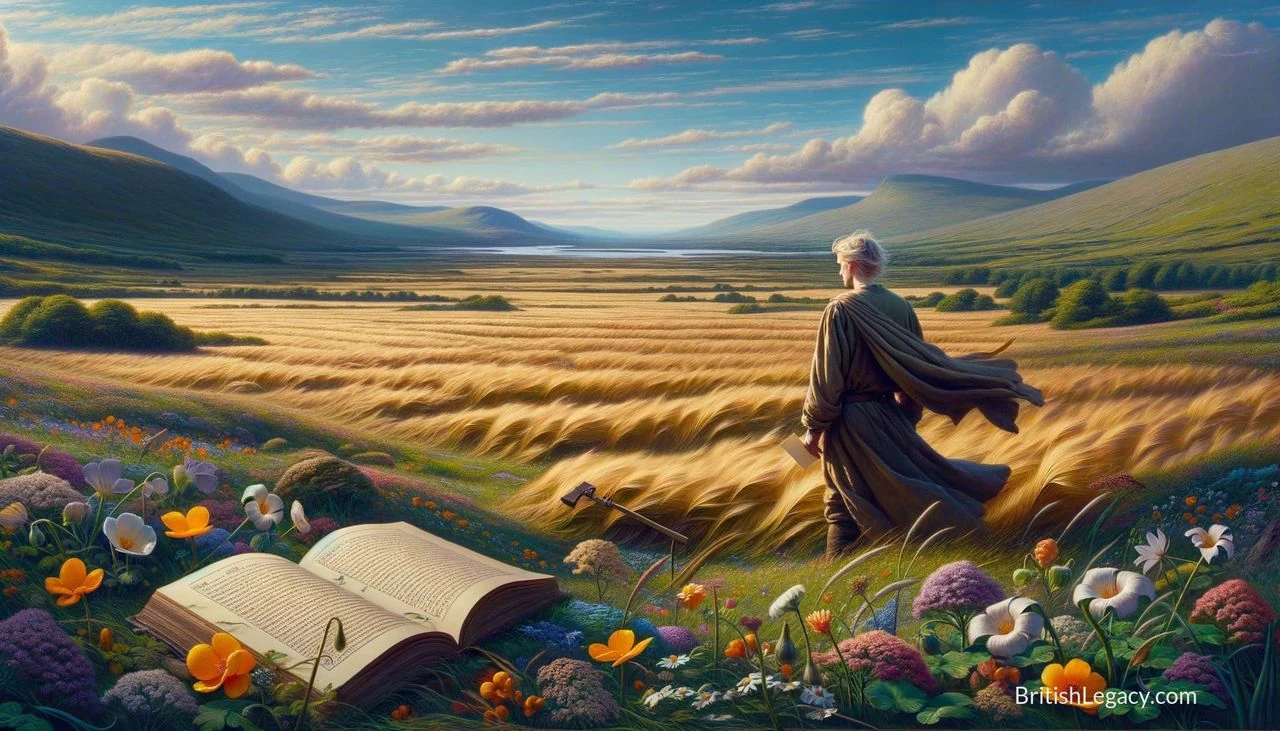
For more than 50 years, Longley spent much of his time in Carrigskeewaun, County Mayo. The landscape there inspired a substantial part of his poetry. Rather than treating nature as a decorative refuge from human affairs, his poems often set the living world beside the experiences of violence, memory and mortality. His clear, musical lines and use of classical forms gave difficult subjects a controlled, sometimes elegiac expression.
Classical stories and the Northern Irish conflict
Longley’s education in Classics became a working resource in his poetry. His 1994 poem “Ceasefire” adapts an episode from Homer’s Iliad: King Priam asks Achilles to return the body of his son. Longley wrote the poem in hope of a ceasefire between the IRA and loyalist forces. It appeared one day before a ceasefire came about. The poem’s use of an ancient encounter did not make the conflict remote; it offered a way to consider grief, enmity and the human recognition that can interrupt them.
That combination of literary inheritance and contemporary attention recurs throughout his work. Longley could draw on the classical tradition while writing from the experience of Northern Ireland, without reducing either to a simple lesson. His poems address the beauty of the natural world and the injuries people inflict on one another; their lyric calm can make the subjects they confront more, not less, stark.
His public engagement also included speaking up for the study of Classics. In October 2002, when Queen’s University Belfast decided to end the teaching of the subject, Longley opposed the decision and urged the university senate to act. His intervention reflected a conviction evident in his writing: the ancient world was not an ornamental inheritance, but a continuing source of language and thought.
Collections, prizes and a continuing career
Longley’s first collection, No Continuing City, appeared in 1969. He went on to publish collections including An Exploded View (1973), Man Lying on a Wall (1976) and The Echo Gate (1979). Gorse Fires, published in 1991, won the Whitbread Poetry Prize. Its place in his career is matched by later collections that continued to bring him major recognition.
The Weather in Japan (2000) won both the T. S. Eliot Prize and the Hawthornden Prize. The collection also received the inaugural Yakamochi Medal in 2018. In 2014, The Stairwell appeared; it won the International Griffin Poetry Prize the following year. Longley’s other later collections included A Hundred Doors (2011), Angel Hill (2017), The Candlelight Master (2020) and The Slain Birds (2022). Ash Keys: New Selected Poems followed in 2024.
Longley held the Ireland Professor of Poetry post from 2007 to 2010. Established as a cross-border academic position, it had previously been held by John Montague, Nuala Ní Dhomhnaill and Paul Durcan; Longley was succeeded by Harry Clifton. He also took part in public literary life through readings and broadcasts. In 2014, he contributed to BBC Radio 3’s The Essay – Letters to a Young Poet, and he recorded readings for the Irish Poetry Reading Archive at University College Dublin.
Honours and the work of remembrance
Longley received the Queen’s Gold Medal for Poetry in 2001 and was appointed Commander of the Order of the British Empire in the 2010 Birthday Honours. His other distinctions included honorary doctorates from Queen’s University Belfast and Trinity College Dublin, and the PEN Pinter Prize in 2017. In 2015 he was elected a Freeman of the City of Belfast. He was a fellow of the Royal Society of Literature and the Royal Hibernian Academy of Arts.
His influence also took institutional form. In 2021, Queen’s University Belfast opened the Longley Room in honour of the poet and his wife, Edna, a critic of modern Irish and British poetry. The university established the Michael Longley scholarship fund, offering two scholarships each year to poetry students of particular merit. The honours and the scholarships recognise different aspects of his contribution: an individual body of work, and a continuing place for poetry in the institutions where it is read and studied.
Longley died on 22 January 2025, aged 85, from complications following hip surgery. His funeral took place at All Souls Church in Belfast on 1 February. He and Edna had three children: Rebecca, Daniel and Sarah. His twin brother, Peter, died in 2013 or 2014; Longley dedicated the second half of The Stairwell to him.
Why Michael Longley deserves a place in British Legacy
Michael Longley’s place in British Legacy rests on a specific literary and historical connection: he was a Belfast-born Northern Irish poet whose work engaged with the conflict and culture of Northern Ireland, while drawing on a classical education at Trinity College Dublin and a career that crossed borders. His poem “Ceasefire” brought an episode from the Iliad into conversation with the possibility of peace between the IRA and loyalist forces. That achievement shows how poetry can confront political violence without turning it into abstraction, attending instead to grief and the human cost of hostility.
His legacy is also visible in the sustained life of his writing and in the institutions that continue to make poetry available to readers and students. From Gorse Fires to The Slain Birds, his collections earned recognition across decades, while his work as Ireland Professor of Poetry and his challenge to the ending of Classics teaching at Queen’s University Belfast reflected a commitment to literary learning. The Longley Room and the scholarships established at Queen’s extend that legacy beyond his own books. Together, these achievements make his British and Irish significance more than a matter of broad cultural labels: it lies in the poems themselves, their engagement with Northern Ireland, and their continuing place in education and public life.
Sources
Michael Longley (revision 1379323241)
Adapted in part from Michael Longley by Wikipedia contributors, under CC BY-SA 4.0. Text has been edited and combined with the existing article; this adapted text is shared under the same licence. Contributor history.