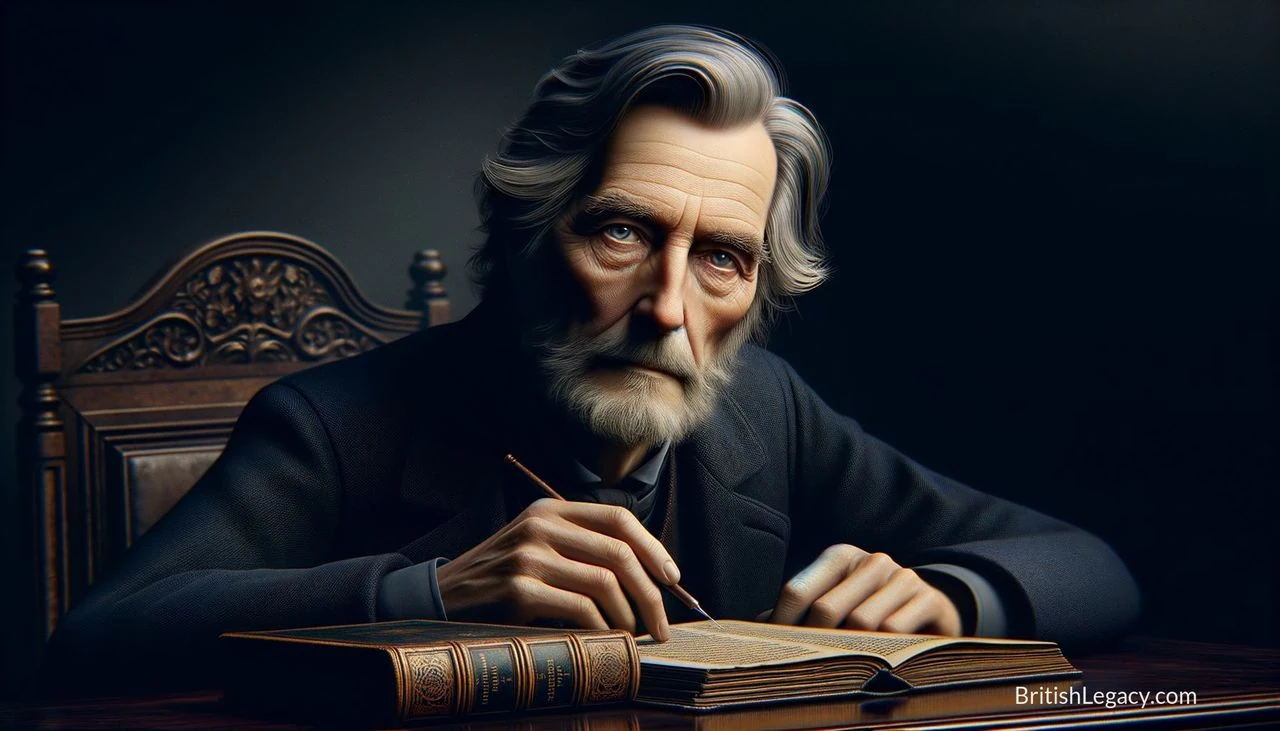
David Harsent: The Poet Illuminating the Shadows of British Literature
In the eclectic realm of British poetry, where voices span centuries and themes fluctuate from the pastoral to the metropolitan, David Harsent stands out as a beacon of enigmatic and often shadowy brilliance. Known for his dark and mysterious themes, Harsent has carved a niche in the annals of British literature that is as haunting as it is illuminating. His contributions, particularly through works such as "Night," have cemented his status as a crucial figure in modern British poetry, enriching the nation's literary heritage and extending its influence worldwide.
The Dark Tapestry of Harsent's Work
David Harsent’s poetry is not for the faint-hearted. His works delve into the deepest recesses of the human psyche, exploring themes of violence, fear, and the uncanny. Born in 1942, Harsent has spent decades perfecting his craft, and his poems often read like fragments of a dream—or, more accurately, a nightmare. His adept handling of suspense and foreboding creates a palpable atmosphere that both intrigues and unsettles the reader.
One cannot discuss Harsent without mentioning "Night," a collection that exemplifies his thematic preoccupations. "Night" navigates through the dark corridors of the mind, exploring insomnia, memory, and the thin veil between reality and imagination. The collection resonated deeply with readers and critics alike, as it captured the ineffable essence of night-time solitude and existential dread, offering a haunting reflection on the human condition.
A Chronicles of Shadows and Light
Harsent's ability to evoke vivid, often unsettling imagery has drawn comparisons to the works of T.S. Eliot and Ted Hughes. However, his voice remains uniquely his own. His poems frequently employ a stark, almost cinematic quality—a narrative form that allows him to dissect human emotions and societal issues with precision. This approach is especially notable in his long-form poems, where he masterfully balances narrative drive with lyrical intensity.
The poet's exploration of dark themes serves a crucial purpose in the British literary tradition. Historically, British literature has never shied away from darker subjects; from Shakespearean tragedies to Gothic novels, there has always been an undercurrent of darkness that reflects societal anxieties and individual turmoil. Harsent's work continues this tradition, but with a modern sensibility that resonates with contemporary readers.
Accolades and Recognition
Throughout his career, Harsent's contributions have not gone unnoticed. He has received numerous awards, including the Griffin Poetry Prize and the Forward Poetry Prize, acknowledging his skill and impact. His appointment as a Fellow of the Royal Society of Literature further underscores his importance in the British literary landscape. These accolades affirm that Harsent is not merely a purveyor of dark themes but a master craftsman whose work offers profound insights.
A Global Influence
David Harsent's reach extends beyond the United Kingdom. His works have been translated into multiple languages, enabling a global audience to experience his evocative verse. This international recognition amplifies the influence of British literature, showcasing its ability to transcend cultural and linguistic boundaries. Harsent's universal themes of human struggle and resilience find resonance across the world, illustrating the global relevance of British poetic tradition.
A Legacy of Shadows
In summation, David Harsent occupies a unique space in British literature. His dark, mysterious themes are not merely for dramatic effect; they serve to explore the complexities of the human experience. His works, particularly "Night," enrich the tapestry of British poetry by adding layers of depth and introspection, continuing the nation’s rich literary legacy. Harsent has proven that even the darkest shadows can illuminate profound truths, making him an indispensable part of what shapes the great British legacy, heritage, and impact.
Through his powerful and evocative poetry, Harsent invites readers into the shadows, challenging them to confront their fears and uncertainties. In doing so, he has not only enriched British literature but also contributed to a global understanding of the human experience, securing his place as a luminary in the world of letters.