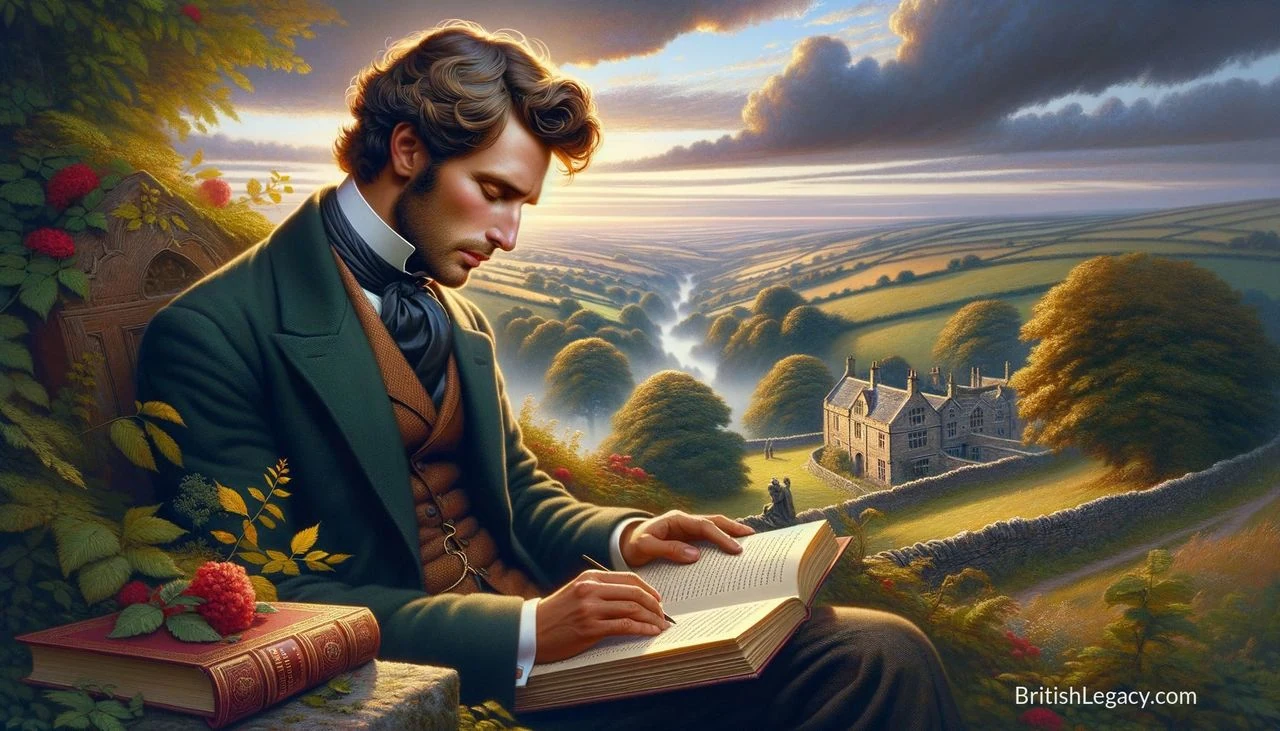
P. J. Kavanagh’s writing ranged from lyric poetry to memoir, fiction and journalism. His best-known autobiographical book, The Perfect Stranger, grew from the sudden death of his first wife, Sally, and the life he had to make afterwards. The work joined private bereavement to a wider readership; beyond it, Kavanagh pursued a varied career as a poet, actor, broadcaster, editor and columnist.
From Worthing to Oxford
Born Patrick Joseph Kavanagh in Worthing, Sussex, on 6 January 1931, he was the son of Ted Kavanagh, a scriptwriter for the radio comedy programme It's That Man Again. Kavanagh attended Douai School and went on to Merton College, Oxford, from 1951 to 1954. He began writing poetry at Oxford and graduated with second-class honours.
His route to university was not uninterrupted. Kavanagh worked as a Butlin’s Redcoat and as a newsreader for Radiodiffusion Française in Paris, and attended acting classes. He was called up for National Service and served in the Korean War, where he was wounded. He later recalled that his experience there made it difficult to take the academic institution seriously. These different beginnings—work in entertainment and broadcasting, military service and study—preceded a career that would not be confined to poetry.
At Oxford he met Caroline Sarah Jane Philipps, known as Sally, the daughter of novelist Rosamond Lehmann. They married at the London Oratory in 1956. In 1958, while the couple were living in Java, where Kavanagh was teaching for the British Council, Sally died suddenly of poliomyelitis. Her death became central to The Perfect Stranger, but the book was not a poem: it was an autobiographical novel about marriage, mourning and the work of finding purpose after loss.
Writing grief and the passage of time
First published in 1966, The Perfect Stranger was Kavanagh’s first major literary success. Its account of bereavement also makes room for humour. The book faced rejection from several publishers before it was accepted, and later won the Richard Hillary Memorial Prize. Kavanagh’s writing about Sally was not limited to a simple story of tragedy: the book considers a relationship and the life that followed it.
He married Catherine Ward in 1965. They had two sons, and Kavanagh lived in Gloucestershire from 1963 until his death. The family’s rural home became part of the setting for his working life: the account of The Perfect Stranger describes him writing in a renovated stone barn, with a nearby cottage serving as a separate creative space.
His poems appeared in collections including One and One (1959), On the Way to the Depot (1967), About Time (1970), Edward Thomas in Heaven (1974), Life Before Death (1979), An Enchantment (1991) and Something About (2004). A Collected Poems was published by Carcanet in 1995, during his lifetime—not posthumously in 1992. In 1993, he received the Cholmondeley Award for poetry.
Kavanagh also wrote novels, essays and books for children. His first novel, A Song and a Dance, won the Guardian Fiction Prize; other novels included A Happy Man, People and Weather and Only by Mistake. Among his children’s books were Scarf Jack and Rebel for Good. His travel autobiography, Finding Connections (1990), followed his search into his family roots and included a journey to Australia, Tasmania and New Zealand. In Voices in Ireland (1995), he brought together a traveller’s view of the country with its literature.
A public literary life
Journalism and broadcasting gave Kavanagh further ways to address readers and listeners. He wrote a column for The Spectator from 1983 to 1996 and then for The Times Literary Supplement until 2002. His articles included book and poetry reviews as well as personal reflections. He co-presented Poetry Please on BBC Radio 4 and appeared alongside David Frost and Willie Rushton on BBC television’s Not So Much a Programme.
He was also an editor. His work in that role included the Collected Poems of Ivor Gurney, The Bodley Head G. K. Chesterton, The Essential G. K. Chesterton, A Book of Consolations and, with James Michie, The Oxford Book of Short Poems. These projects extended his contribution beyond his own writing: he helped bring other poets and writers into collections for new readers.
Acting remained part of his working life, too. His film roles included Masters of Venus (1962), Half Moon Street (1986) and Hidden Agenda (1990). On television, he appeared in Journey Through Summer, in an episode of The Avengers, and in the comedy Father Ted. In the latter, he played Father Seamus Fitzpatrick, a collector of Nazi memorabilia. His range of work was unusual, but the different roles shared a concern with language and performance, whether on the page, on radio or before a camera.
Irish connections and identity
Kavanagh’s family background connected him to Ireland as well as England. His parents’ relatives originated in Ireland: his father’s family came from County Carlow, while his mother was thought to have been born in County Roscommon and was brought up in Scotland. In Finding Connections, Kavanagh traced his family history through his great-grandfather Patrick and travelled to explore those links.
He described being regarded as Irish at school, saying that it was an imprint. His engagement with Irish culture also took a literary form in Voices in Ireland. He admired the Irish poet Patrick Kavanagh, whom he met twice; after Patrick Kavanagh asked why he would not change his name, he began using “P. J.” in his writing to avoid confusion. The name thus distinguishes the English writer without erasing the family and literary ties that formed part of his identity.
Why P. J. Kavanagh deserves a place in British Legacy
Kavanagh merits a place in British Legacy for the breadth of a career that connected poetry with the wider life of British letters. He wrote verse and fiction, but also reviewed books, presented poetry on radio, appeared on television and edited collections by writers including Ivor Gurney and G. K. Chesterton. That range mattered: it placed literary work in conversation with readers beyond the audience for a single book or poetry collection. His 1993 Cholmondeley Award recognises one part of that achievement, while his long-running columns and broadcasting show how regularly he brought literature into public discussion.
His writing also made difficult personal experience available without reducing it to a lesson or slogan. The Perfect Stranger treated the death of Sally Philipps and the aftermath of bereavement in an autobiographical novel that also contained humour. Later, Finding Connections turned towards family history and travel, while his poems appeared in collections across several decades. These works give readers different ways into the same varied literary life: through grief, memory, place, family and the act of reading itself. Kavanagh’s English career and home in Gloucestershire sit alongside his Irish family connections and sustained attention to Irish literature. Together, those details make his legacy particular rather than generic: a writer rooted in British literary and broadcasting culture whose work remained alert to the histories and identities that crossed it.
Sources
Adapted in part from P. J. Kavanagh by Wikipedia contributors, under CC BY-SA 4.0. Text has been edited and combined with the existing article; this adapted text is shared under the same licence. Contributor history.