
Pat McGrath’s career has moved between the backstage of fashion shows, the pages of British magazines and the products sold under her own name. Born in Northampton in 1970, she developed an approach to make-up that treats colour, texture and materials as creative tools, not simply finishing touches. Her work has travelled far beyond Britain; its foundations, however, lie in a Northampton childhood and the London fashion scene where she began to establish herself.
A Northampton childhood and a move into fashion
McGrath was raised by her mother, Jean, a Jamaican immigrant who worked as a dressmaker. Her mother introduced her to make-up and fashion, interests that became central to her working life. McGrath completed an art foundation course at Northampton College, but it did not cover fashion or make-up. She had no formal make-up training, so the skills she became known for were developed through practice and observation rather than a specialist course.
In the 1980s, McGrath moved to London and became involved with designers including Alexander McQueen and John Galliano. In the early 1990s, she worked alongside stylist Edward Enninful at the British fashion magazine i-D. The collaboration helped bring her make-up work into view, but success did not come as an instant escape from ordinary employment: she continued working as a receptionist to support herself financially.
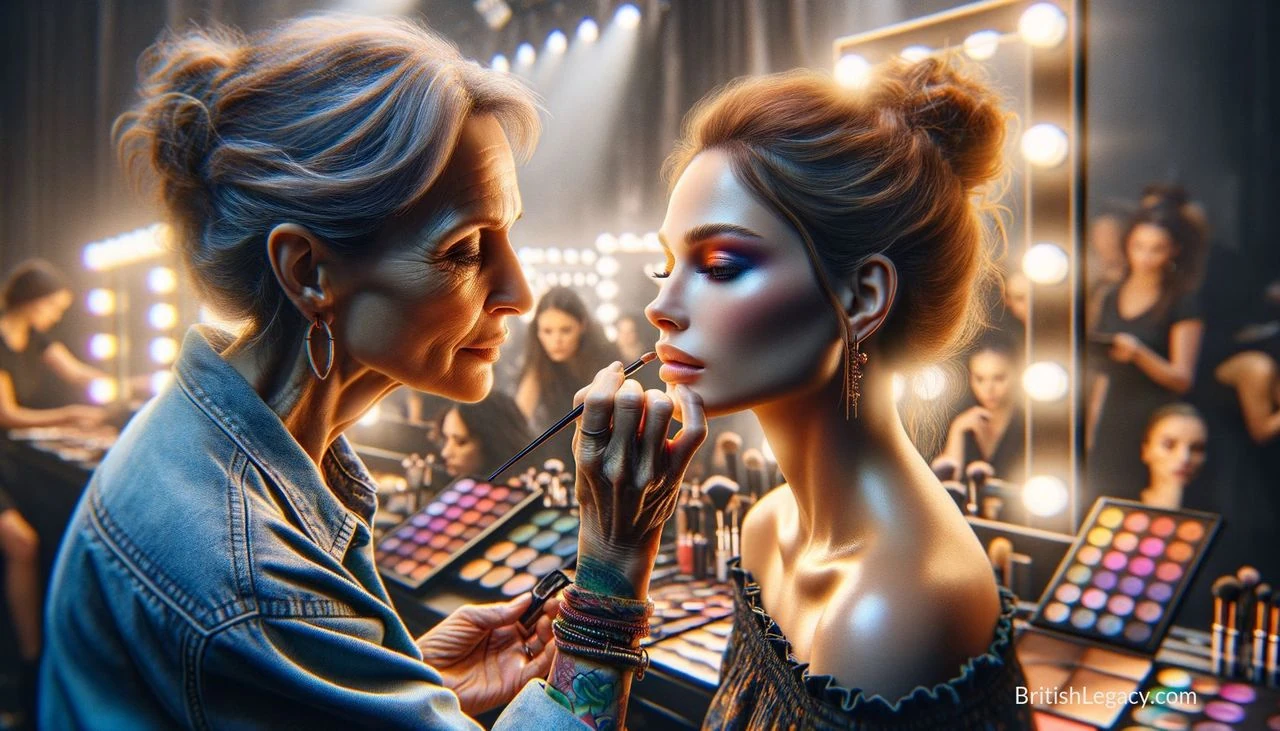
Her work distinguished itself through adventurous use of colour and materials, including feathers, gold leaf and leather. Rather than relying only on brushes, she has been known to work with her hands. She has described taking inspiration from fabrics, the colours in a collection and the faces of the models. That responsiveness let her create different looks for different shows and shoots, while making make-up an active part of a fashion image.
Working across the fashion industry
McGrath’s work has brought her into collaboration with designers, photographers and fashion houses. Alexander McQueen and John Galliano were among the designers with whom she worked; photographers Steven Meisel and Mario Testino are also named among her collaborators. These relationships placed her make-up in the midst of fashion image-making, where a look had to answer the ideas of a collection and register clearly in photographs as well as on the runway.
In 1999, Giorgio Armani hired McGrath to collaborate on a new cosmetics range. From 2004, she worked for Procter & Gamble as Global Cosmetics Creative Design Director for several years. In 2017, Enninful, by then editor of British Vogue, appointed her Beauty Editor-at-Large. The progression—from editorial work at i-D to an international cosmetics role and a senior position at Vogue—shows how a make-up artist’s creative contribution could extend beyond individual shows into product development and fashion publishing.
McGrath’s runway work has also included Prada and Miu Miu. Rather than treating make-up as separate from design, she has used it to translate a collection’s visual ideas into faces, colour and texture. That work has helped make make-up a visible element of a show’s overall aesthetic. Its influence is not limited to one house or one style: her practice draws on different materials and sources, and changes with each collection.
Building a beauty brand—and continuing to create
McGrath launched Pat McGrath Labs in 2015, taking her work from the fashion industry into a product business under her own name. The range includes the Mothership eyeshadow palettes and MatteTrance lipsticks, and its experimental colours and finishes offer customers a way to work with the techniques and visual language associated with her fashion work.
The company’s fortunes have changed over time. The Wikipedia account records that by 2019 it had become a billion-dollar company and Selfridges’ biggest-selling beauty line. It also describes serious financial strain later on: in December 2025 the company put itself and its assets up for auction after losing most of its revenue amid limited consumer demand and heightened competition. The auction bid was dismissed in January 2026 after the company filed for Chapter 11 bankruptcy protection; it exited bankruptcy in April 2026 after being sold to GDA Luma Capital Management. The arc is a reminder that creative reach and commercial stability are not the same thing.
McGrath’s work has continued beyond her own company. In 2025, Louis Vuitton announced her appointment as creative director of cosmetics for La Beauté Louis Vuitton. The product line launched on 29 August that year. McGrath had worked with Nicolas Ghesquière, the house’s artistic director of women’s collections, since his 2014 debut at the brand; the new cosmetics project followed that longer relationship. In October 2025, she was head make-up artist for the Victoria’s Secret Fashion Show, designing looks for its models, including Quenlin Blackwell and Angel Reese.
Honours and public recognition
McGrath’s achievements have been recognised in Britain and internationally. She received an MBE in 2014 for services to the fashion and beauty industry and the Isabella Blow Award for Fashion Creator at the Fashion Awards in 2017. She received a DBE in 2021 for services to the fashion and beauty industry and diversity. She was the first make-up artist to be made a Dame Commander of the Order of the British Empire. In 2024, she received the London Design Medal at the London Design Festival.
McGrath appeared on Time magazine’s list of the 100 most influential people in 2019. She has also been described by Vogue and other commentators as the world’s most influential make-up artist. Such recognition reflects not only a prominent name but a professional range: she has worked on editorial images, runway shows, cosmetics development and products sold to the public. She has also regularly appeared in the Powerlist, which highlights influential Black British people across different industries.
Why Pat McGrath deserves a place in British Legacy
Pat McGrath’s place in British Legacy rests on a specific achievement: she helped establish make-up as a powerful part of British fashion’s visual identity, then carried that creative practice into publishing, cosmetics and international fashion houses. Her route from Northampton College and early London work at i-D to senior roles at British Vogue and Procter & Gamble connects local beginnings with institutions that shape how fashion is presented and experienced. Her collaborations with designers and photographers show the breadth of that work, while the techniques and materials she uses—hands as well as brushes, and fabrics, feathers or gold leaf as sources—give substance to her reputation for experimentation.
Her influence also reaches consumers directly. Pat McGrath Labs made products associated with her fashion work available under her own name, while her later appointment at Louis Vuitton brought her expertise to another major cosmetics venture. The honours she has received, including a DBE recognising services to fashion, beauty and diversity, mark her contribution to British public life. McGrath’s story is not a simple account of uninterrupted commercial success: the financial crisis and sale of her company form part of its later chapter. But her continuing work across fashion, beauty and product design demonstrates how a British-based creative career can shape visual culture internationally, while widening the public recognition given to make-up artistry itself.
Sources
Pat McGrath — Wikipedia, revision 1375999873
Adapted in part from Pat McGrath by Wikipedia contributors, under CC BY-SA 4.0. Text has been edited and combined with the existing article; this adapted text is shared under the same licence. Contributor history.
_(cropped).jpg)