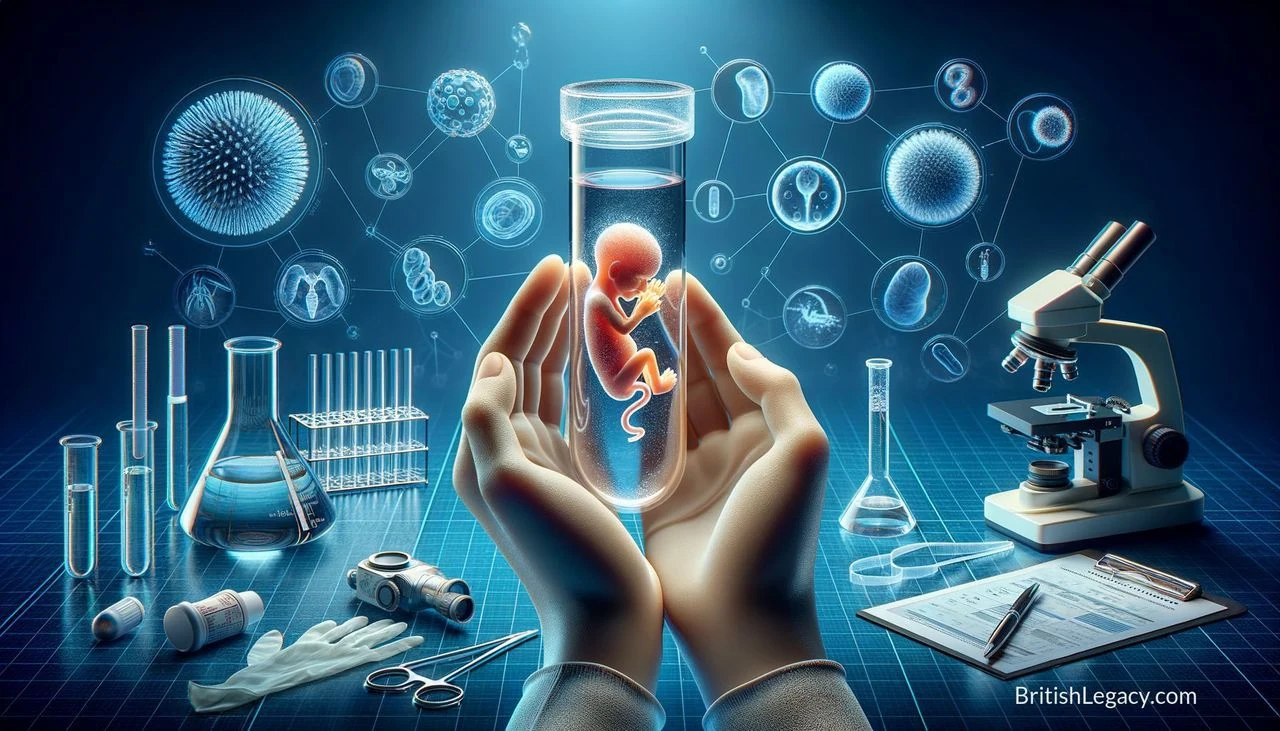
Patrick Steptoe: Pioneer of In-Vitro Fertilisation and British Scientific Legacy
In the annals of British medical history, few names resonate as profoundly as that of Patrick Steptoe. Alongside Robert Edwards, Steptoe achieved a groundbreaking milestone in human fertility and reproductive health - the successful development of in-vitro fertilisation (IVF). Their collaborative work culminated in the birth of the first "test-tube baby," Louise Brown, in 1978. This monumental achievement not only transformed the lives of individuals and families yearning for children but also cemented its place in the tapestry of Great Britain's legacy of innovation, compassion, and scientific excellence.
The Unlikely Duo: Steptoe and Edwards
Patrick Steptoe, born on 9 June 1913, was not merely a gynaecologist but a visionary determined to tackle the thorny issues of infertility. Steptoe, equipped with a medical degree from St. George's Hospital Medical School, was dedicated to exploring the frontier of reproductive health. His expertise in laparoscopy, a minimally invasive surgical procedure, and his determination to push boundaries brought him into collaboration with physiologist Robert Edwards.
Edwards had been diligently researching the science of fertilisation, focusing on how eggs and sperm interact outside the human body. He dreamed of offering hope to countless couples struggling with infertility, a vision Steptoe shared passionately. Together, they navigated the scientific hurdles and ethical considerations that once seemed insurmountable. Their partnership, a blend of clinical and research prowess, laid the foundations for a paradigm shift in reproductive medicine.
The Breakthrough: Louise Brown
After relentless experimentation and overcoming numerous setbacks, Steptoe and Edwards witnessed their breakthrough on 25 July 1978 with the birth of Louise Brown, the world's first baby conceived through IVF. Her arrival was met with both astonishment and scepticism, as public and professional communities grappled with the ethical and practical implications of their work.
Louise Brown's birth was not merely a scientific feat but a beacon of hope. It demonstrated that infertility could be overcome and provided a new avenue for those for whom traditional methods of conception had failed. Hundreds of thousands of families worldwide owe their joy to the pioneering work of Steptoe and Edwards.
Impact on Britain and Beyond
Patrick Steptoe's work with in-vitro fertilisation reverberates globally, establishing the United Kingdom as a leader in medical innovation. The success of IVF had profound implications:
-
Medical Advancements: Steptoe’s work ushered in a new era in reproductive science, leading to advancements in genetic screening, fertility preservation techniques, and broader applications of assisted reproductive technologies.
-
Social Impact: By proving that conception outside the human body was possible, Steptoe and Edwards catalysed a cultural shift towards acceptance and understanding of infertility treatments, reducing stigma and offering hope to millions.
-
Ethical and Legal Frameworks: The birth of Louise Brown propelled discussions about the ethical and legal dimensions of reproductive technology, fostering guidelines and regulations that continue to evolve and shape the landscape of modern fertility practices.
-
Research and Development: Steptoe's work inspired a wealth of subsequent research, positioning the UK as a nexus for pioneering research in reproductive health and technology.
A Legacy of Compassion and Science
Patrick Steptoe passed away in 1988, but his legacy endures. His commitment to blending empathy with ground-breaking science reflects the quintessentially British blend of ingenuity and humanity. Steptoe's work with Robert Edwards has left an indelible mark on medicine, one that continues to inspire and offer life-affirming possibilities.
In commemorating Patrick Steptoe’s contributions, we celebrate not just an individual but an enduring testament to the potential of human innovation and compassion. His work, integral to the great British legacy, remains a beacon, illuminating the path forward in reproductive health and medicine. Through Steptoe and Edwards, the world witnessed the power of perseverance, collaboration, and the unwavering quest to turn dreams into reality.