
Peter Kay’s comedy finds its material close to home: in the jobs people do, the places they gather and the habits they share. Born in Farnworth and raised in the Bolton area, he turned experiences from work and local life into characters and stories that travelled far beyond Greater Manchester. Stand-up made his name; television, music and an exceptionally well-attended tour carried that local perspective to a national audience.
From Farnworth to the comedy clubs
Peter John Kay was born in Farnworth, Lancashire, on 2 July 1973. He attended Mount Saint Joseph School, leaving with a GCSE in art. His father, Michael, was an engineer; his mother, Deirdre, was originally from County Tyrone, and Kay was brought up in her Catholic faith.
Before comedy became his career, Kay held a succession of jobs, among them work in a toilet-roll factory, a supermarket, a video-rental shop, an arena, a cinema, a petrol station and a bingo hall. Some of those workplaces later supplied settings and details for That Peter Kay Thing. He began a degree course in drama, theatre studies and English literature at the University of Liverpool, then moved to the University of Salford, where he studied media performance, including stand-up, at its Adelphi campus.
Kay began performing at Manchester’s Frog & Bucket Comedy Club in 1996 while continuing to work part-time at a local cinema. He won the North West Comedian of the Year competition and, in 1997, Channel 4’s So You Think You’re Funny? contest. At the Edinburgh Fringe the following year, his show received a Perrier Award nomination. His early progress came through local stages and television opportunities, rather than a single overnight breakthrough.
Building a television world around Bolton
Kay’s early screen work included appearances in the comedy series New Voices and the BBC drama Born to Run, both in 1997, followed by sketches and stand-up on Granada’s The Last Laugh Show. In 1998, his Comedy Lab episode, “The Services”, won a Royal Television Society award for best newcomer and served as a pilot for That Peter Kay Thing, a Channel 4 series in which he played a range of characters.
One episode of that series, “In the Club”, became the starting point for Phoenix Nights. Kay co-wrote and starred in the Channel 4 sitcom, working with Neil Fitzmaurice and Dave Spikey. First shown in 2001, it centres on Brian Potter, the determined owner of a social club in Bolton, and the staff and patrons around him. The fictional club gave Kay a setting for comic performances shaped by local speech, social life and aspiration.
The series led to Max and Paddy’s Road to Nowhere, a six-episode spin-off broadcast in 2004. Kay and Paddy McGuinness played the bouncer characters on a road trip, with other familiar figures from Phoenix Nights also appearing. Kay received a Rose d’Or for best performance by an actor at the Montreux television festival in 2005.
His television work was not confined to his own shows. He appeared in Doctor Who in 2006 as Victor Kennedy, whose identity is revealed as the alien Abzorbaloff, and played director Roger DeBris in the Manchester production of The Producers in 2007. In 2008, he co-wrote and starred in Britain’s Got the Pop Factor... and Possibly a New Celebrity Jesus Christ Soapstar Superstar Strictly on Ice, a parody of reality talent programmes. As its fictional singer Geraldine McQueen, he released “The Winner’s Song”.
Stand-up, records and shared journeys
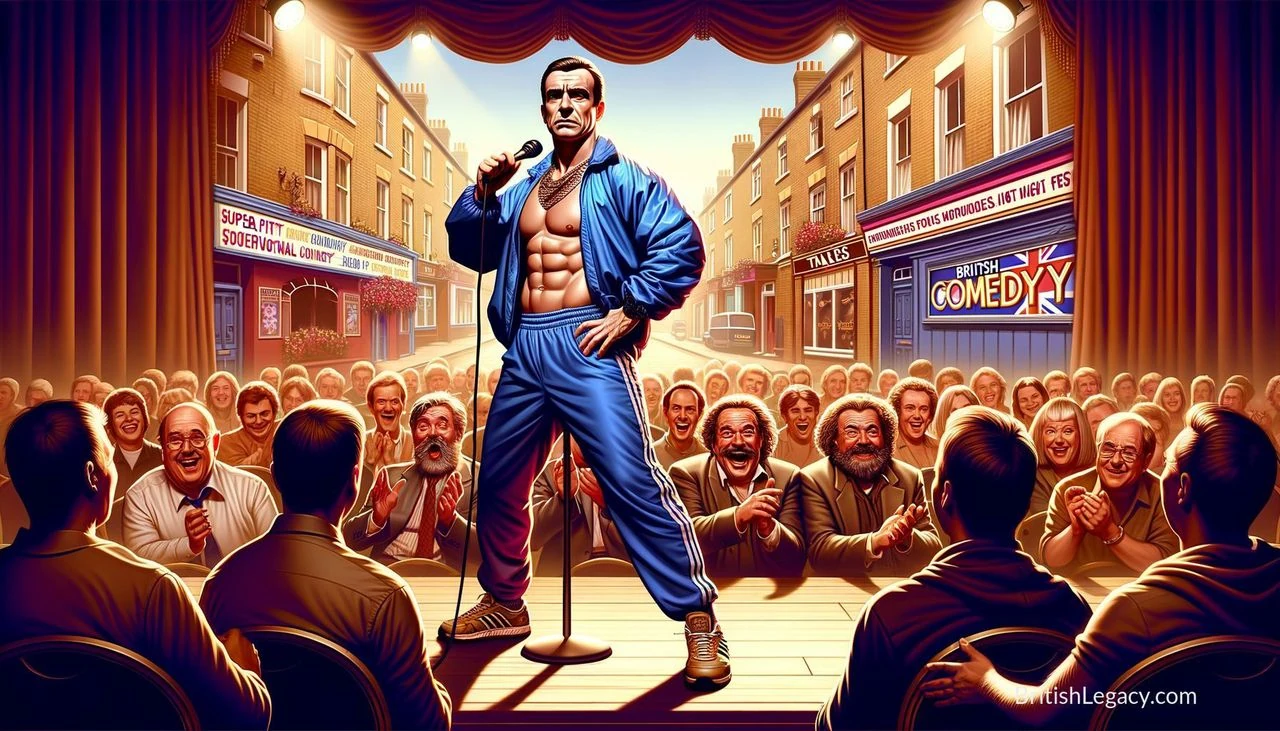
Live at the Top of the Tower, released in 2000, brought Kay mainstream recognition as a stand-up. His comedy draws on family, childhood, work and popular culture, moving between observational detail and physical performance. Rather than treating ordinary life as background, he makes its routines and small social awkwardness the subject of the joke.
In 2005, Kay appeared in a promotional video for Tony Christie’s “(Is This the Way to) Amarillo”, released to raise money for Comic Relief. The record reached number one in the UK singles chart. He returned to the song for Comic Relief in 2020, introducing an updated version during the BBC’s The Big Night In. Other charity-linked music projects included a 2007 cover of “I’m Gonna Be (500 Miles)” and a 2009 Children in Need medley featuring characters from children’s television.
Kay’s 2010–11 stand-up tour played to 1.2 million people, a total recorded by Guinness World Records as a record for a comedy tour. After a planned tour was cancelled in 2017, he announced a return to stand-up in 2022. The tour that followed ran from December 2022 into 2025, with further performances announced for 2026.
In 2015, Kay returned to sitcom with Peter Kay’s Car Share, co-starring Sian Gibson. Its premise—two colleagues sharing car journeys—gave the series a compact, recurring space for conversation and character. It received two BAFTA Television Awards, including best male comedy performance for Kay and best scripted comedy, as well as a National Television Award for most popular comedy series. He also appeared in the BBC sitcom Cradle to Grave that year and presented the clip-based Peter Kay’s Comedy Shuffle from 2016 to 2020.
Kay’s screen work includes voice roles in two Wallace & Gromit films: he voiced PC Albert Mackintosh in The Curse of the Were-Rabbit (2005) and returned as Chief Inspector Albert Mackintosh in Vengeance Most Fowl (2024). His books include The Sound of Laughter (2006), Saturday Night Peter (2009), T.V.: Big Adventures on the Small Screen (2023) and Peter Kay’s Diary: The Monthly Memoir of a Boy from Bolton (2025).
Why Peter Kay deserves a place in British Legacy
Kay’s place in British Legacy rests on a distinctive connection between local experience and popular entertainment. Farnworth and Bolton are not simply points in his biography: the social clubs, workplaces and familiar interactions associated with the area became material for television characters and stories. Phoenix Nights made a fictional Bolton club the centre of a national sitcom, while That Peter Kay Thing drew on recognisable working lives and places. His comedy’s attention to everyday behaviour gave those settings specificity without requiring audiences to know them in advance.
His career also shows how one comic voice can move between forms. Kay developed from local stand-up and a Channel 4 talent contest into a writer and performer on several television series, a live act whose 2010–11 tour drew 1.2 million people, and a participant in charity music releases. “(Is This the Way to) Amarillo” linked his screen persona to fundraising for Comic Relief; his children’s television medley supported Children in Need. Car Share brought the close observation of conversation into a different, tightly focused sitcom, while his voice work extended his reach to family animation. Together, these achievements make his British connection concrete: a body of comedy rooted in Lancashire life, made for television and stages across the country, and repeatedly connected with shared cultural events.
Sources
Peter Kay — Wikipedia, revision 1378548633
Adapted in part from Peter Kay by Wikipedia contributors, under CC BY-SA 4.0. Text has been edited and combined with the existing article; this adapted text is shared under the same licence. Contributor history.
.jpg)