
Spike Milligan’s comedy could turn a sound effect, a broken line or an unexpected word into the centre of a scene. As co-creator, principal writer and a leading performer in The Goon Show, he helped make surreal, fast-changing radio comedy part of British popular culture. His career ranged well beyond the programme: he wrote plays, novels, children’s verse and an extensive series of war memoirs, and took his unruly comic style on to television and the stage.
From British India to wartime service
Terence Alan Milligan was born in Ahmednagar on 16 April 1918, during British rule in India. His father, Leo, was Irish and served in the British Indian Army; his mother, Florence, was English. Milligan spent his childhood in Poona and Rangoon. In 1931, after his father’s army position was affected by cuts, the family moved to England. Milligan attended schools in south-east London, worked as a clerk at Woolwich Arsenal and took up the cornet and jazz. He adopted the name Spike after hearing the bandleader Spike Jones on Radio Luxembourg.
Music and performance remained part of his life when he was called up in 1940. He served as a signaller in the Royal Artillery and saw action in North Africa and Italy. At Monte Cassino he was wounded and later treated for what he described as shell shock. While serving, he also wrote and performed comedy sketches for troops. After joining the Central Pool of Artists in Italy, he became a full-time entertainer, playing in a jazz and comedy group. The experience of writing parodies and performing for soldiers helped form the comic instincts he would bring to radio.
Making The Goon Show
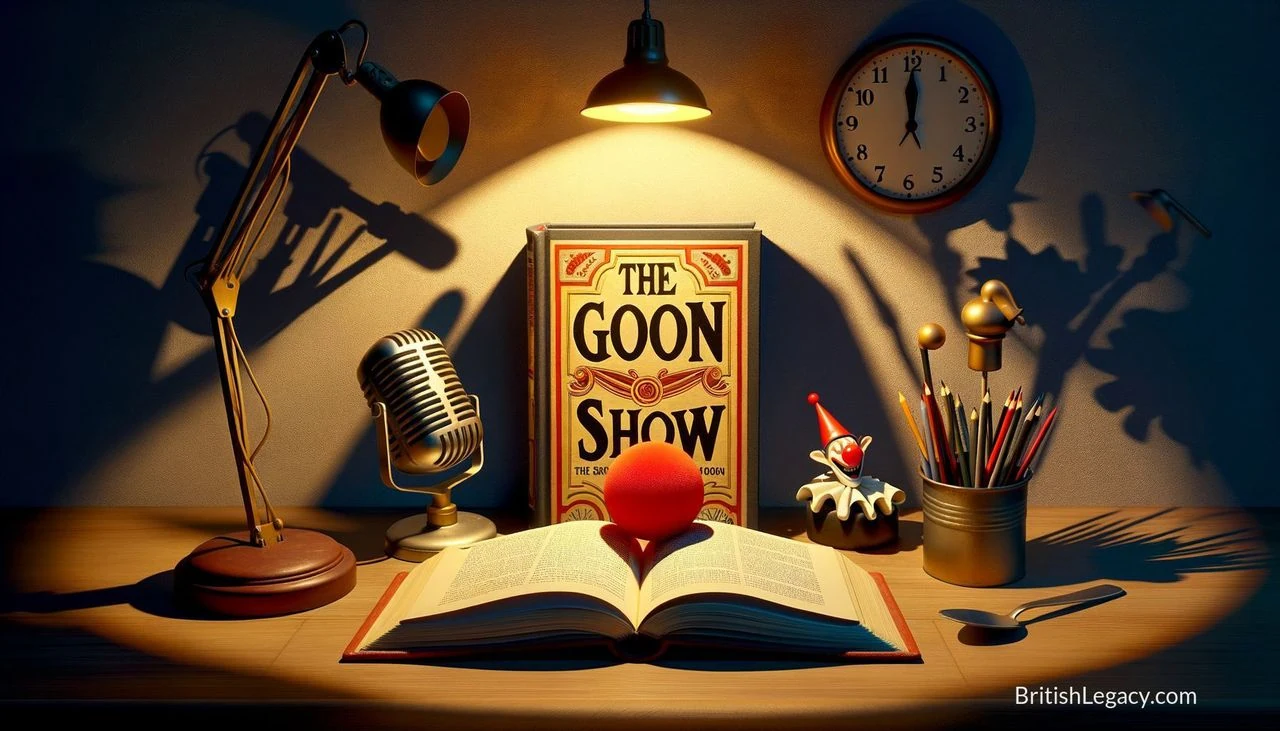
Back in Britain after the war, Milligan worked in musical comedy and sought a place in broadcasting. His first radio success came as a writer for comedian Derek Roy. In 1951, he joined Peter Sellers, Harry Secombe and Michael Bentine to create The Goon Show. The BBC initially presented it under the title Crazy People; the first episode went out on the Home Service on 28 May 1951. Milligan became the programme’s principal writer and one of its lead performers, playing characters including Eccles, Minnie Bannister and Count Jim Moriarty.
The Goons’ strange characters and skewed plots depended on more than dialogue. Milligan pressed for increasingly elaborate sound effects, or “grams”, and the programme’s move to magnetic tape gave the team new scope to edit and build them. BBC engineers and, later, members of the Radiophonic Workshop helped create effects that would have been difficult to perform live. The result was a form of radio comedy in which editing, sound and verbal invention could all upset the listener’s expectations.
Writing and performing at that intensity had a severe personal cost. During the programme’s third series, Milligan experienced the first of several serious mental breakdowns; he lived with bipolar disorder for decades. He spoke about the condition and its effect on his life. The pressures surrounding the show also coincided with the breakdown of his first marriage. The achievement of The Goon Show should not obscure the strain under which it was made.
Television, stage and the written word
Milligan continued to test how far his comic ideas could travel. His early television projects included The Idiot Weekly, Price 2d, A Show Called Fred and Son of Fred. In 1969, he began the Q series with Q5; later instalments included Q6, Q7, Q8 and Q9, followed by There’s a Lot of It About. The series’ shifts of tone and abrupt, unconventional sketches became an important influence on members of Monty Python’s Flying Circus.
Theatre gave Milligan another setting for improvisation. He co-wrote The Bedsitting Room with John Antrobus, a post-nuclear comedy first staged in 1962 and later expanded for the Mermaid Theatre. In 1964, he appeared in Oblomov at the Lyric Hammersmith. When he began improvising around the play’s text, the production changed into a comedy built around his performance. Renamed Son of Oblomov, it moved to the West End and ran for 559 performances. He also played Ben Gunn in the Mermaid Theatre’s productions of Treasure Island.
His books likewise moved between comedy and more serious subjects. Puckoon (1963) was a novel; Silly Verse for Kids (1959) established his playful nonsense poetry. His seven-volume war memoir began with Adolf Hitler: My Part in His Downfall (1971), followed by accounts of service, injury and post-war life. These books combine comic irreverence with recollections of military experience; their titles alone do not convey the full range of the subject. Milligan also wrote for children, including Badjelly the Witch, and contributed cartoons to Private Eye.
Citizenship, honours and remembrance
Milligan’s national identity did not fit neatly within the labels often attached to his work. Born in British India to an English mother and Irish father, he served in the British Army and lived and worked in Britain for most of his life. When he applied for a British passport in 1960, his application was refused. He became an Irish citizen in 1962 through his father and remained an Irish citizen. He was appointed a Commander of the Order of the British Empire in 1992 and received an honorary knighthood in 2001.
Milligan died at home near Rye, East Sussex, on 27 February 2002, aged 83. He was buried at St Thomas’s Church in Winchelsea. His headstone carries the Gaelic translation of “I told you I was ill”, the joke he had wanted for his memorial, alongside “Love, light, peace”. The epitaph joins his characteristic black humour to a more reflective farewell.
Why Spike Milligan deserves a place in British Legacy
Milligan’s place in British cultural history rests first on the work itself. As a writer and performer on The Goon Show, he helped make radio comedy less dependent on familiar comic routines and more adventurous in its use of language, characters, editing and sound. The programme’s technical experimentation was not separate from its humour: the sounds and cuts became part of the joke. His later Q series carried that willingness to break with convention into television, and its influence on Monty Python connects his work to a further generation of British comedy.
His contribution was not confined to broadcasting. Milligan took improvisation into the theatre, wrote comic and children’s verse, created novels and published a sustained record of his wartime service. Those forms allowed humour to meet subjects such as military life and mental illness without reducing his career to a single character or catchphrase. His personal story also makes the British connection more specific than birthplace alone: he grew up and worked in England, served in the British Army and shaped popular entertainment in Britain, while retaining Irish citizenship. Remembering Milligan means recognising both the reach of his comic invention and the varied, sometimes difficult life behind it.
Sources
Spike Milligan — revision 1379806532
Adapted in part from Spike Milligan by Wikipedia contributors, under CC BY-SA 4.0. Text has been edited and combined with the existing article; this adapted text is shared under the same licence. Contributor history.
.jpg)