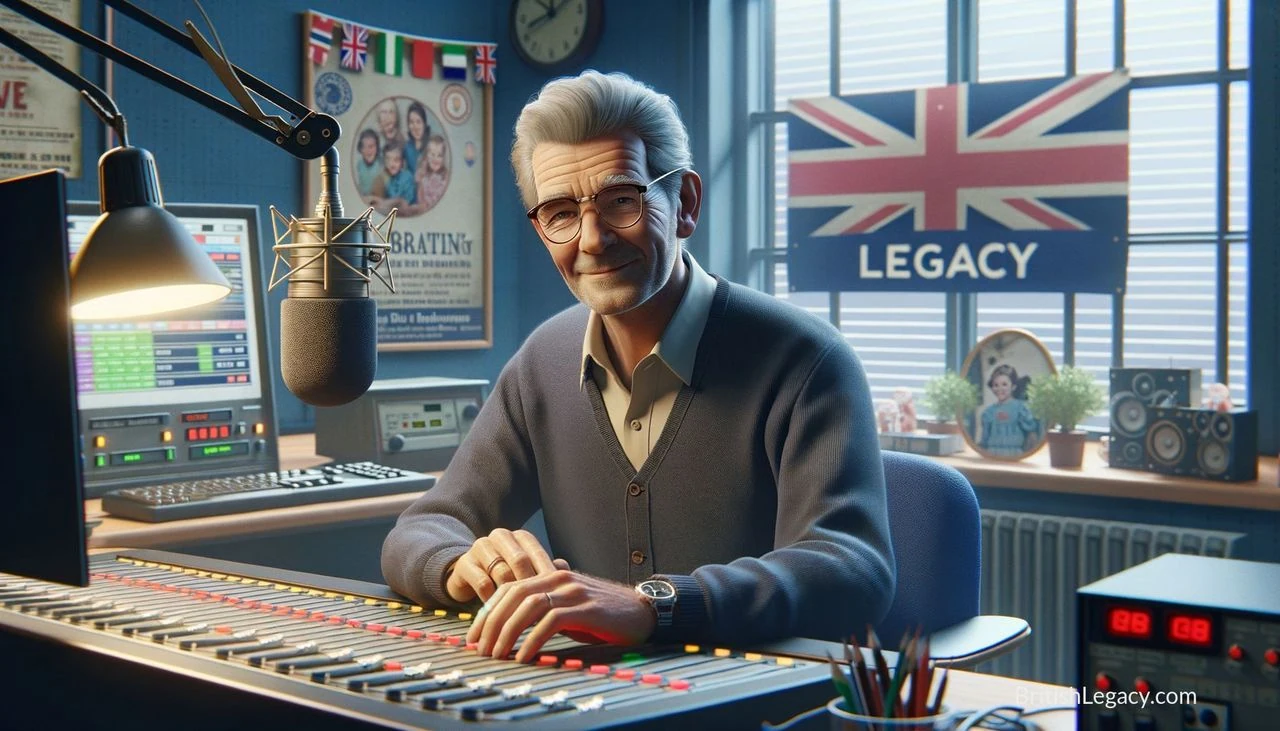
For millions of listeners, Terry Wogan’s voice was part of the morning. His long-running BBC Radio 2 breakfast programmes combined interviews and music with rambling diversions, listener letters and jokes shared with his production team. On television, he became familiar as a chat-show host, the face of Children in Need and the BBC’s wry commentator on the Eurovision Song Contest. Born in Limerick, Wogan made most of his career in Britain, where his conversational style became a distinctive part of broadcasting.
From Limerick to the microphone
Michael Terence Wogan was born in Limerick, Ireland, on 3 August 1938. He attended Crescent College, a Jesuit school, and moved with his family to Dublin at 15, where he continued his education at Belvedere College. He took part in amateur dramatics and developed an interest in popular music. After leaving school in 1956, he worked in banking at the Royal Bank of Ireland.
In his early twenties, Wogan joined Ireland’s national broadcaster, Raidió Teilifís Éireann (RTÉ), as a newsreader and announcer. He conducted interviews and presented documentary features before moving into light entertainment, working as a disc jockey and hosting television quiz and variety programmes. Among them was Jackpot, a popular RTÉ quiz show in the 1960s.
Wogan began broadcasting for the BBC in 1966, initially from Dublin. He presented programmes for BBC radio while commuting to London, then took a weekday afternoon slot in 1969. From 1970, that programme was broadcast simultaneously on Radios 1 and 2. In April 1972, he moved to Radio 2’s breakfast programme, beginning the role that would define much of his career.
A breakfast show built around its listeners
Wogan presented the Radio 2 breakfast show from 1972 until 1984, when he left full-time radio to concentrate on television. He returned in 1993 with Wake Up to Wogan, which ran until 2009. The programme regularly attracted millions of listeners; its estimated audience reached eight million in 2005. He later returned to the station with Weekend Wogan, a live Sunday programme that began in 2010 and continued until his final broadcast on Remembrance Sunday 2015.
The success of the later breakfast show rested partly on its loose, companionable rhythm. Wogan might follow a planned item with an aside or an extended exchange with producer Paul Walters. Listeners wrote in under punning names, and the programme developed recurring jokes involving Wogan and members of the production team. He called his fans “TOGs”, short for “Terry’s Old Geezers” or “Terry’s Old Gals”, and playfully coined “TYGs” for younger listeners.
The show also helped bring music to a wider audience. Wogan repeatedly played Katie Melua’s début single, “The Closest Thing to Crazy”, in 2003; he credited Walters with discovering her. Walters also played music by the American singer Eva Cassidy, whose profile rose in Britain after her death. Wogan’s broadcasts could be entertaining without being confined to jokes: his exchanges with listeners and guests made space for music, conversation and the small rituals of a daily radio programme.
Television: chat, comedy and Eurovision
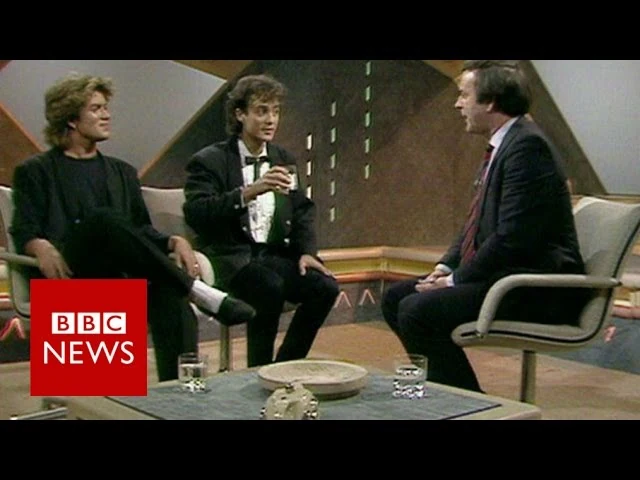
Wogan’s television career encompassed several kinds of programme. He hosted Blankety Blank from 1979 to 1983, presenting the British version of the American game show Match Game. His BBC chat show, Wogan, began in the early 1980s and ran in different schedules until 1992. He interviewed performers and public figures, and the programme could accommodate both light entertainment and unexpected controversy. He also presented Auntie’s Bloomers, a collection of television outtakes, from 1991 to 2001.
Eurovision gave him another long-running television role. Wogan provided BBC radio commentary in 1971 and from 1974 to 1977; he commentated on television in 1973, 1978 and annually from 1980 to 2008. In 1998, he co-hosted the contest in Birmingham with Ulrika Jonsson, while also providing commentary for viewers. His deadpan style became a familiar part of the British broadcast, though it could be pointed: his remarks about performers and presenters sometimes attracted criticism. He stepped down as commentator after the 2008 contest, and Graham Norton took over from 2009.
Children in Need and public recognition
Wogan was among the presenters of the first televised Children in Need appeal in 1980 and became its main regular presenter. He campaigned for the charity and supported fundraising through activities on air, including auctions connected with his radio programme. His regular presenting role lasted until 2014. When illness prevented him from taking part in the live telethon in 2015, he appeared briefly in a recorded sketch. His BBC fees for the appeal were donated to the charity.
His honours reflected both his broadcasting career and his place in public life. Wogan was appointed an honorary Officer of the Order of the British Empire in 1997. In 2005 he acquired British citizenship while retaining Irish nationality and was appointed an honorary Knight Commander of the Order of the British Empire. He was formally knighted that October. In 2007, he became a Deputy Lieutenant of Buckinghamshire; he also received the Freedom of the City of Limerick and, in 2009, was made an Honorary Freeman of the City of London.
Final broadcasts and remembrance
Wogan’s final radio broadcast was Weekend Wogan on 8 November 2015. By then he had been diagnosed with advanced prostate cancer. He died at his home in Taplow, Buckinghamshire, on 31 January 2016, aged 77. A private funeral was followed by a memorial service at Westminster Abbey in September that year.
His career crossed the Irish and British broadcasting worlds, but it was his work for the BBC that brought him into the routines of audiences across Britain. BBC Western House, home of Radio 2, was renamed BBC Wogan House in his memory; although the BBC later left the building, the name was retained.
Why Terry Wogan deserves a place in British Legacy
Wogan’s place in British Legacy rests on a particular achievement: he made national broadcasting feel conversational. Across two periods on the Radio 2 breakfast programme and later on Weekend Wogan, he built a sustained relationship with listeners through music, letters, recurring jokes and informal exchanges. The estimated audiences for Wake Up to Wogan show the scale of that connection, while the detail of the broadcasts—the listener pseudonyms, the banter with his team and the affectionate name “TOGs”—shows how it worked. His style was recognisable without requiring every programme to be the same.
He also connected British audiences to television events and causes over many years. His Eurovision commentary, spanning radio and television, became part of how the contest was experienced by viewers in the UK; his work as a commentator and co-host gave him a role in the event beyond simply introducing the songs. At Children in Need, he helped present and promote a major fundraising appeal from its first televised edition, donating his BBC fees to the charity and continuing as its main regular presenter until 2014. Wogan’s Irish birth and continuing Irish nationality are part of his story, not obstacles to his British legacy: his career in British broadcasting, his public service through the BBC and his lasting place in the country’s shared media life provide the specific connection.
Sources
Terry Wogan (revision 1376631145) · Terry Wogan
Adapted in part from Terry Wogan by Wikipedia contributors, under CC BY-SA 4.0. Text has been edited and combined with the existing article; this adapted text is shared under the same licence. Contributor history.